5 Outstanding Advantages of Precast Concrete Components
In the context of the growing demand for industrial construction, investors are not only looking for sustainable solutions but also require fast construction speed, consistent quality, and cost optimization. Precast concrete components have become a top choice thanks to their ability to meet all three criteria: economical – sustainable – efficient in construction. Modern production technology, high standardization, and tightly controlled processes make precast components increasingly popular in factories, industrial plants, and infrastructure projects. Let TECO explore in depth the concept, the 5 outstanding advantages, and remarkable applications of precast concrete components in today’s industrial construction.
 5 advantages of precast concrete components
Definition of precast concrete components
Precast concrete components are construction elements manufactured in factories according to pre-designed dimensions, shapes, and technical standards. After being cast, cured, and quality inspected, the components are transported to the construction site and assembled using mechanical equipment.
The biggest difference between precast concrete and cast-in-place concrete lies in the production location: instead of being poured on-site, concrete is completely cast in factories, ensuring ideal technological and quality conditions.
5 outstanding advantages of precast concrete components
Construction speed many times faster
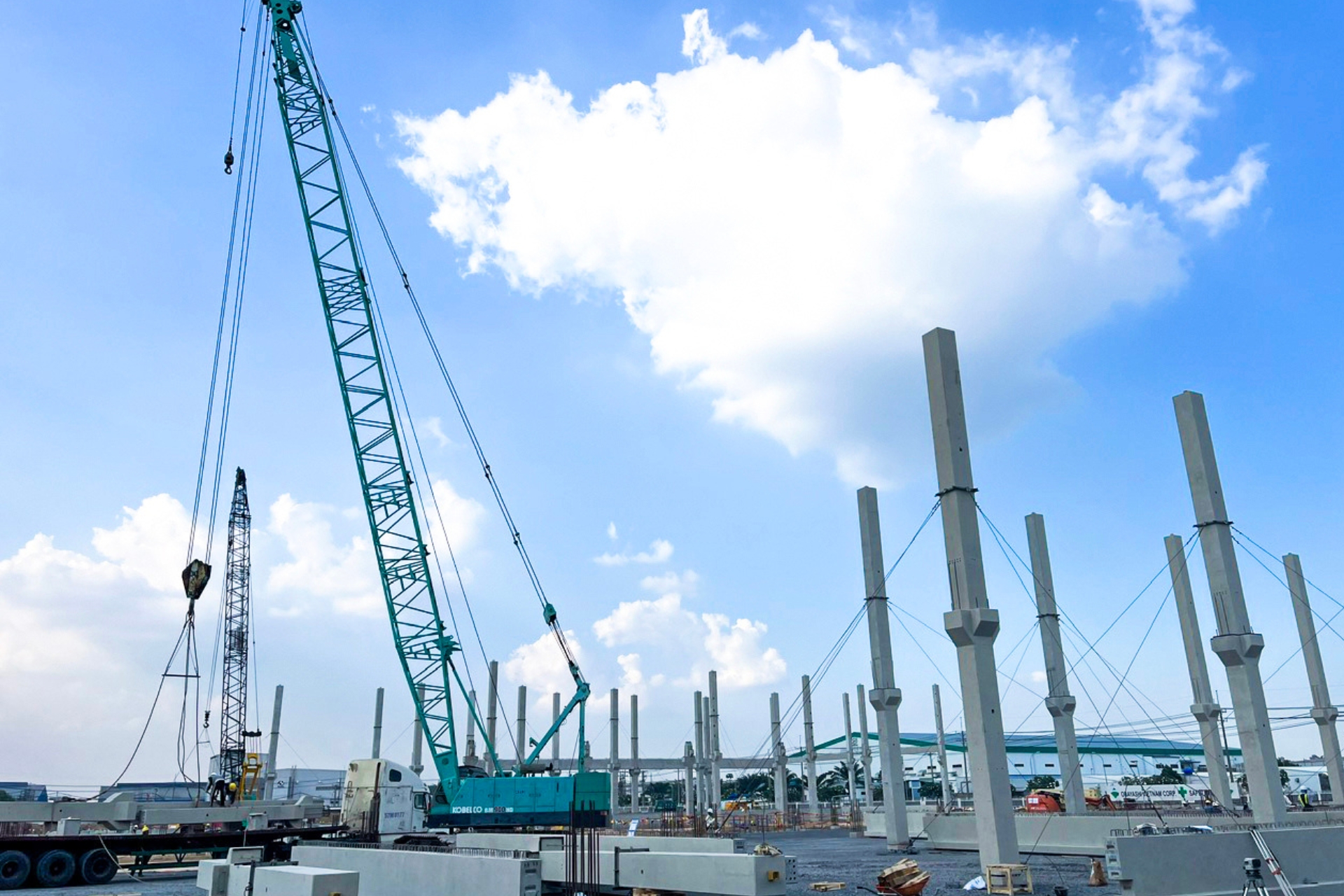
One of the reasons precast concrete components are favored in industrial projects is that they shorten construction time by 30–50%. Thanks to parallel production in the factory while the site is preparing foundations, the overall project duration is significantly reduced. The assembly stage is carried out with cranes and mechanical equipment, ensuring fast, neat construction with minimal weather-related interruptions.
Consistent quality, strictly controlled
All components are produced in a factory environment under strict standards: concrete slump, compression strength, flexural strength, load capacity, etc. This ensures high accuracy, good surface finishing, and more stable quality compared to on-site pouring. This uniformity is especially important for factories, warehouses, and logistics centers—projects requiring high structural safety.
Consistent quality, strictly controlled
Cost savings in operation and labor
When using precast components, construction sites significantly reduce incidental costs such as:
-
Formwork costs
-
Labor for mixing, pouring, and curing concrete
-
Costs for handling excess concrete
-
Losses caused by weather or construction errors
In addition, shortening construction time helps reduce project management costs and allows the facility to be put into operation sooner. This is considered a notable economic benefit for businesses.
High durability and superior lifespan
Thanks to industrial production lines, precast concrete components typically have:
-
High compressive strength
-
Good waterproofing and crack resistance
-
Stable performance
-
Longer lifespan than cast-in-place concrete
This is particularly suitable for structures subject to heavy loads or continuous operation such as manufacturing plants, cold storage, yards, and water treatment stations.
 High durability and superior lifespan
Clean construction – safe – environmentally friendly
Construction sites using precast components reduce on-site concrete mixing, dust, noise, wastewater, and safety risks. Additionally, centralized production allows mold reuse, material optimization, and reduced CO₂ emissions—bringing construction closer to the goals of green – sustainable – resource-efficient development.
Remarkable applications of precast concrete components in industrial construction
Factories – manufacturing plants
This is the largest application area. Precast components help accelerate factory construction, meet business investment timelines, and ensure strong load-bearing structures for large-scale plants.
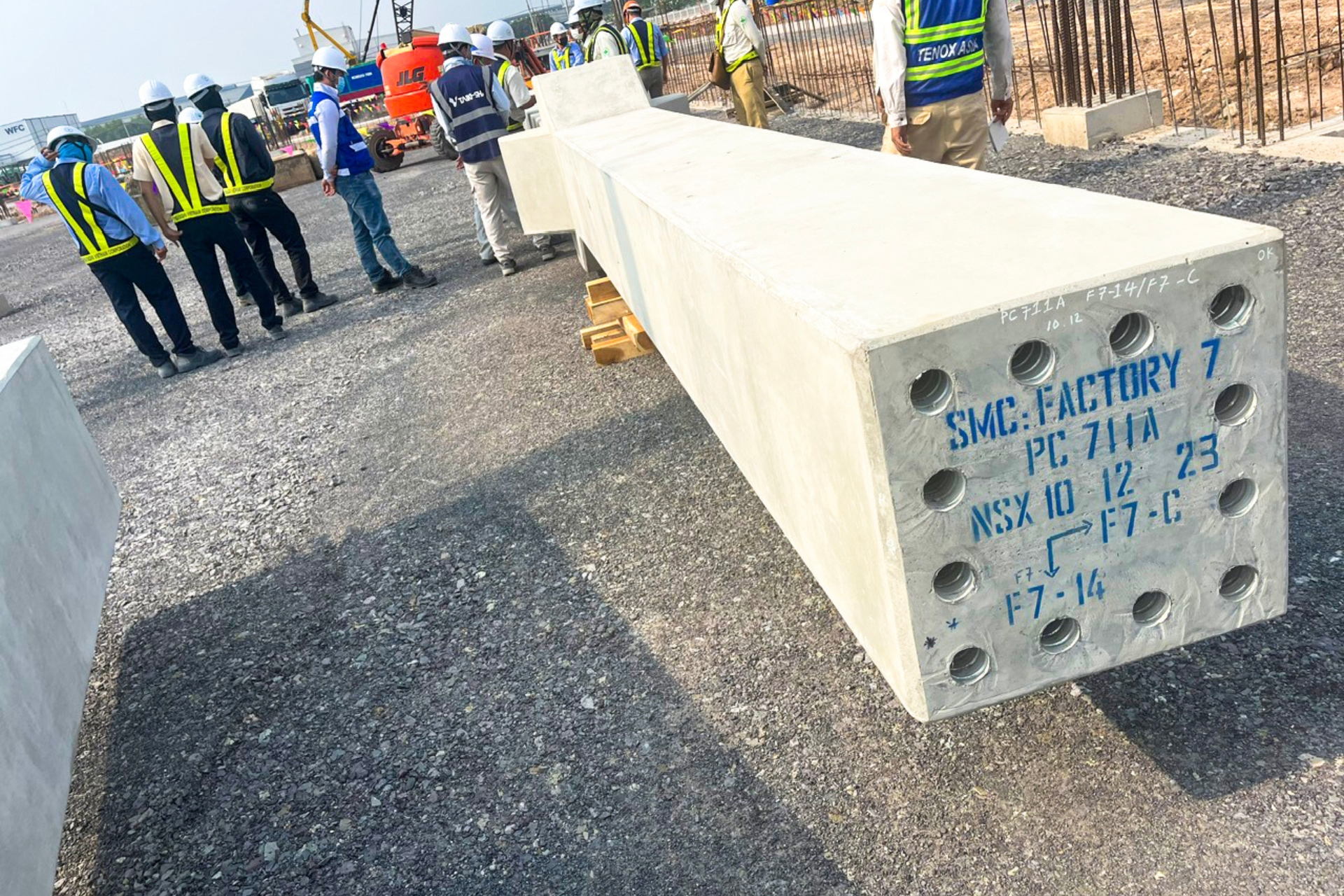 Application of precast concrete components in factories
Warehouses – logistics – cold storage
Projects requiring large floor areas, tall structures, and consistent quality are very suitable for precast concrete solutions.
Infrastructure
Including:
-
Box culverts, circular culverts
-
Manholes
-
Bridge girders, retaining walls
-
Railings, drainage components
Precast components help accelerate infrastructure construction, reduce congestion, and minimize risks in densely populated areas.
Large-scale commercial – residential buildings
Including:
-
Shopping malls
-
Multi-level parking garages
-
Apartments, offices
High durability, flexible assembly, and technical standardization make precast concrete widely used in many modern structures.
TECO – A trusted contractor for precast concrete projects
With the strong development of the industrial sector, precast concrete components increasingly affirm their importance thanks to fast construction speed, consistent quality, and cost optimization. This is an effective solution for investors seeking sustainable – modern – economical construction methods.
 TECO – A trusted contractor for precast concrete projects
With extensive experience in factory construction, industrial projects, and precast concrete solutions, TECO is ready to accompany businesses from consulting and design to turnkey construction.
We are committed to delivering quality – progress – safety, helping investors optimize efficiency and enhance project value.