In modern construction, reinforced concrete slabs are structural components that play a particularly important role. Not only do they perform the load-bearing function, but slabs also directly affect the durability, functionality, and lifespan of a building. With high load-bearing capacity, flexibility in design, and suitability for various types of construction, reinforced concrete slabs are increasingly becoming a popular choice for factories. Join TECO in exploring this structural component in detail in the article below.
What is a reinforced concrete slab?
A reinforced concrete slab is a type of slab formed by concrete combined with an internal load-bearing steel reinforcement system. Concrete has good compressive strength, while steel reinforcement performs the tensile function. This combination enables the slab to work effectively under both static and dynamic loads during use.
In a building structure, a reinforced concrete slab not only divides space vertically but also transfers loads to beams, columns, and foundations. Therefore, the design and construction of slabs always require high precision and strict compliance with technical standards.
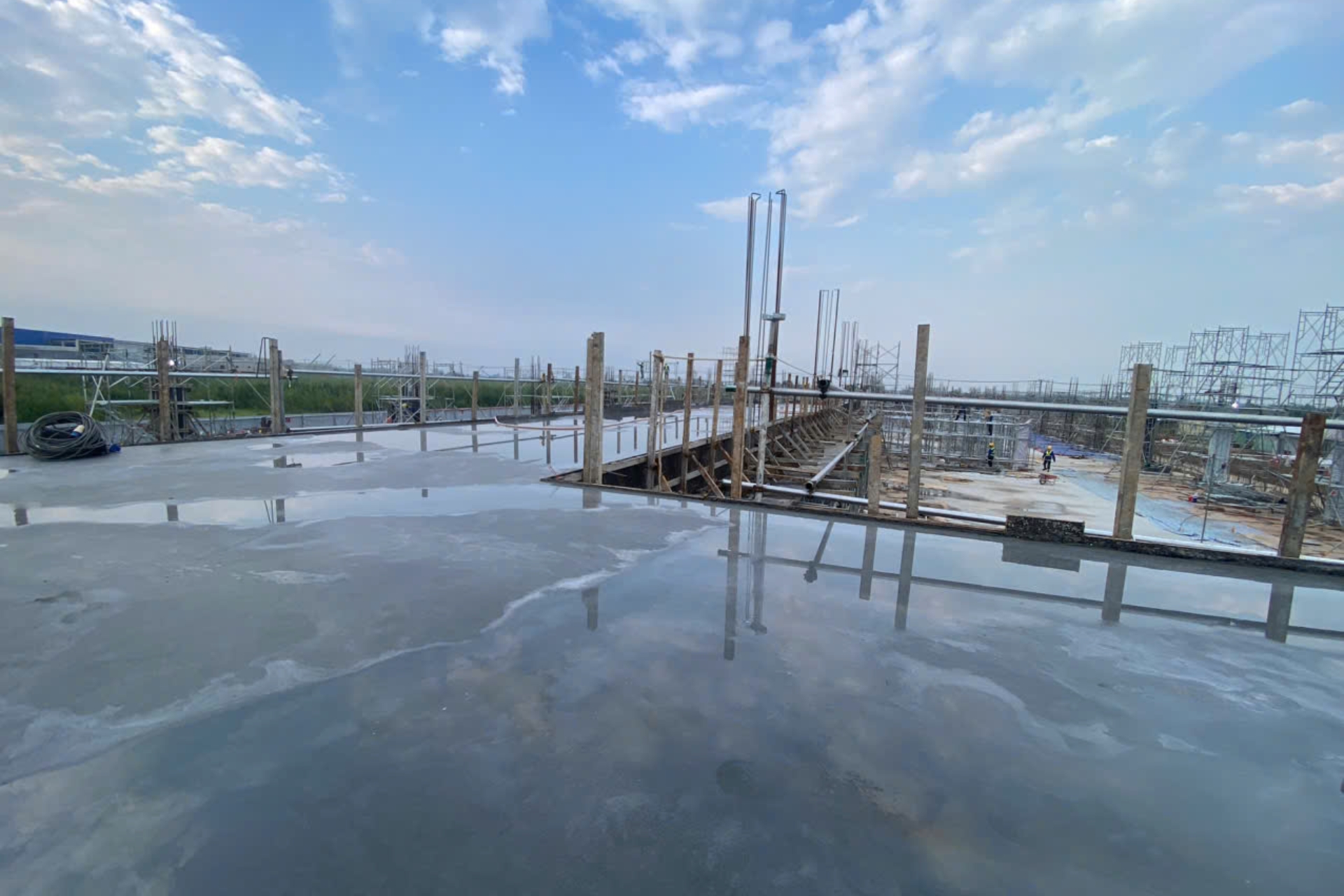 Concept of reinforced concrete slabs
Basic structure of reinforced concrete slabs
The structure of a reinforced concrete slab consists of multiple layers and components that are tightly connected, forming a unified structural system. The concrete layer is the outer covering, responsible for protecting the reinforcement and resisting compression. Concrete quality depends on the concrete grade, mix proportion, mixing process, pouring, and curing.
The reinforcement system is arranged according to the main load-bearing direction of the slab. Load-bearing steel bars are typically placed in tensile zones, while distribution steel helps limit cracking and enhance uniform structural performance.
In addition, the slab is directly connected to the system of beams, columns, or load-bearing walls. This connection helps distribute loads reasonably and ensures the overall performance of the building structure.
Common types of reinforced concrete slabs today
Depending on their structure and working method, reinforced concrete slabs are classified into various types to suit different usage requirements.
Cast-in-place reinforced concrete slabs
This is the traditional type of slab, poured directly on-site together with beams and columns. Cast-in-place slabs offer strong connectivity, high load-bearing capacity, and ease of construction with standard technical teams. However, this type requires a long construction time and depends heavily on weather conditions and workmanship.
Precast reinforced concrete slabs
Precast slabs use prefabricated reinforced concrete panels or components, which are then installed on-site. This solution helps shorten construction time, improve quality, and better control dimensional accuracy.
Precast slabs are commonly applied in factories, industrial buildings, or projects with tight schedules.
Flat slabs without beams
Flat slabs are reinforced concrete slabs that do not use traditional beams. Loads are transferred directly from the slab to the columns. This type of slab creates open space, flexible functional layouts, and optimizes floor height.
However, flat slabs require complex structural calculations and strict control of punching shear at column locations.
 Classification of common reinforced concrete slabs
Common mistakes during slab construction
In practice, many projects encounter problems due to improper construction of reinforced concrete slabs.
A common mistake is incorrect placement or incorrect type of reinforcement. Improper steel positioning or insufficient load-bearing reinforcement significantly reduces the slab’s load capacity.
Concrete failing to meet the designed strength grade is also a frequent issue. This may result from incorrect mix proportions, uncontrolled manual mixing, or the use of low-quality materials.
In addition, slab cracking occurs when concrete curing is done improperly, when slabs lose moisture too quickly, or when loads are applied earlier than permitted.
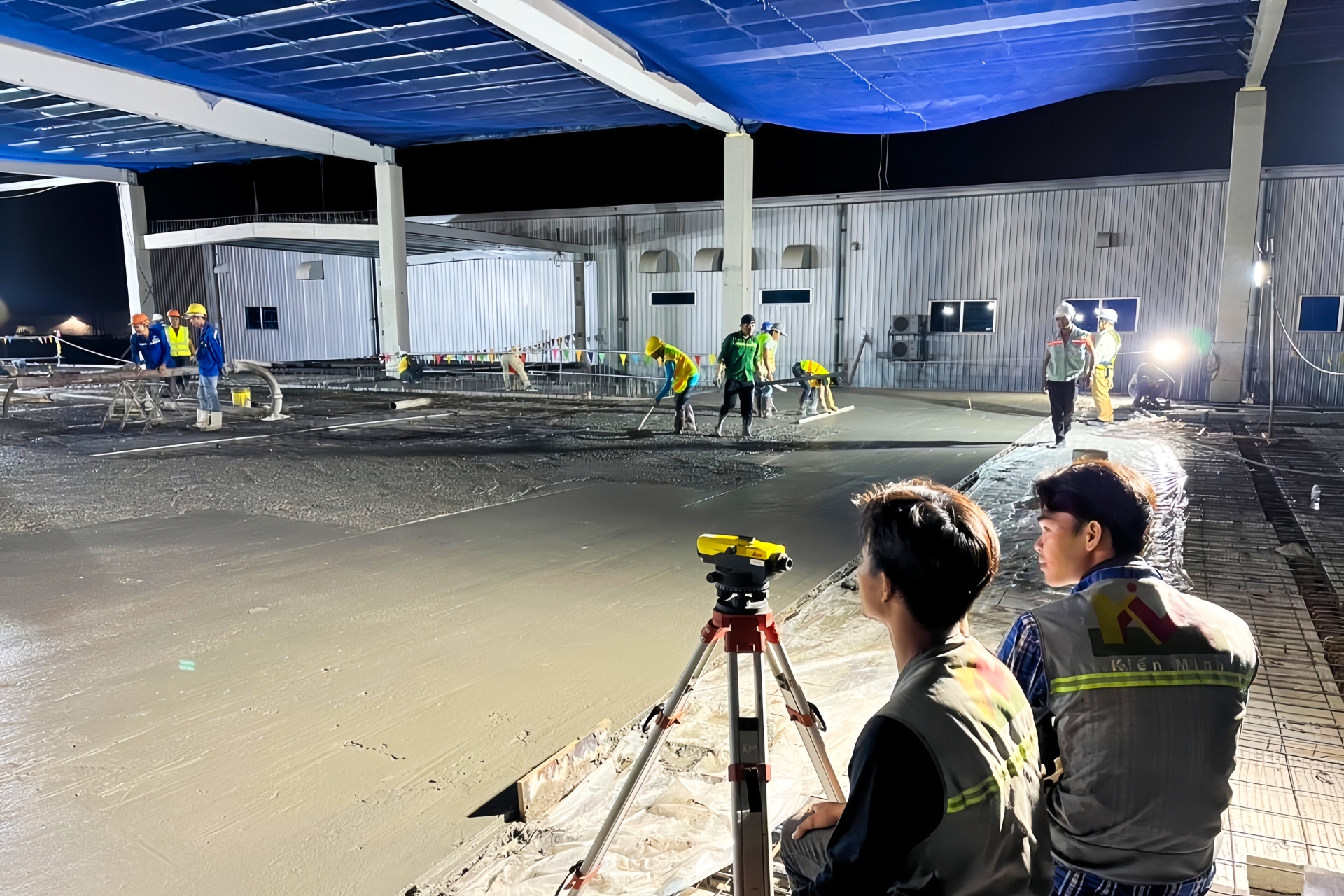 Common mistakes during slab construction
Slab construction process
Concrete pouring is the stage that determines the quality of a reinforced concrete slab. This process must be well-organized and closely supervised.
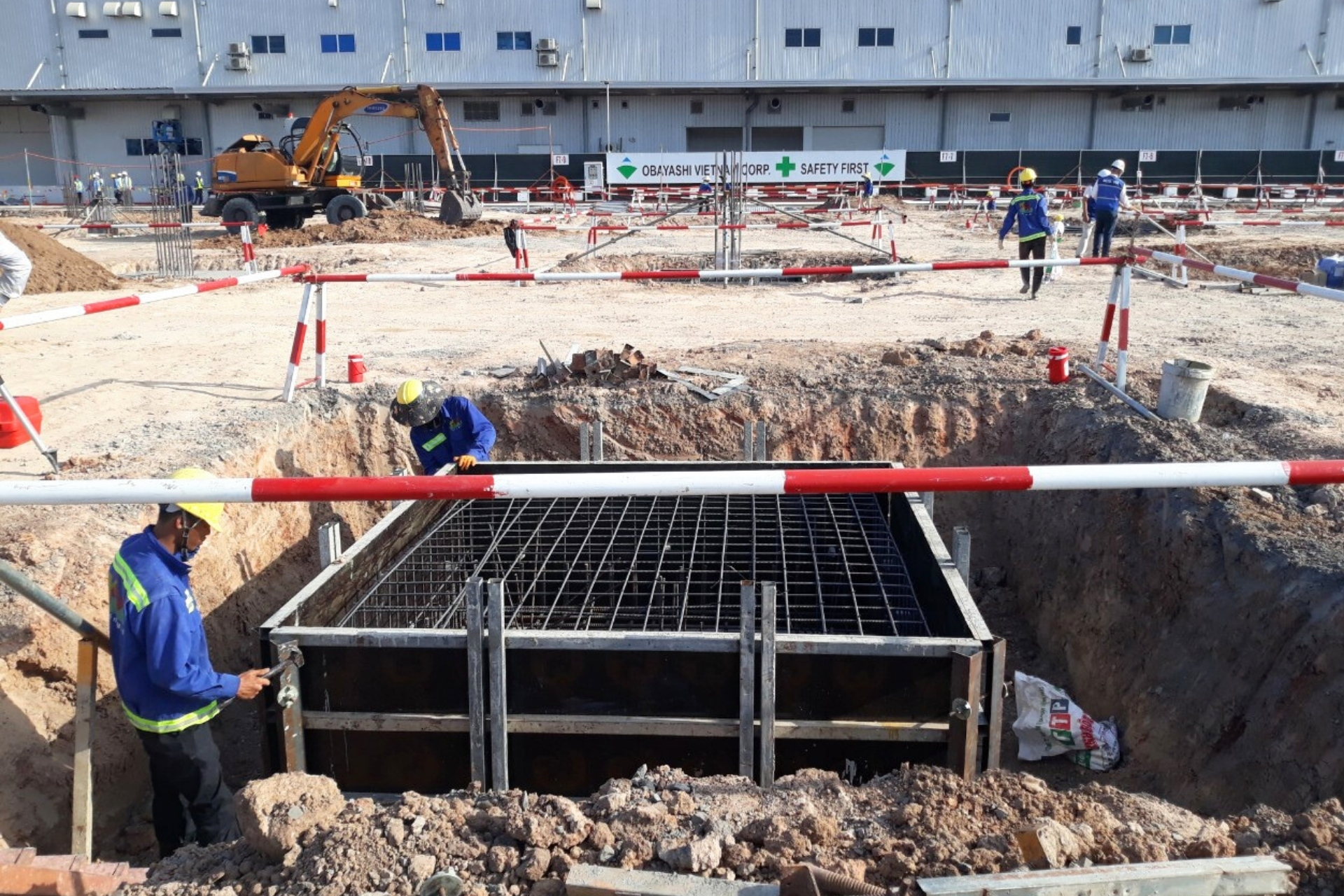
Before pouring, formwork and reinforcement must be thoroughly inspected and accepted. Reinforcement must be clean, free of mud, dirt, or oil. Formwork must be tight and firm to prevent concrete leakage.
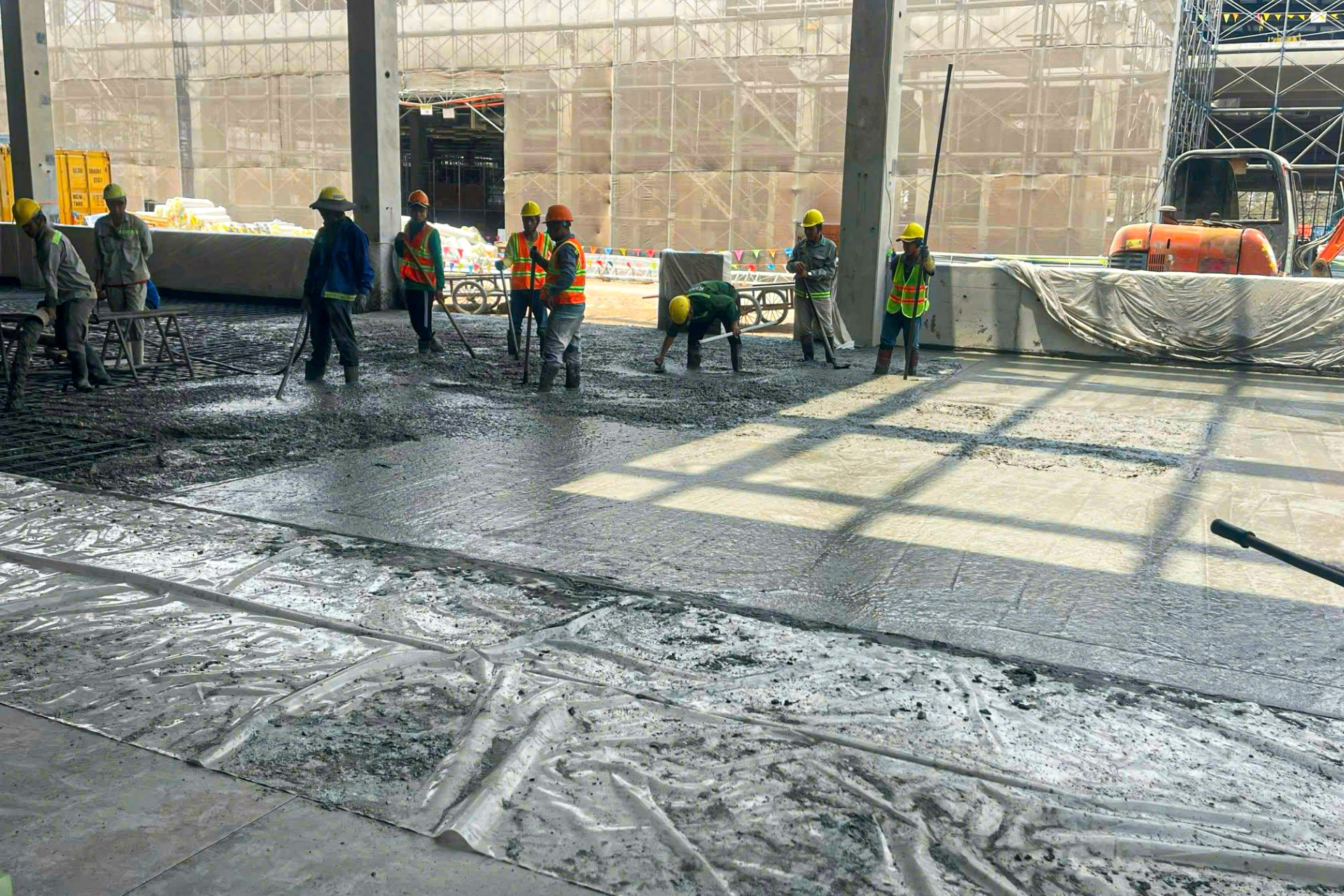
During pouring, concrete must be placed continuously and in the correct sequence to avoid segregation. The use of vibrators helps compact the concrete, reduce air voids, and improve bonding with the reinforcement.
After pouring, the slab surface must be finished flat and at the correct design elevation to serve subsequent finishing works.
Slab construction steps
Notes when carrying out slab concrete pouring
To ensure quality, the construction process must observe many important technical factors.
First, formwork must not be removed too early. The timing of formwork removal must comply with standards to ensure the concrete reaches sufficient strength.
Second, concrete curing must be carried out continuously during the early days. Maintaining moisture helps concrete develop optimal strength and limits shrinkage cracking.
Finally, loads acting on the slab during the early stage of use must be controlled. Placing heavy materials or carrying out overlapping construction too early may cause deflection and cracking.
 Notes when carrying out slab concrete pouring
Conclusion
Reinforced concrete slabs play the role of a key structural component and therefore directly affect the safety and lifespan of a building. A clear understanding of this structure helps investors select appropriate solutions that optimize both technical performance and costs.
This is an effective structural solution for many types of buildings. Contact TECO for consultation on optimal solutions for your enterprise’s projects.