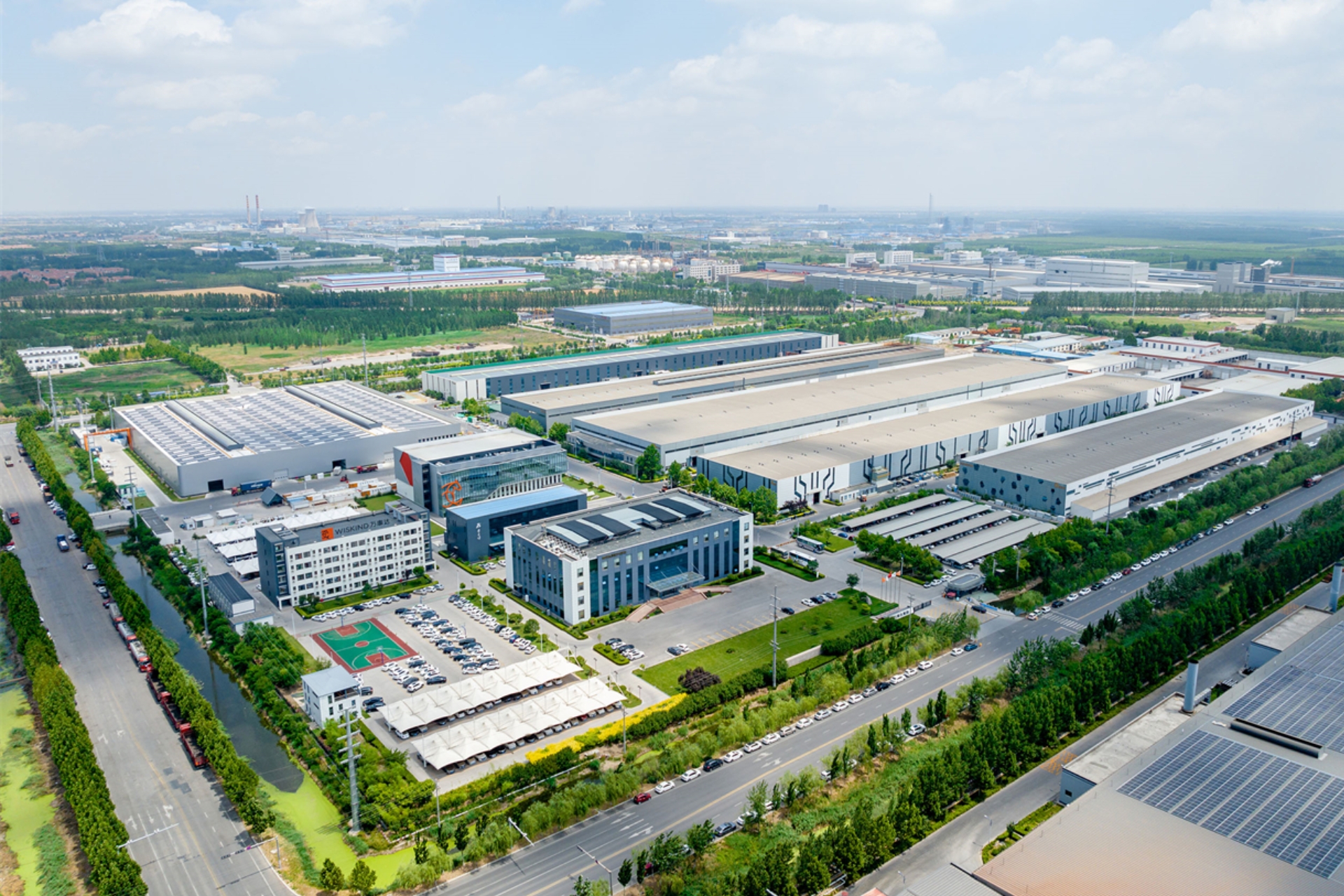

Modern Factory Office Models That Enhance Productivity
In the context of increasingly professionalized manufacturing, factory offices are no longer temporary auxiliary spaces. They are the workplaces of management teams, engineers, and administrative and technical departments. Office design directly affects operational efficiency, management capability, and the overall productivity of the factory.
A modernly designed factory office helps enterprises organize work more systematically, improve the working environment, and enhance a professional image. Conversely, if the design lacks proper planning, the office can become a bottleneck in the entire operational chain.
The following article will help you clearly understand the criteria for modern factory office models, while also referring to actual projects designed and constructed by TECO.
 Modern factory office project models that enhance performance
Criteria for designing modern factory offices to improve productivity
Scientific space planning and optimized circulation
Factory offices need to be located conveniently for management while not interfering with production activities. The circulation flow of office staff should be relatively separated from machinery and forklift routes. Scientific space organization helps save time and increase working efficiency.
Lighting, ventilation, and microclimate conditions
Offices within factories must be ensured sufficient lighting and air circulation. Priority should be given to utilizing natural light to reduce fatigue and save energy. Ventilation and air-conditioning systems should be designed separately to avoid drawing in hot air and dust from the production area.
Appropriate soundproofing and thermal insulation solutions
Noise and heat are major factors affecting productivity. Factory office design needs effective solutions for sound insulation, vibration reduction, and heat resistance. Partitions, ceilings, and floor structures must be properly treated to create a stable working environment.
Application of modern materials and technologies
Prefabricated, lightweight, and durable materials help speed up construction and allow easy future expansion. Energy-efficient lighting and air-conditioning technologies help reduce operating costs. Modern design prioritizes functional efficiency over form.
Ensuring occupational safety and fire protection standards
Factory offices must fully comply with occupational safety and fire protection regulations. Emergency exits must not be obstructed or affect safety corridors. Fire alarm systems, emergency lighting, and evacuation routes need to be clearly arranged and synchronized with the entire factory.
Megmilk factory office model designed by TECO
The Megmilk factory office project is a typical example of a modern, productivity-enhancing, separated factory office model. The office is reasonably separated from the production area while still ensuring effective supervision and internal connectivity.
The working space is designed to be neat, optimizing natural light and ventilation in line with the brand’s green color scheme. Finishing materials are simple, easy to maintain, and suitable for industrial environments. Functional rooms are organized scientifically, meeting the enterprise’s long-term operational needs.


Fujiya factory office model designed by TECO
With the Fujiya project, TECO applied a modern and flexible factory office solution. The office was designed in harmony with the overall factory architecture, creating a unified and well-organized appearance.
Soundproofing and thermal insulation solutions were emphasized to ensure a stable working environment. The office space not only meets functional requirements but also clearly expresses corporate identity.
The Fujiya project demonstrates that when factory office design is properly invested in, operational efficiency and work productivity improve significantly.


Notes when selecting a modern factory office model
Suitability to the specific manufacturing industry
Each manufacturing industry has different requirements regarding environment, safety, and functionality. Factory offices should be designed based on these specific characteristics rather than applying a one-size-fits-all model.
Avoid focusing on appearance while neglecting functionality
A beautiful factory office does not necessarily mean a complex design. Form should serve function and operation. Impractical designs will quickly reveal limitations once in use.
Balancing investment costs and long-term operating costs
Design costs are not limited to initial construction but also include operation and maintenance. Modern design should help enterprises save costs throughout the entire lifecycle of the project.
Conclusion
Modern factory office models are an important factor in helping enterprises enhance productivity, optimize management, and build a professional image. Proper design from the outset helps avoid mistakes, reduce costs, and establish a foundation for sustainable development.
With practical experience in factory office design and construction, TECO provides tailored solutions for each production model. If you are looking for an effective and long-term factory office solution, investing in a well-planned design is a necessary step.