

Standards for hospital design and construction for each functional room.
In the healthcare sector, each space carries its own role. Therefore, hospital design and construction cannot apply a single standard to the entire project. Each functional room is a “micro-system” with different requirements in terms of technical aspects, infection control, and operation. If there is a design mistake at one point, the entire system can be affected. Understanding the correct standards for each room is the foundation to ensure the project operates efficiently, safely, and sustainably. Let TECO explore in detail hospital design and construction for each functional room.
Explore in detail the functions of each hospital functional room
General principles when designing and constructing by each room
Before going into each specific space, hospital design and construction must comply with 4 core principles.
Clean – dirty zoning
This is the most important principle. All spaces must be organized according to the flow:
- Clean
- Intermediate
- Dirty
The movement flow of patients, staff, and materials must be separated. There must be no intersection between clean and contaminated zones.
Air pressure control
Each room has different pressure requirements:
Operating room: positive pressure
Isolation room, laboratory: negative pressure
The HVAC system must be calculated from the beginning. If done incorrectly, the risk of infection will increase.
Material selection
Materials in hospitals are not only for aesthetic finishing. They must meet:
- Antibacterial
- Dust-resistant
- Easy to clean
- No gaps
Wall corners are often curved to avoid the accumulation of bacteria.
Operational optimization
Design is not only for being “beautiful,” but must serve operation: reducing travel distance, increasing staff efficiency, and optimizing processing time. The core principle: design starts from operation, not from form.
Design and construction standards for each functional room
In hospital design and construction, each functional room is an independent technical system with its own requirements in terms of space, materials, environment, and operation. Understanding and correctly implementing standards for each area is the decisive factor for long-term efficiency.
Reception lobby, waiting area, registration area
The reception lobby is a high-traffic space and plays the role of regulating patient flow from the beginning. In hospital design and construction, this area needs to be organized based on clear zoning between reception – registration – waiting to avoid local congestion. The area must be large enough to accommodate peak hours while ensuring safe distances between seating positions. The lighting system should combine natural and artificial light, reaching 300–500 lux to create a comfortable feeling. Finishing materials such as floors and walls must be slip-resistant, stain-resistant, and easy to clean. In addition, the wayfinding system must be intuitive, helping patients navigate quickly without relying on staff.
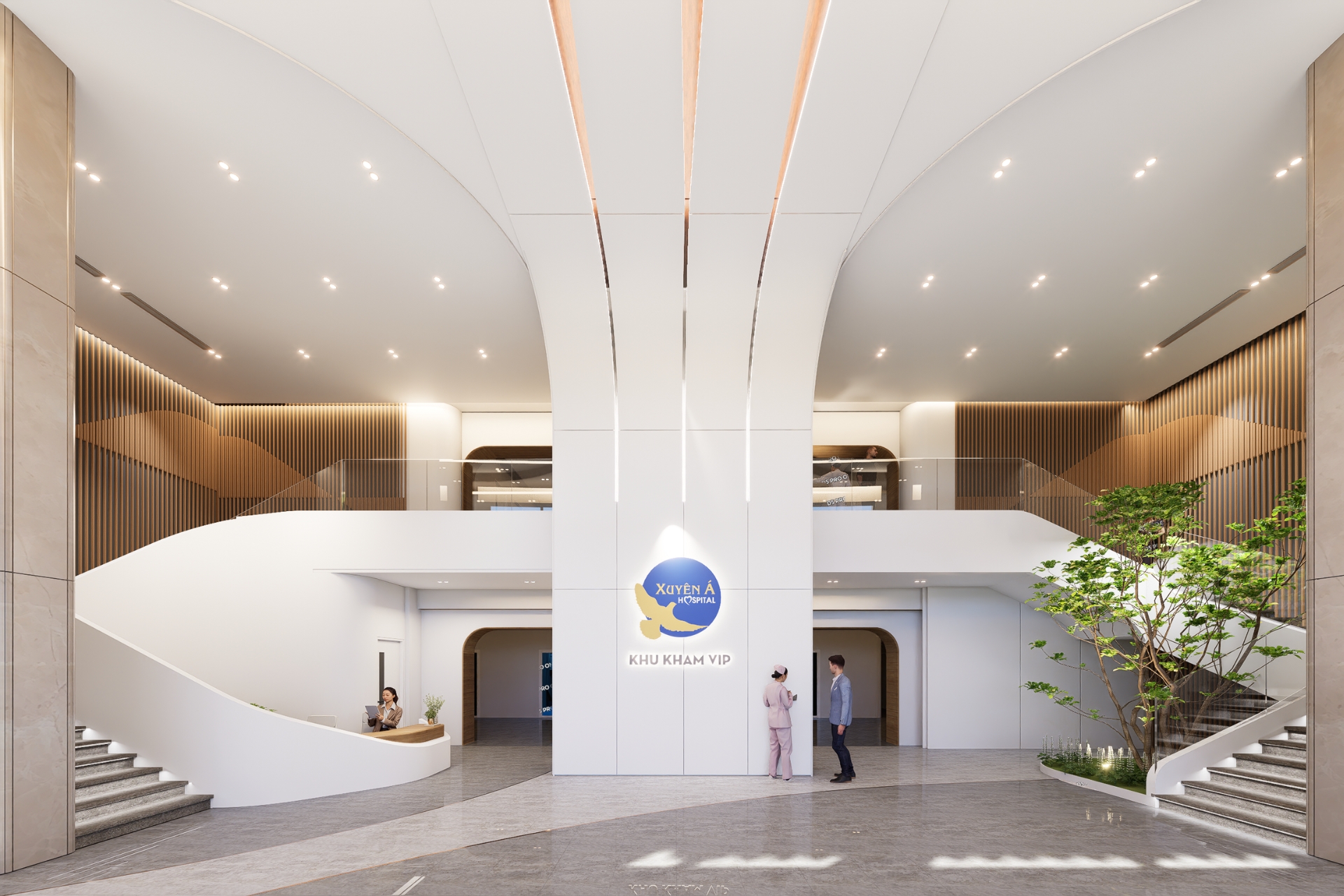 Reception lobby of the VIP Examination Area of Xuyen A Hospital constructed by TECO
Examination room
The examination room is a basic functional unit but has a high frequency of use, requiring a balance between functionality and privacy. In the process of hospital design and construction, examination rooms should be arranged with an area of about 10–15 m², clearly separating the clinical examination area and the consultation area. Sound insulation is required to ensure patient information confidentiality. The lighting system should reach 300–500 lux, focusing on the examination area to support accurate observation by doctors. Ventilation can combine natural and mechanical systems to ensure continuous air circulation. Interior materials must be antibacterial, minimizing gaps to avoid microbial accumulation.
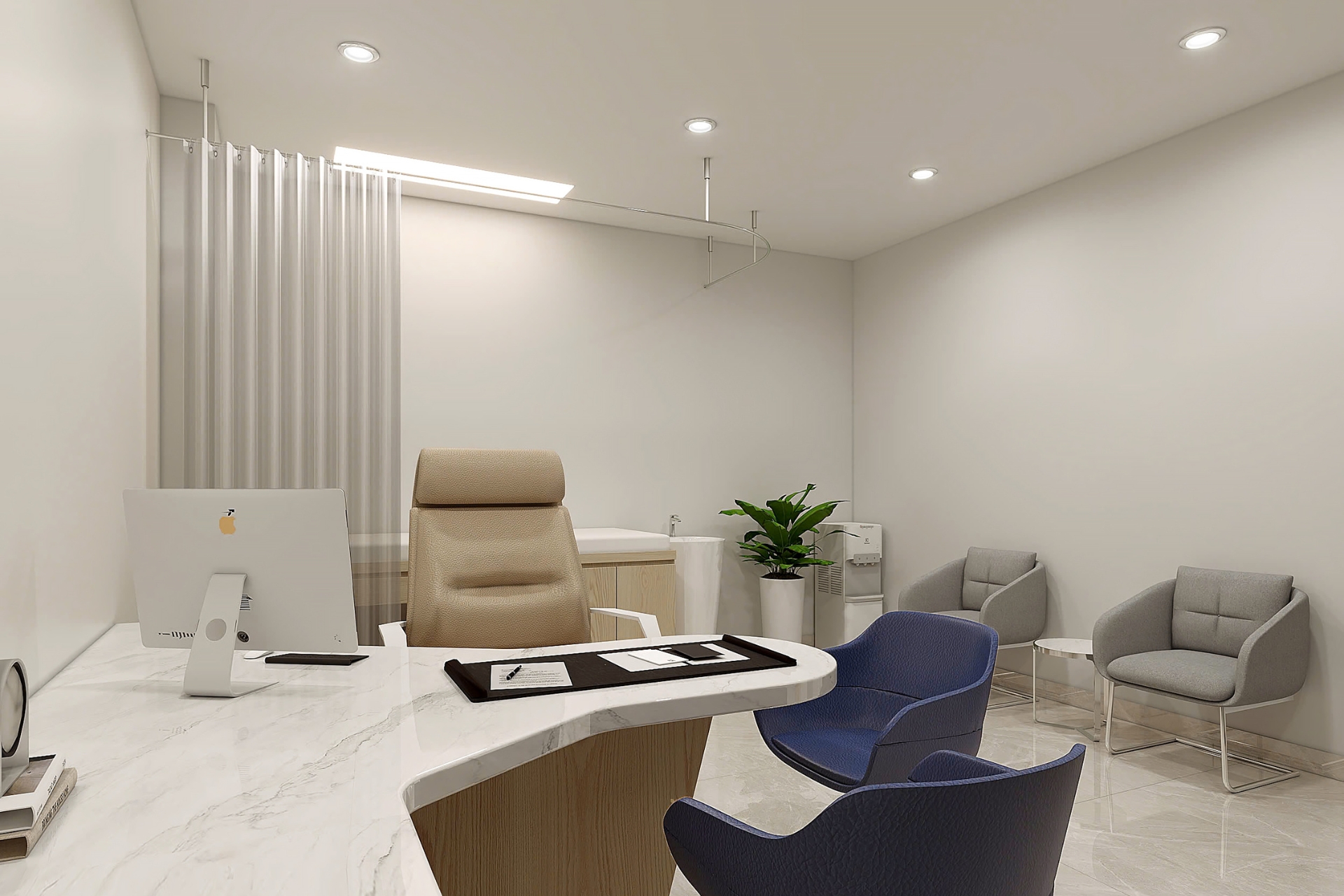 Examination rooms need to use antibacterial materials.
Paraclinical rooms
The paraclinical area includes laboratory testing and diagnostic imaging, which has high technical requirements in hospital design and construction. For laboratories, the sample transportation flow must be organized in a one-way direction from reception to analysis and storage, avoiding cross-contamination. The ventilation system must create negative pressure to prevent biological agents from spreading to the external environment, while integrating exhaust systems at working positions. Laboratory surfaces and walls must be resistant to chemicals and easy to disinfect. For diagnostic imaging areas, radiation shielding standards are mandatory, using materials such as lead walls or lead glass.
Inpatient rooms
Inpatient rooms are where patients stay for long periods, so in addition to technical factors, spatial experience plays an important role. In hospital design and construction, inpatient rooms need to be arranged with an appropriate number of beds, ensuring minimum distance between beds for convenient care. Each room should have a private restroom that meets anti-slip and easy-to-clean standards. Natural light should be maximized through large windows or skylights, combined with mechanical ventilation to maintain air quality. Materials used should be user-friendly, reduce noise, and create comfort. The current trend is to upgrade inpatient spaces toward higher comfort, better supporting the recovery process.
Operating room
The operating room is the area with the strictest standards in the entire hospital design and construction. The space must be divided into clear zones: clean area, buffer area, and dirty area, with one-way movement flow to ensure absolute infection control. The HVAC system plays a key role, maintaining positive pressure in the operating room to prevent external bacteria from entering, while using HEPA filters to ensure air cleanliness. Temperature is usually maintained between 20–24°C and humidity at 45–60%. All wall, ceiling, and floor surfaces must be seamless, without gaps, using antibacterial and easy-to-clean materials. Wall corners are curved to minimize dust and microbial accumulation.
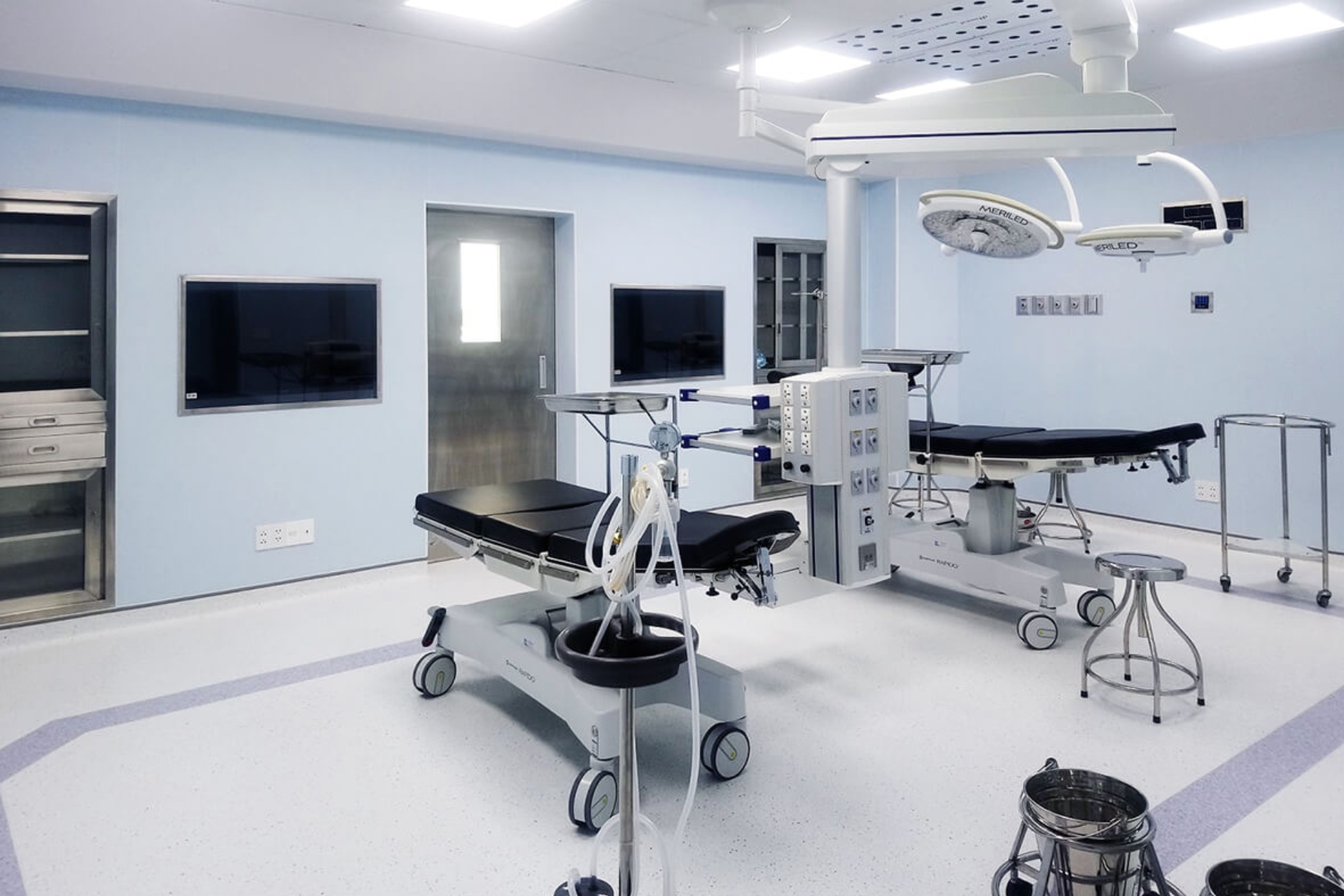 The operating room is the area with the strictest standards in the entire hospital design and construction
Emergency room
The emergency room requires a design optimized for speed and rapid response. In hospital design and construction, this area should be located near the main entrance or ambulance access, and directly connected to key departments such as diagnostic imaging, operating rooms, and ICU. The internal space must be large enough to access patients from multiple directions, supporting emergency procedures. Technical systems must ensure continuity, including backup power, medical gas, and ready-to-use emergency equipment. Lighting design must be strong and uninterrupted to ensure accuracy in handling situations.
ICU room
The intensive care unit is an area with high requirements for environmental control and continuous monitoring. Each ICU bed requires a larger area than a standard inpatient room, ensuring space for equipment and medical operations. The layout must allow staff to observe patients from a central nursing station. Medical gas systems are integrated at the bedside, along with continuous backup power to ensure uninterrupted treatment. Depending on the purpose, ICU rooms can be designed with positive or negative pressure. Finishing materials must meet high antibacterial standards and be easy to clean, especially minimizing the risk of cross-infection.
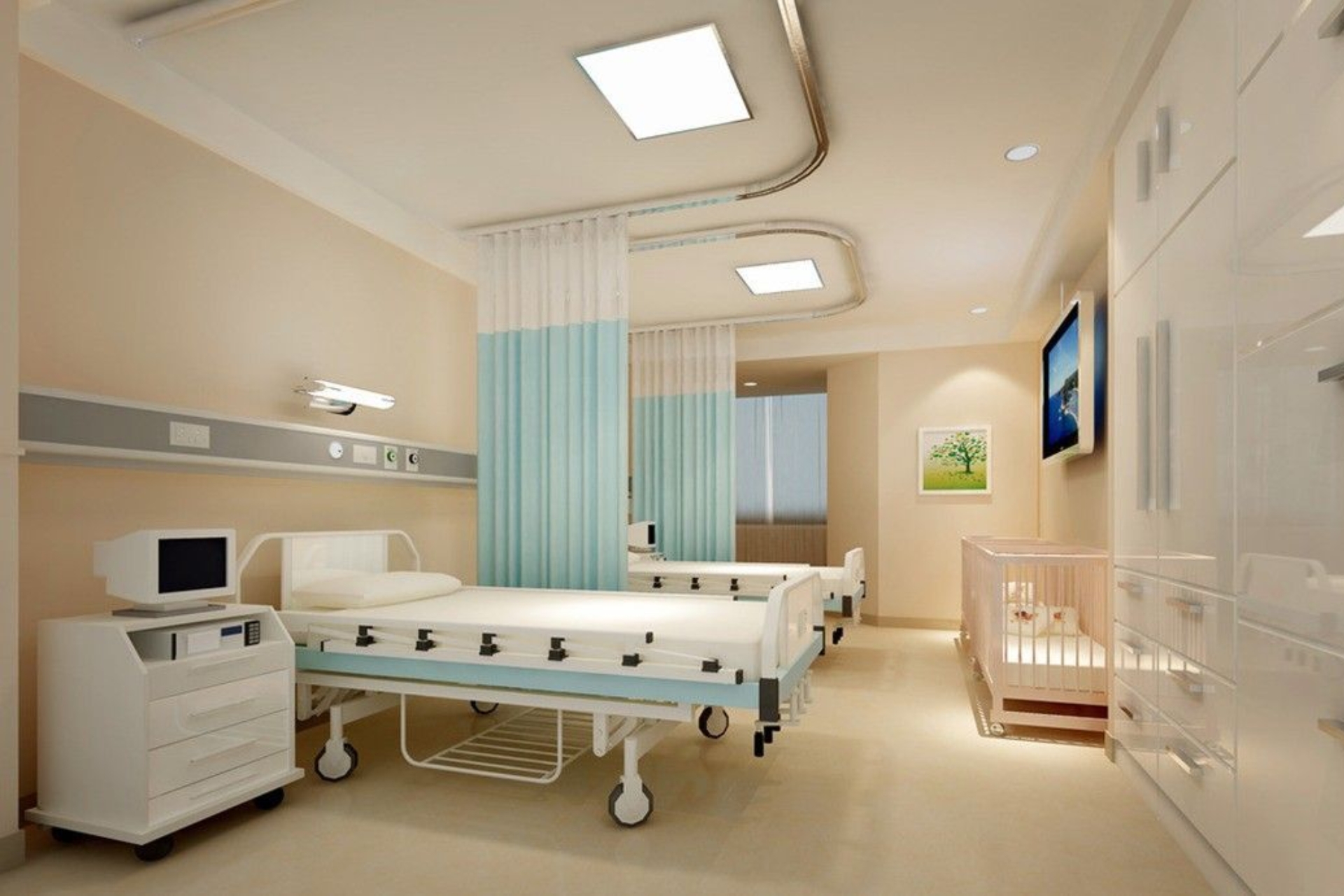 Each ICU bed requires a larger area than a standard inpatient room
Sterilization department (CSSD)
The sterilization department is the center of infection control in the hospital, supporting the entire system. In hospital design and construction, the CSSD must be organized according to a strict one-way flow principle: from dirty instrument receiving to washing, sterilization, and clean storage. These areas must be clearly separated and must not intersect. The air pressure system is zoned, with dirty areas maintained at negative pressure and clean areas at positive pressure. Sterilization equipment must be arranged appropriately to optimize operational processes. This is an area that directly affects the infection control quality of the entire hospital.
Conclusion
Hospital design and construction is one of the most complex fields in construction. Each functional room has its own standards and directly affects the entire system.
A correct design not only ensures functionality, but also increases treatment efficiency, reduces infection risks, and optimizes operational costs. In the context of the rapidly developing healthcare sector, investing properly in design from the beginning is the key factor determining the long-term success of a hospital. A hospital is not just a building. It is a living system, where every design detail impacts human health. TECO hopes this article has helped clarify the standards for each functional room to ensure effective hospital operation