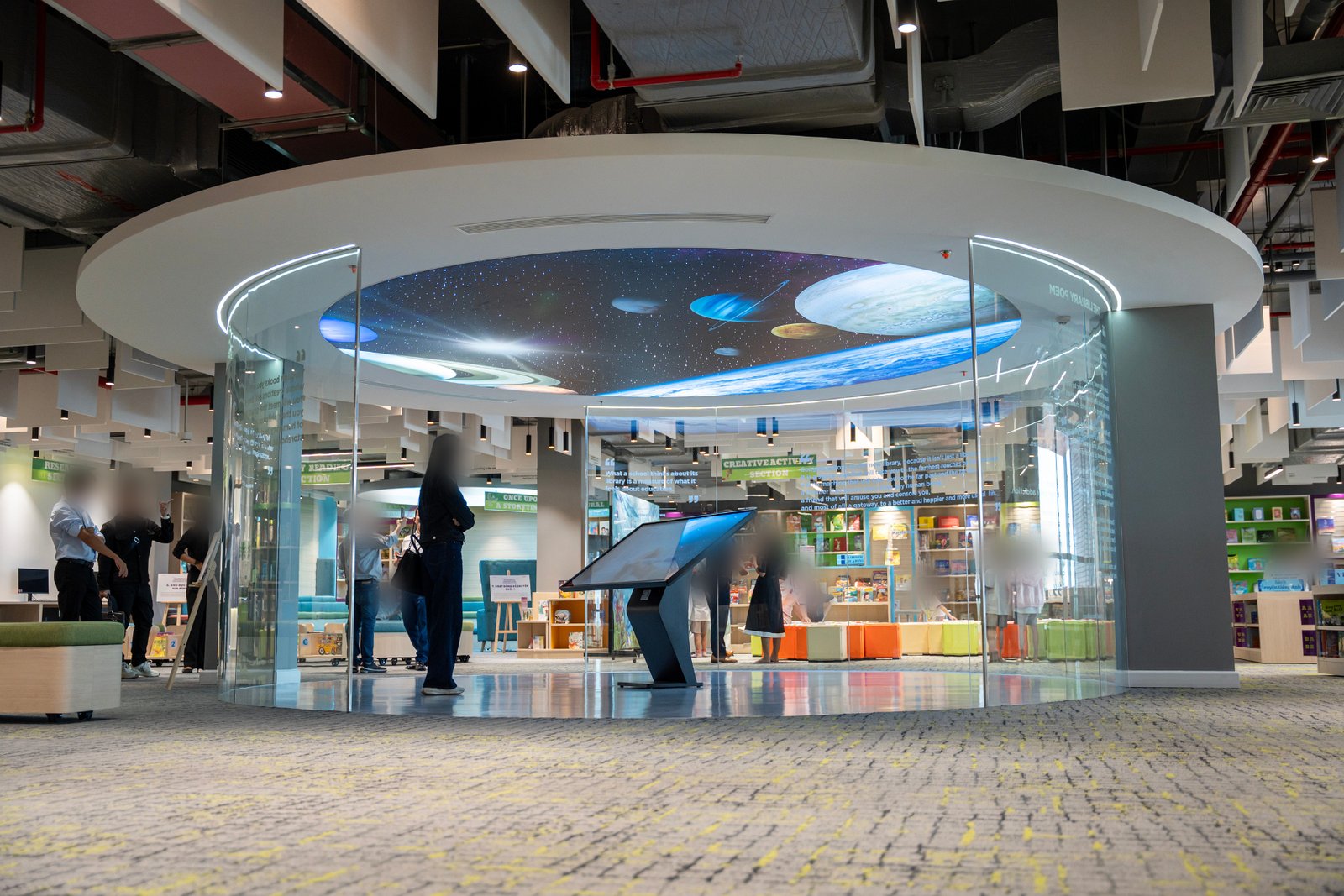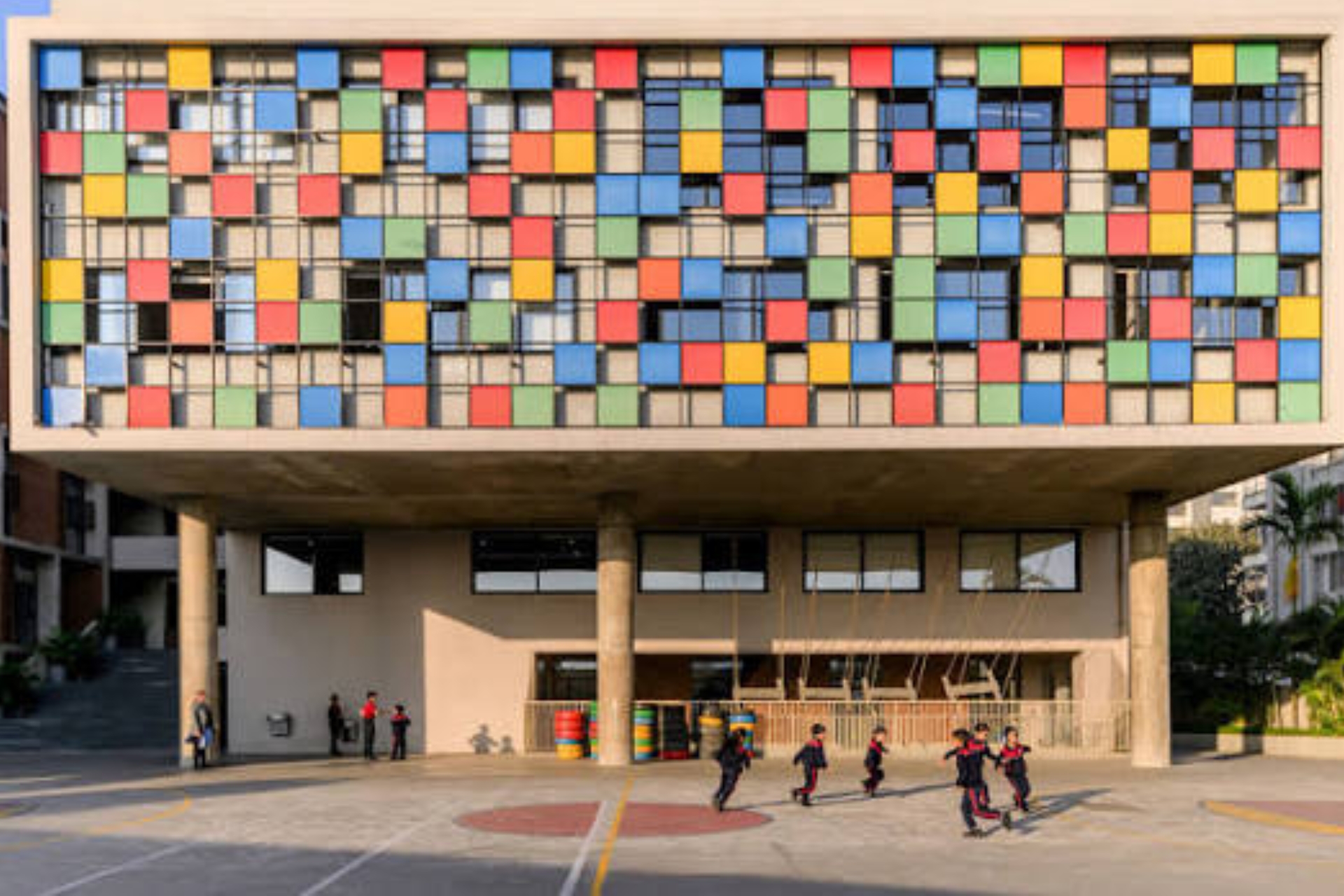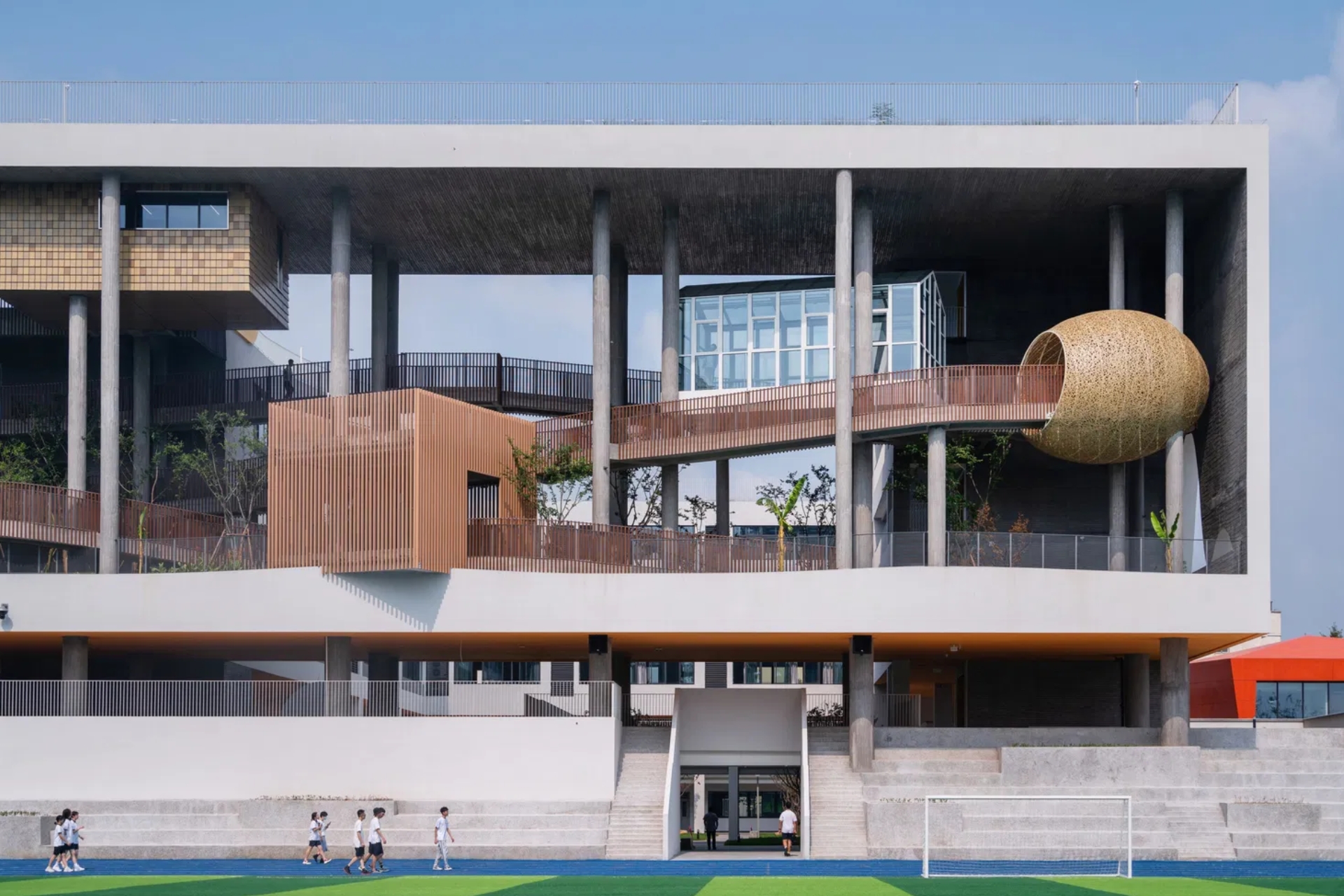
In modern education trends, learning spaces are no longer confined within the four walls of a classroom. Open library design is becoming a preferred choice for many international schools thanks to its ability to stimulate thinking, promote interaction, and nurture a spirit of lifelong learning for students. Join TECO in taking a deeper look at open library design in international schools.
What is an open library in the context of international education?
An open library is a library model designed in an open, flexible, multifunctional spatial orientation, allowing students to freely access knowledge, exchange ideas, and learn in various ways.
Unlike traditional libraries that emphasize absolute silence, open library design in international schools focuses on:
The connection between people and space
Learner autonomy
Flexible transformation according to different activities
The library is not only a place for reading, but becomes the learning – creative – academic communication center of the entire school.
 What is the concept of an open library?
The role of open libraries in the modern international school model
In international schools, open libraries play the role of a “learning hub” – a center connecting both curricular and extracurricular learning activities.
This space supports: individual learning and group learning, research, presentations, project work, the development of critical thinking skills, and the formation of self-directed learning habits. Through open library design, students are empowered to choose the learning methods that best suit them, in alignment with the learner-centered education philosophy.
Advantages of open library design in international schools
Enhancing interaction and collaborative learning
One of the greatest advantages of open library design is its ability to promote interaction.
Open spaces eliminate rigid boundaries between areas:
Students can easily exchange ideas
Study groups form naturally
Teachers take on the role of facilitators
This environment is particularly suitable for Project-Based Learning, which is widely applied in international schools.
 One of the advantages of open libraries.
Flexible, multifunctional space
Open libraries can quickly transform their functions: reading and research areas, group study zones, workshops, academic events, exhibitions.
As a result, open library design helps optimize usable space while meeting diverse learning needs within a single environment.
Creating an inspiring learning environment
Space directly affects students’ emotions and their ability to absorb knowledge. Open libraries are often designed with: neutral, soothing color palettes; environmentally friendly materials; modern and approachable layouts. All of these elements contribute to creating a positive learning environment, where students want to stay longer to read, explore, and create.
Enhancing the image and standards of international schools
A well-invested open library clearly reflects:
The school’s educational vision
Its level of alignment with international trends
Its commitment to holistic student development
Therefore, open library design in international schools is also an important factor in brand building and attracting parents.
International-standard principles for open library design
Flexibility in spatial layout
The first and most important principle is flexibility in spatial layout. Open libraries should not be designed with rigid structures or fixed partitions. Instead, the space should be organized into soft functional zones that can be easily adapted to different learning activities. Low bookshelves, movable furniture, changes in floor levels, or finishing materials allow the library to quickly shift from a quiet reading space to group study areas, project work zones, or academic event spaces. This approach is particularly suitable for international education programs that emphasize active and collaborative learning.
 Flexibility in spatial layout
Natural lighting and artificial lighting solutions
Lighting is a core element in international-standard open library design. Natural light should be maximized through large windows, skylights, or glazed façades with radiation control. Natural light not only saves energy but also improves students’ concentration and mood. At the same time, artificial lighting systems must be designed according to each functional zone, ensuring stable, non-glare lighting suitable for prolonged reading, research, and discussion.
Acoustics and noise control
A major challenge of open libraries is noise control. Open space does not necessarily mean noisy space if acoustics are handled properly. In open library design, sound-absorbing solutions should be integrated from the outset, from ceilings and walls to floors and furniture. As a result, the library can maintain multiple levels of quietness within the same space, encouraging interaction while still ensuring the necessary focus for individual learning.
Flexible, student-friendly furniture
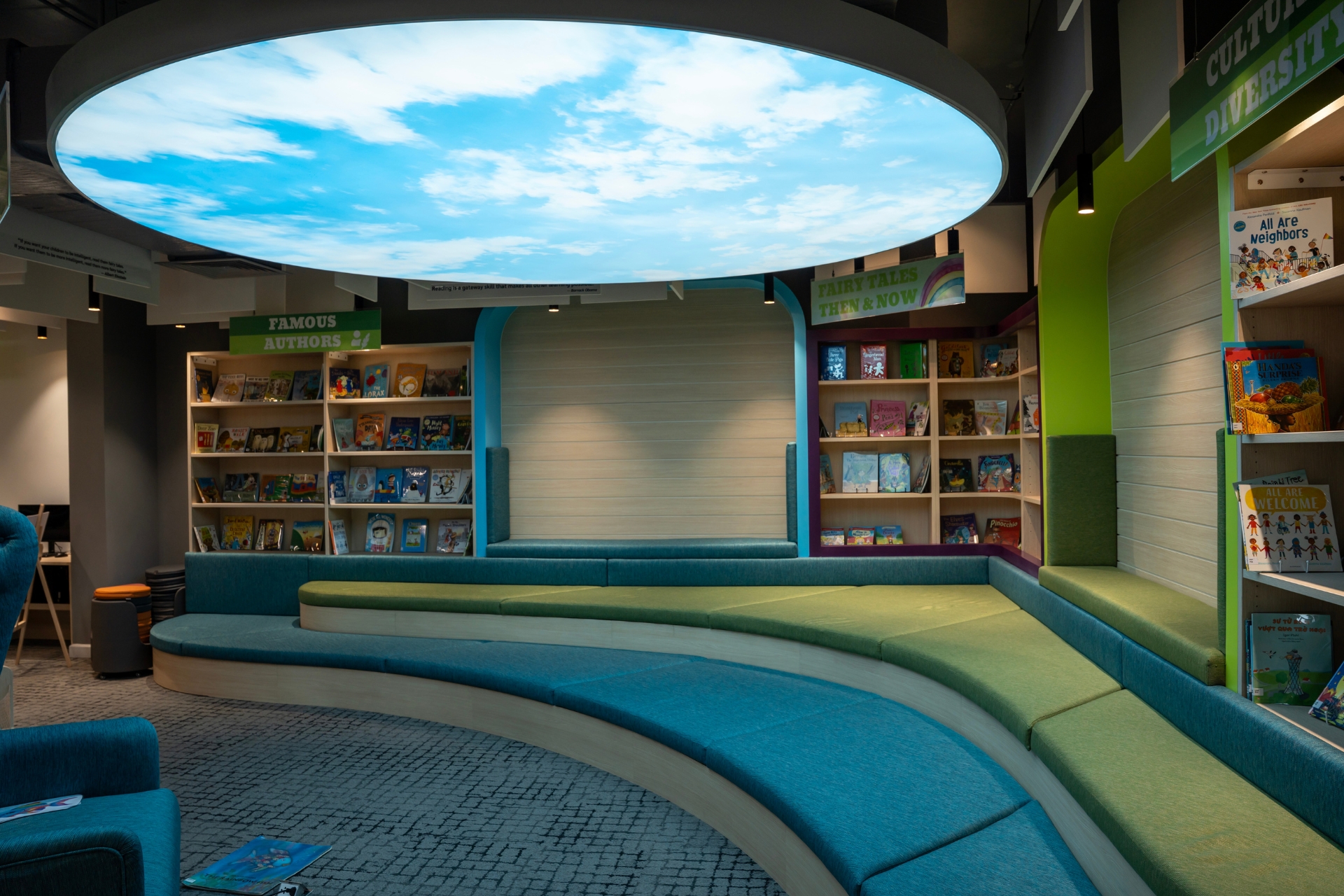
Furniture plays a direct role in shaping user experience. In open library design, furniture must not only be aesthetically pleasing but also flexible, safe, and suitable for different student age groups. Modular desks and chairs, individual reading chairs, soft seating areas, or multifunctional stepped seating allow students to freely choose postures and learning styles that suit them best. This diversity enhances autonomy and comfort when using the library.
 Flexible, student-friendly furniture
Integration of digital learning technology
Digital learning technology is an indispensable component of modern open libraries. International-standard libraries not only store printed books but also integrate digital resource search systems, shared learning devices, and robust connectivity infrastructure. The harmonious combination of physical space and technology turns the library into a point of convergence between traditional knowledge and digital learning methods, meeting the learning needs of global students.
Application of open library design in real international school settings
Application at the international primary school level
At the international primary school level, open libraries are designed with the goal of sparking a love for reading and helping form positive learning habits from an early age. Spaces are typically open and friendly, using bright colors and furniture sized appropriately for young children. Reading areas are arranged at low, safe levels and combined with storytelling spaces, interactive reading, and creative activities. Thanks to open library design, primary students can freely explore knowledge in a friendly, pressure-free environment, nurturing curiosity and proactive learning spirit.
 Application at the international primary level
Application at the secondary school level
For secondary education, open library design in international schools focuses more on supporting in-depth learning and independent research. Libraries are organized into flexible zones that simultaneously accommodate individual and group learning needs. Quiet areas for reading and research are harmoniously arranged alongside group workspaces, discussion zones, and presentation areas. The integration of digital learning technology enables the library to become a place where students prepare for international academic programs, while also developing critical thinking and teamwork skills.
Application in bilingual school
In bilingual and K–12 school models, open library design plays the role of a multidimensional connective space. The library must be flexible enough to serve multiple age groups, curricula, and teaching methodologies. Open spaces help optimize area usage while enabling students across levels to share learning resources, interact, and learn from one another. This approach contributes to building a shared learning culture and enhancing community spirit within the international education environment.
Conclusion
Open library design is not merely an architectural trend, but a strategic educational solution in international schools. When invested in according to proper standards, open libraries become the heart of knowledge where thinking, inspiration, and learning aspirations of global citizens are nurtured. TECO hopes this article has helped you gain a clearer understanding of the advantages and practical applications of open libraries in international schools.