Common Mistakes in International School Library Design
In modern education, the school library is no longer an auxiliary space. It is the center for learning, research, and creativity for students. For international schools, this role is even more clearly defined. Libraries need to support self-directed learning, collaborative learning, and the development of global skills. However, in reality, many library projects still suffer from basic design mistakes. These errors prevent libraries from fully realizing their intended value. In some cases, libraries even become inefficient in long-term operation.
Identifying common mistakes in international school library design is an important step. This helps schools optimize their investment. At the same time, libraries can truly serve modern educational philosophies. Join TECO in exploring the common mistakes in international school library design.
Designing libraries based on traditional models, lacking openness
A common mistake is applying traditional library models to international school libraries. Spaces are subdivided. Tall bookshelves and rigid partitions are densely arranged. This layout focuses more on storage than on the learning experience. Students find it difficult to interact. Group learning and discussion are limited.
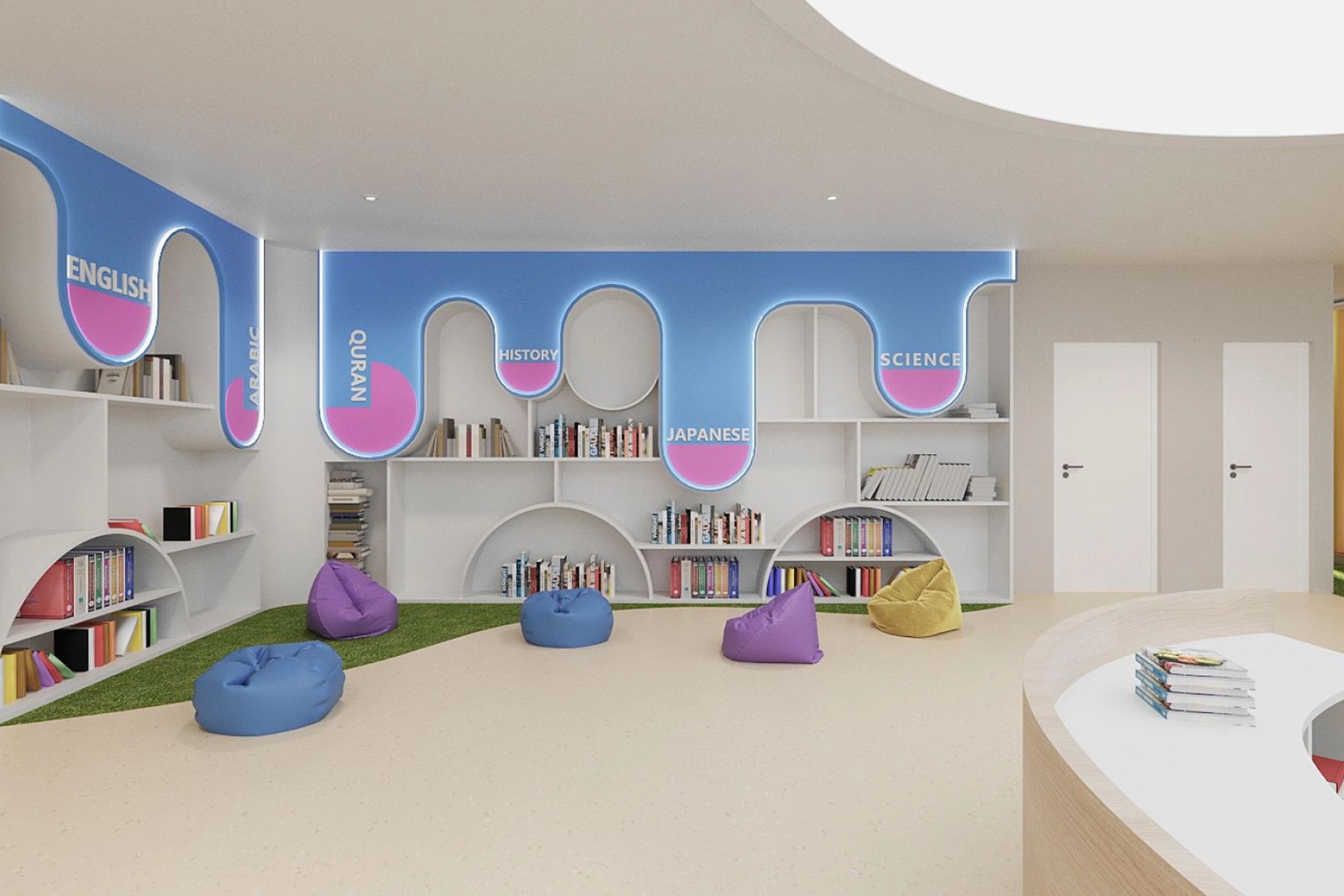
In an international education environment, libraries need openness. Spaces must encourage movement and interaction among students. When libraries lack openness, students use them less. Over time, libraries no longer maintain their role as the academic center of the school.
 Designing libraries according to traditional models, not open design.
Lack of clear functional zoning in school libraries
Many school libraries are designed as a single shared space. All activities take place in the same area. Reading, group study, and events overlap. This causes distractions for users.
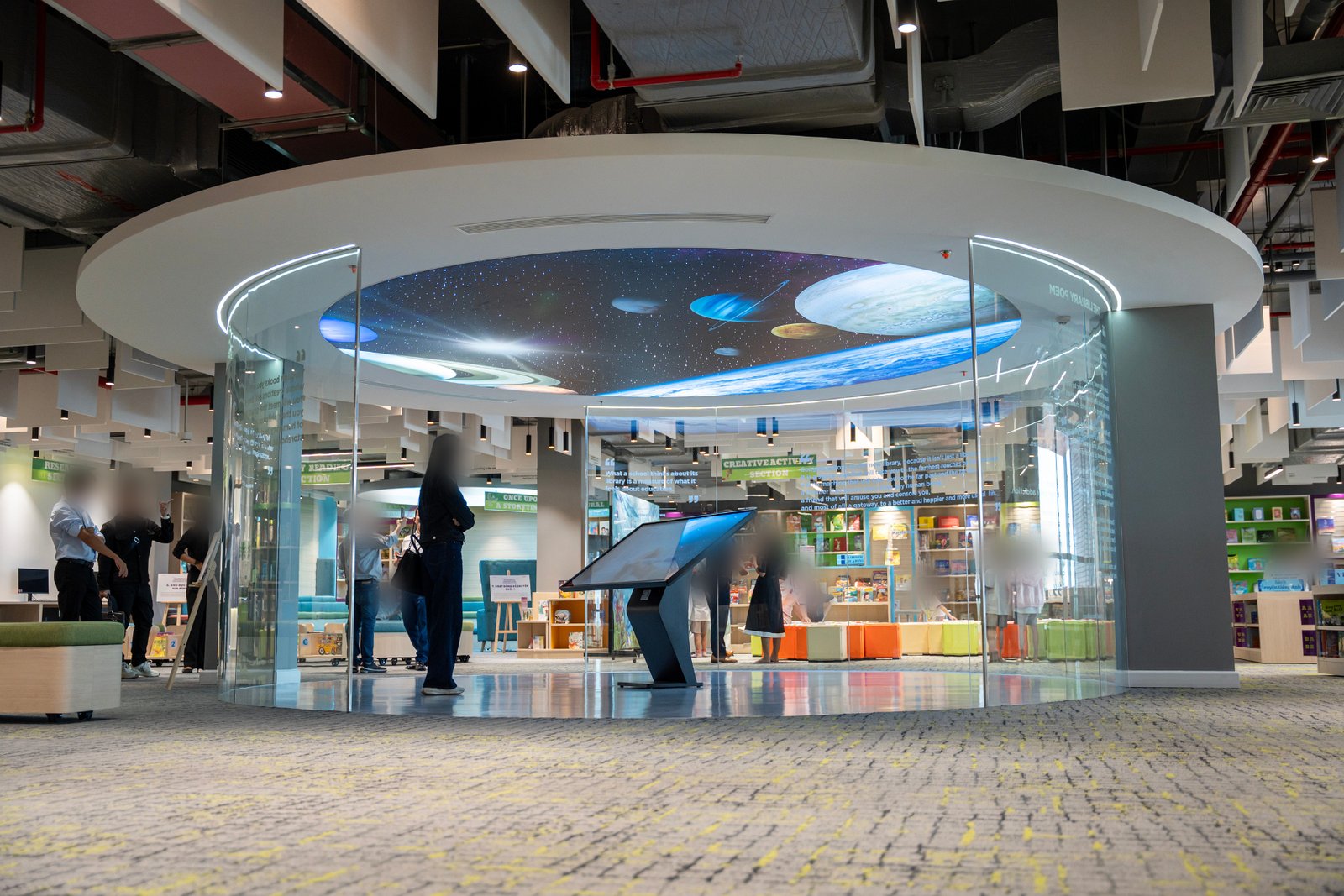
International-standard libraries require clear functional zoning. Quiet reading areas should be relatively separated. Group study areas need flexible space. Creative and technology zones should be arranged appropriately. Good zoning helps libraries operate more effectively. Students can also easily choose spaces that suit their needs.
Poor control of acoustics and noise
Acoustics are often overlooked in school library design. Open spaces without proper sound-absorbing solutions become noisy. Voices and sounds reverberate continuously. Students struggle to concentrate while reading and researching. This particularly affects individual learning activities.
In addition, many libraries lack appropriate noise-control materials. Acoustic ceilings or soft materials are often not used. Hard floors and smooth walls cause strong sound reflection. When noise is not controlled, the library loses the essential quietness it requires. This reduces the overall learning quality throughout the space.
Failure to control noise in library spaces
Ignoring natural lighting and academic lighting solutions
Lighting plays an important role in school libraries. However, many projects do not take advantage of natural light. Windows are small or poorly positioned. Artificial lighting systems also fail to meet educational standards.
Insufficient lighting causes eye strain. Excessive glare reduces concentration. Over time, this affects students’ health. International library design must ensure even, soft, and stable lighting. Natural and artificial lighting should be harmoniously combined.
Rigid furniture, lacking flexibility for multiple age groups
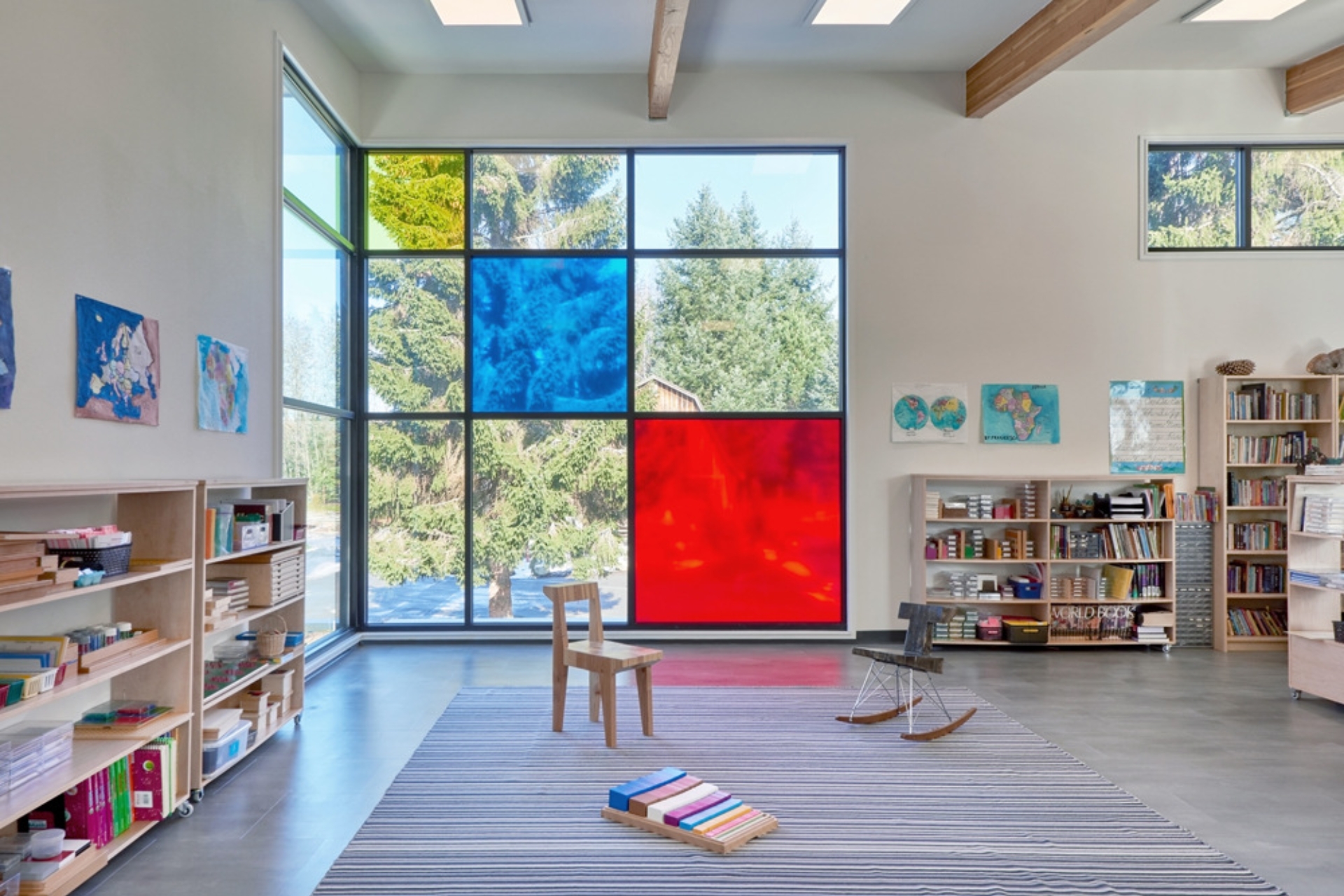
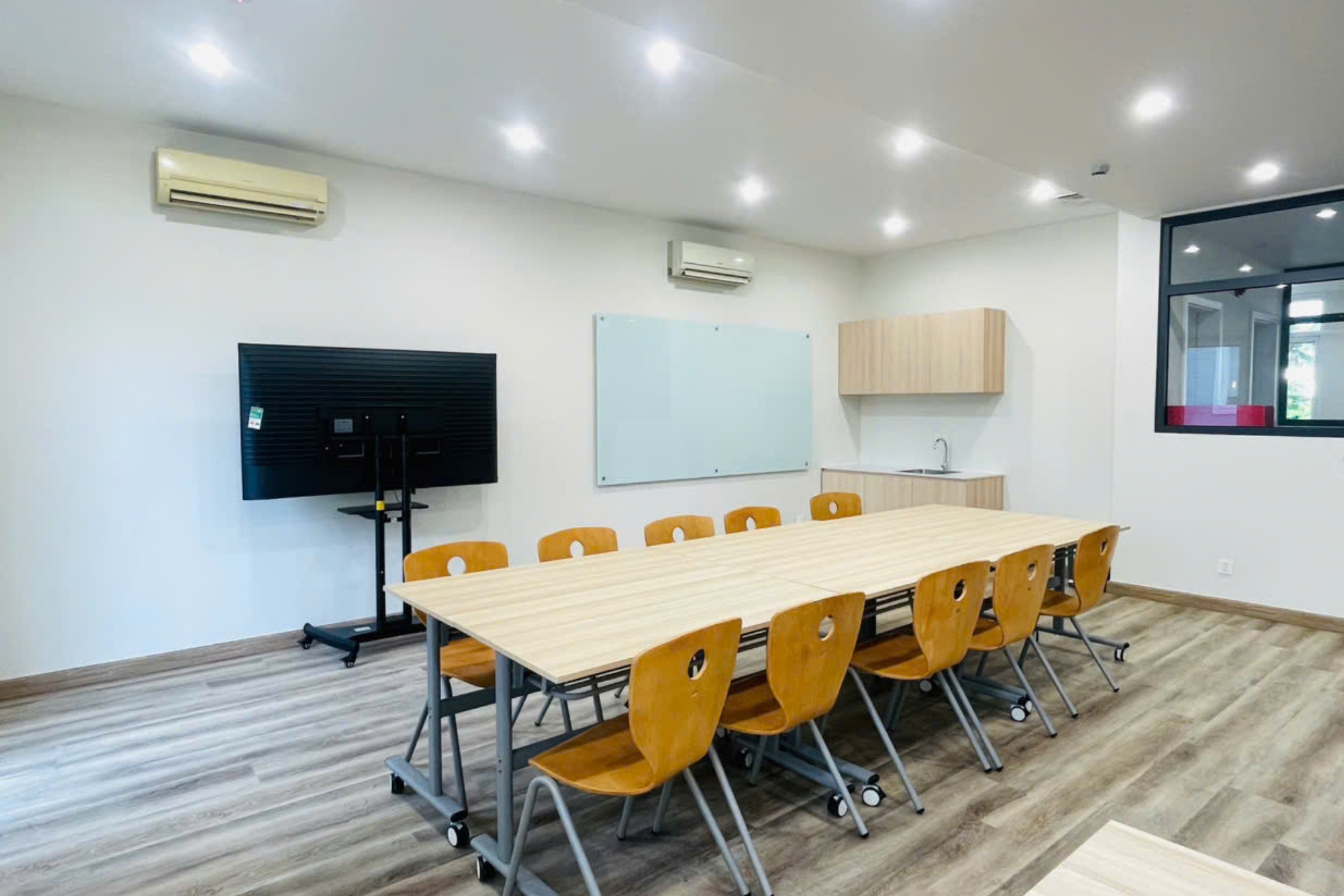
International school libraries often serve multiple grade levels. However, furniture is frequently designed uniformly. Tables and chairs are fixed and difficult to move. Sizes are not appropriate for different age groups. This makes it difficult for students to change learning postures.
Inflexible furniture also limits group activities and creativity. Students do not feel comfortable using the library. An effective library requires ergonomic furniture. Tables and chairs must be adjustable, movable, and safe for students.
 Furniture lacking flexibility
Visually attractive design but unsuitable for real operation
Many school libraries are heavily invested in aesthetics. The spaces are visually appealing and impressive. However, operation becomes difficult. Circulation paths are impractical. Storage areas are hard to manage. Library staff encounter many obstacles in daily use.
When design does not align with actual operation, libraries are easily left unused. Students use them less. Investment value is not fully realized. An effective library must be both beautiful and easy to operate at the same time.
Failure to integrate modern learning technology
Technology is an essential component of international school libraries. However, many libraries still focus only on printed books. Technological infrastructure is not adequately invested in. There is a lack of digital learning devices and multimedia spaces.
This prevents libraries from keeping pace with international education programs. Students face limitations in digital research and learning. Modern libraries need to connect traditional resources with technology.
 Failure to integrate modern learning technology
Lack of alignment with international education programs
Each international education program has its own philosophy. School library spaces need to reflect that philosophy. However, many libraries are designed using generic templates. Little research is conducted on the actual curriculum being implemented.
When libraries are not aligned with the education program, their effectiveness is significantly reduced. Libraries fail to support appropriate teaching methodologies. This directly affects the quality of student learning.
TECO – A reputable international school library design and construction firm
TECO is an experienced unit in the design and construction of international school libraries. Many projects have been successfully delivered by TECO. Each project is carefully researched based on the specific educational program. Designs closely follow modern learning philosophies.
TECO focuses on optimizing functionality, user experience, and operational efficiency. At the same time, the school’s brand image is enhanced. Libraries are not only visually appealing but also operate effectively. This is the sustainable value that TECO delivers to international schools.
Related services: International school & kindergarten design & build · After-handover maintenance – TECO MSC