
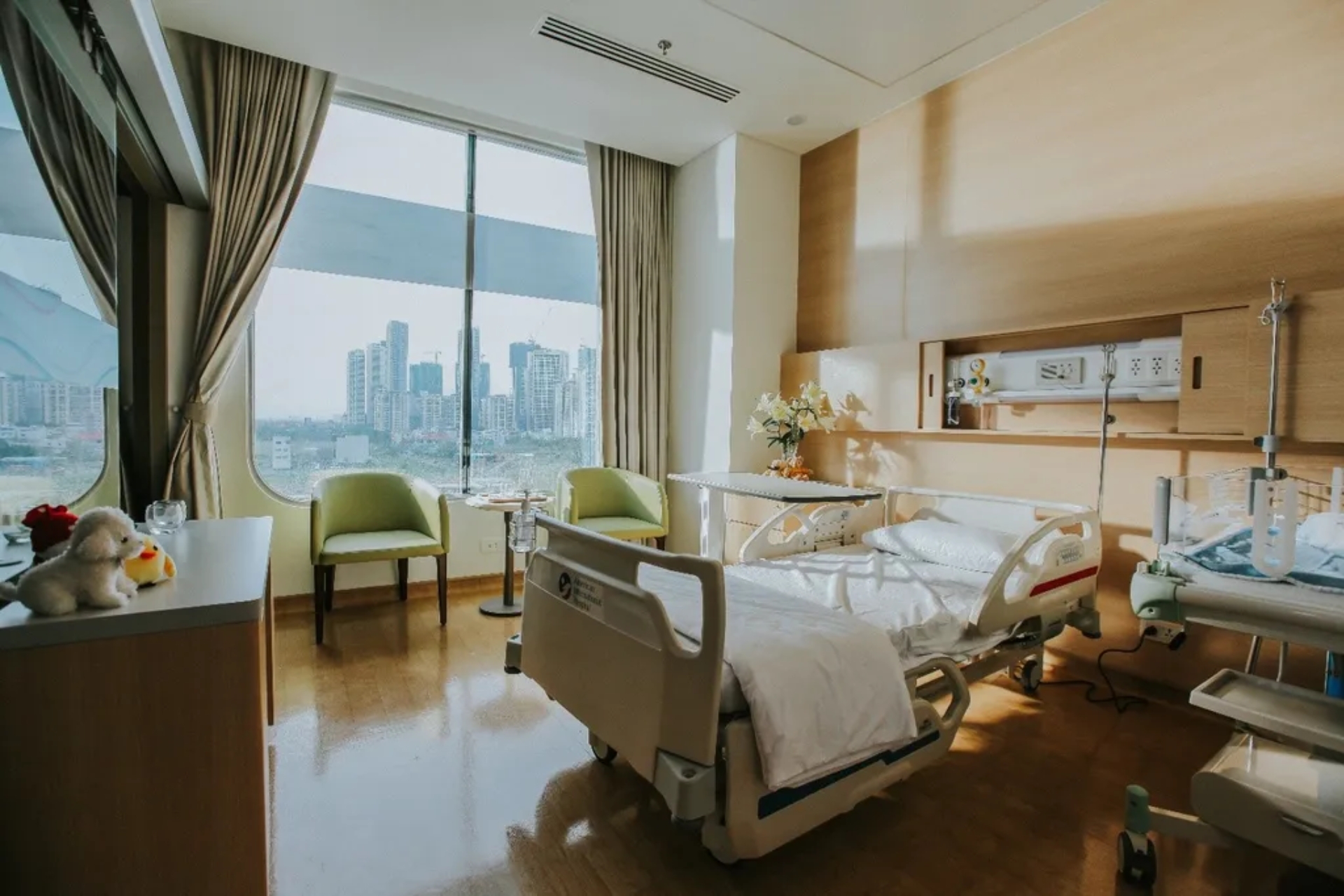
Hospital Design Meeting JCI Standards: The Foundation for a World-Class Healthcare System
In the context of the global healthcare industry undergoing strong transformation, hospitals are no longer merely places for treatment but have become comprehensive healthcare ecosystems. Today’s patients expect more: safe spaces, comfortable experiences, and effective treatment processes.
Therefore, JCI standards are increasingly considered the “gold standard” for evaluating hospital quality. However, to achieve this certification, the core factor lies not only in operations but begins with design from the very early stage. Join TECO in exploring the international JCI standards in detail through the article below.
 Hospital Design Meeting JCI Standards
What are JCI standards and why are they important?
Joint Commission International (JCI) is one of the world’s most reputable healthcare quality accreditation organizations, with a system of standards applied in more than 100 countries.
Unlike many other sets of standards, JCI standards not only evaluate treatment quality but also cover the entire hospital system, including:
- Patient Safety
- Quality of Care
- Risk Management
- Infection Control
The key point is: these criteria cannot be achieved if spatial design does not support them. In other words, hospital design is the foundation for achieving JCI standards.
Why is design the core factor in achieving JCI standards?
In practice, many hospitals face difficulties when implementing JCI standards due to limitations from the initial design. When spaces are not properly planned, issues such as cross-infection, overcrowding, or operational risks become very difficult to control.
Design directly affects:
- Workflow: If not clearly separated, the risk of infection and errors increases
- Infection control: Depends on spatial layout and technical systems
- Patient safety: Related to materials, architectural details, and warning systems
Therefore, a hospital aiming to achieve JCI standards must be designed as a synchronized system, where architecture, engineering, and operations are closely integrated from the beginning.
 Why design is the core factor in achieving JCI standards
Principles of hospital design according to JCI standards
Patient-centered design
The core principle of JCI standards is “patient-centered care.”
This is clearly reflected in design:
- Patient rooms ensure privacy and quietness
- Colors and lighting are selected to reduce stress
- Waiting areas are comfortable and welcoming
Design not only serves treatment but also supports psychological well-being, contributing to shorter recovery time.
Traffic flow and scientific zoning
A hospital meeting JCI standards must have a clear flow separation system:
- Patient flow
- Staff flow
- Medical supplies and waste flow
These flows need to be separated to avoid intersections, thereby:
- Reducing the risk of cross-infection
- Increasing operational efficiency
- Ensuring privacy and safety
Proper zoning not only helps hospitals operate smoothly but is also a mandatory factor for accreditation.
Infection control from the design stage
Infection control is one of the most stringent criteria of JCI standards.
Design must ensure:
- Clear zoning: clean – semi-clean – contaminated
- Negative/positive pressure rooms for specialized areas
- Standard-compliant ventilation and air filtration systems
- Antibacterial, easy-to-clean surface materials
Instead of dealing with consequences, JCI requires risk prevention from the design stage.
Infection control from the design stage
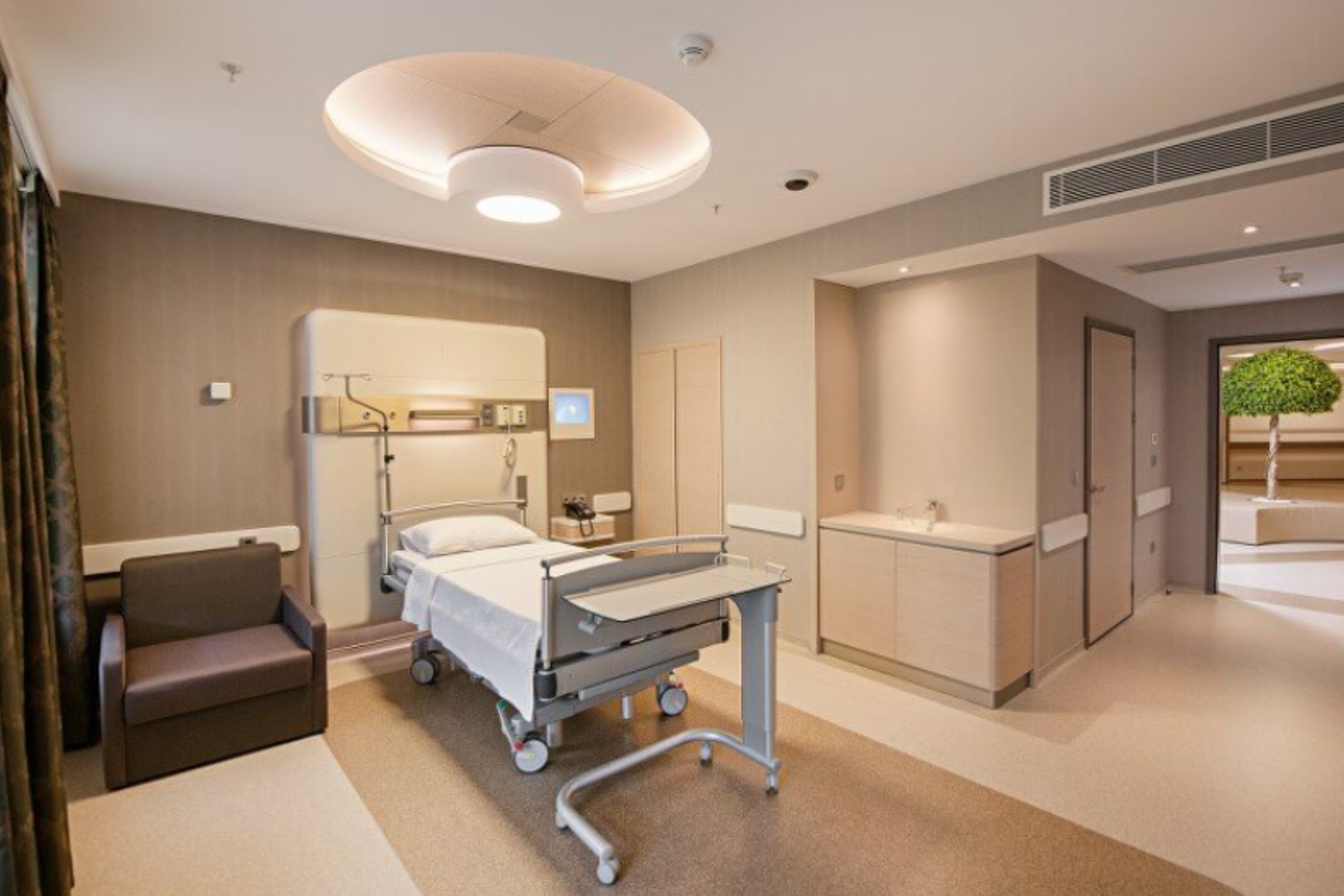
Ensuring patient safety
Safety is a consistent factor across all JCI criteria.
Design must minimize risks through:
- Anti-slip flooring, rounded corners to limit collisions
- Clear and easy-to-understand signage systems
- Patient room design suitable for each group (elderly, children, etc.)
In addition, warning systems and emergency response systems must also be synchronously integrated into the space.
 Ensuring patient safety
Optimizing technical systems (MEP & Medical Planning)
A hospital meeting JCI standards cannot lack internationally standardized technical systems:
- Stable electrical system with backup power
- Water supply and drainage systems ensuring hygiene
- Medical gas systems (oxygen, vacuum, etc.) with absolute safety
- HVAC systems controlling temperature, humidity, and pressure
The key point is that all these systems must be integrated from the design stage, not added later.
Common mistakes in designing hospitals according to JCI standards
Although JCI standards have been widely disseminated, many projects still make basic mistakes:
- Focusing only on appearance while ignoring operations
- Not separating flows from the beginning, leading to difficult renovation
- Lack of coordination between architecture and technical systems
- Not updating the latest standards
- Design not based on actual operations
These mistakes not only increase costs but also make it difficult for hospitals to achieve certification.
Benefits of hospitals meeting JCI standards
Meeting JCI standards brings many outstanding values:
- Enhancing hospital reputation and brand
- Increasing trust from domestic and international patients
- Attracting international customers
- Optimizing operations and minimizing risks
- Increasing long-term investment value
This is not just a certification, but a sustainable competitive advantage in the healthcare industry.
 Benefits of hospitals meeting JCI standards
Conclusion
JCI standards are not simply a set of accreditation criteria, but a comprehensive philosophy of hospital design and operation. In which, design plays a foundational role determining the ability to meet standards from the very beginning.
In the context of an increasingly competitive and globally integrated healthcare industry, investing in hospital design according to JCI standards is no longer an option but an inevitable direction. To realize this, investors need to collaborate with specialized design units that understand both architecture and healthcare operations where each space created is not only for use but for healing.
Contact TECO for consultation on international hospital design solutions.
Related services: Hospital interior design & build · After-handover maintenance – TECO MSC