Interior Design of International School Libraries
In modern education models, library interiors are no longer merely systems of bookshelves and reading desks. For international schools, the library is regarded as the “academic heart” – a place where students develop independent thinking, research skills, and a lifelong learning mindset. Therefore, library interior design must be carefully invested in, scientifically planned, and aligned with international education standards. Join TECO in exploring international school library interior design in depth through the article below.

Interior Design of International School Libraries
The Role of the Library in International Schools
Libraries in international schools play a central role within the entire learning ecosystem. They are spaces that connect knowledge, technology, and people, supporting students in various forms of learning.
First, the library is a place that nurtures self-directed learning habits. A scientifically designed space helps students easily access materials, thereby forming skills in information retrieval, analysis, and synthesis – core competencies of global citizens.
Second, the library serves as a hub for research and creativity. With the integration of digital libraries, group study areas, and creative zones, students not only read but also discuss, practice, and develop ideas.
Third, library interiors contribute to building school culture. A beautiful, friendly, and inspiring library encourages students to actively come to study, read, and interact, rather than viewing the library as a static and rigid space as in traditional models.
 The importance of the library in international schools
Functional Zoning in International School Libraries
Designing international school libraries requires clear and scientific functional zoning while still ensuring flexible connectivity between spaces. Each functional area needs its own interior solutions suited to its intended use.
Quiet Reading Area
This is the core area of the library, serving individual reading and research needs. Library interiors in this zone prioritize minimalism and high concentration.
Tables and chairs must meet standard school dimensions and provide comfortable seating posture. Lighting must meet standards, minimizing glare and eye strain. Neutral colors such as beige, light wood, and light gray help create a calm and focused atmosphere.
Group Study and Discussion Area
International education emphasizes teamwork and critical thinking. Therefore, the group study area is an indispensable space in modern libraries.
This area typically uses flexible, movable furniture such as modular tables, swivel chairs, and movable partitions. The design is open while still ensuring relative sound insulation so as not to affect the quiet reading area.
Technology Research Area and Digital Library
Along with technological advancement, digital libraries have become an important part of international school libraries. The technology research area needs to be logically arranged and convenient to use.
Furniture here integrates computer desks, power outlets, network systems, and presentation equipment. The design should be neat, scientific, ensure electrical safety, and be easy to maintain. This is where students access global data resources and study and research according to international standards.
Creative Area (Maker Space, STEAM Corner)
The creative area is a highlight of modern library interior design. This space encourages students to practice, experiment, and develop ideas through STEAM activities.
Furniture is often open, durable, and easy to reconfigure. Large worktables, tool storage shelves, writing boards, and product display areas allow students to freely create and learn from one another.
Relaxation and Free Reading Area for Younger Students
For preschool and primary school students, libraries need gentle and approachable reading areas. Interiors here prioritize safety, friendliness, and inspiration.
Bean bags, floor mats, low bookshelves, and bright colors help children feel that the library is a fun and accessible place. This space contributes to fostering a love of reading from an early age.
Important Considerations When Designing Modern International School Library Interiors
For libraries to truly fulfill their role, the interior design process must adhere to many important principles, from user research to safety and sustainability standards.
Researching Library Users
Each international school has different student age groups and educational programs. Therefore, library interior design must be based on thorough research of users.
Younger students need safe and visual spaces. Secondary students need spaces for in-depth research and group study. Teachers and educational experts are also library users and require dedicated areas for research and work.
Scientific Library Spatial Layout
A reasonable layout helps the library operate efficiently and be easy to use. Functional areas should be clearly separated but not completely isolated.
Circulation paths should be open and easy to navigate. Noisy and quiet zones need appropriate acoustic treatment. Scientific design helps students quickly find spaces that suit their learning needs.
Flexible and Multifunctional Interior Design
One of the key requirements of international school libraries is adaptability. Library interiors must be flexible to change according to teaching activities, events, or new learning methods.
Modular tables and chairs, movable partitions, and multifunctional bookshelves allow spaces to be easily reconfigured without major renovations. This is a cost-effective solution that enhances long-term usage efficiency.
 Flexible and multifunctional interior design
School Design and Safety Standards
Safety is a mandatory factor in library design for students. Furniture must meet standards for dimensions, ergonomics, and materials.
Edges should be rounded; materials should be slip-resistant and non-toxic. Lighting, ventilation, and acoustics must meet international school standards, creating a healthy and sustainable learning environment.
Sustainability and Environmental Friendliness
Current design trends are oriented toward sustainable development. Library interiors should prioritize environmentally friendly, recyclable, and durable materials.
Designs that utilize natural light and save energy not only reduce operating costs but also contribute to educating students about environmental protection awareness – a core value of international education.
EMASI Plus International Bilingual School Library Project Designed by TECO
TECO is honored to be the contractor for the EMASI PLUS WATERPOINT International Bilingual School Library – an open, multifunctional, and creativity-oriented library space. More than just a library, this is a place where students freely explore, unleash creativity, nurture learning inspiration, and expand knowledge horizons.
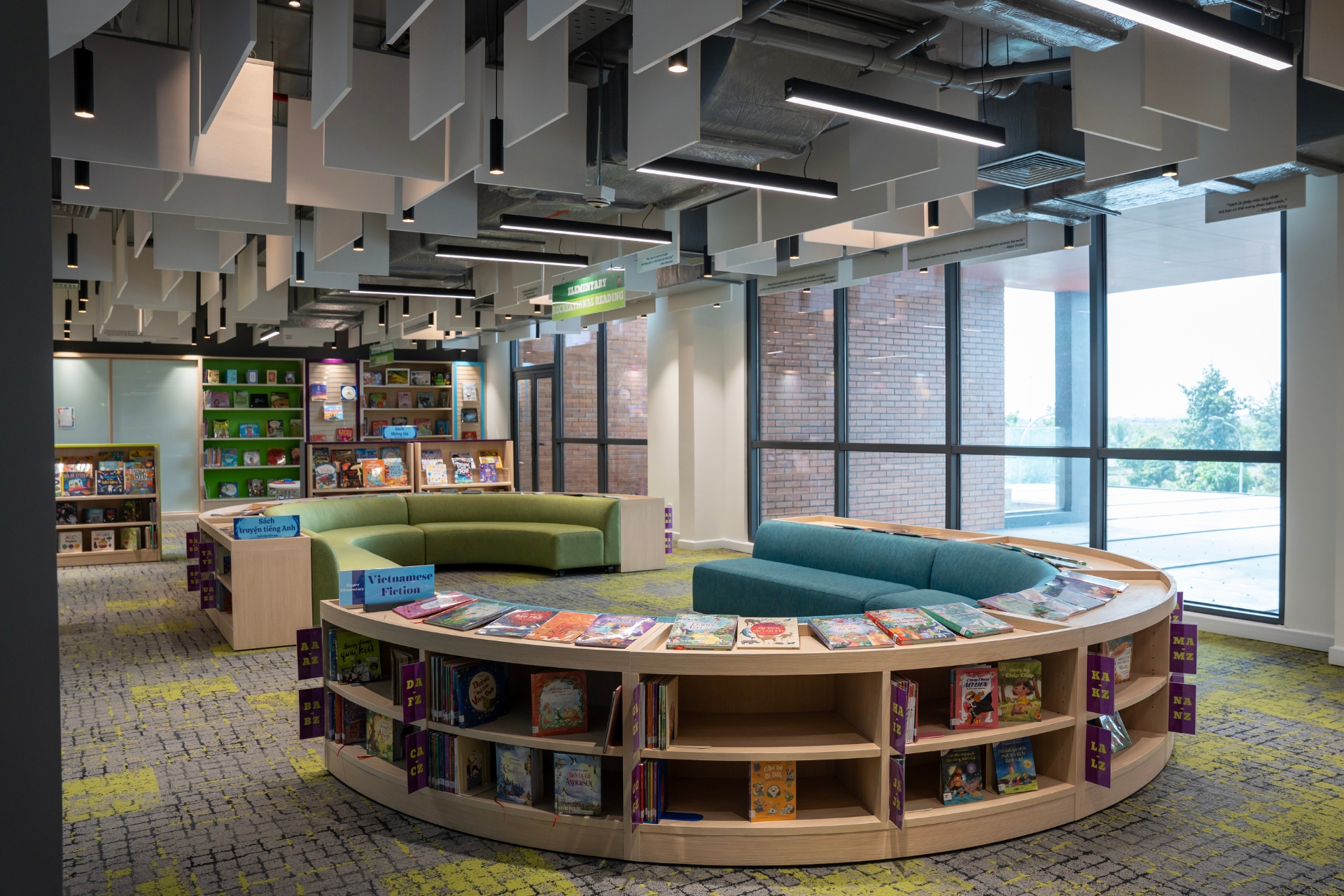
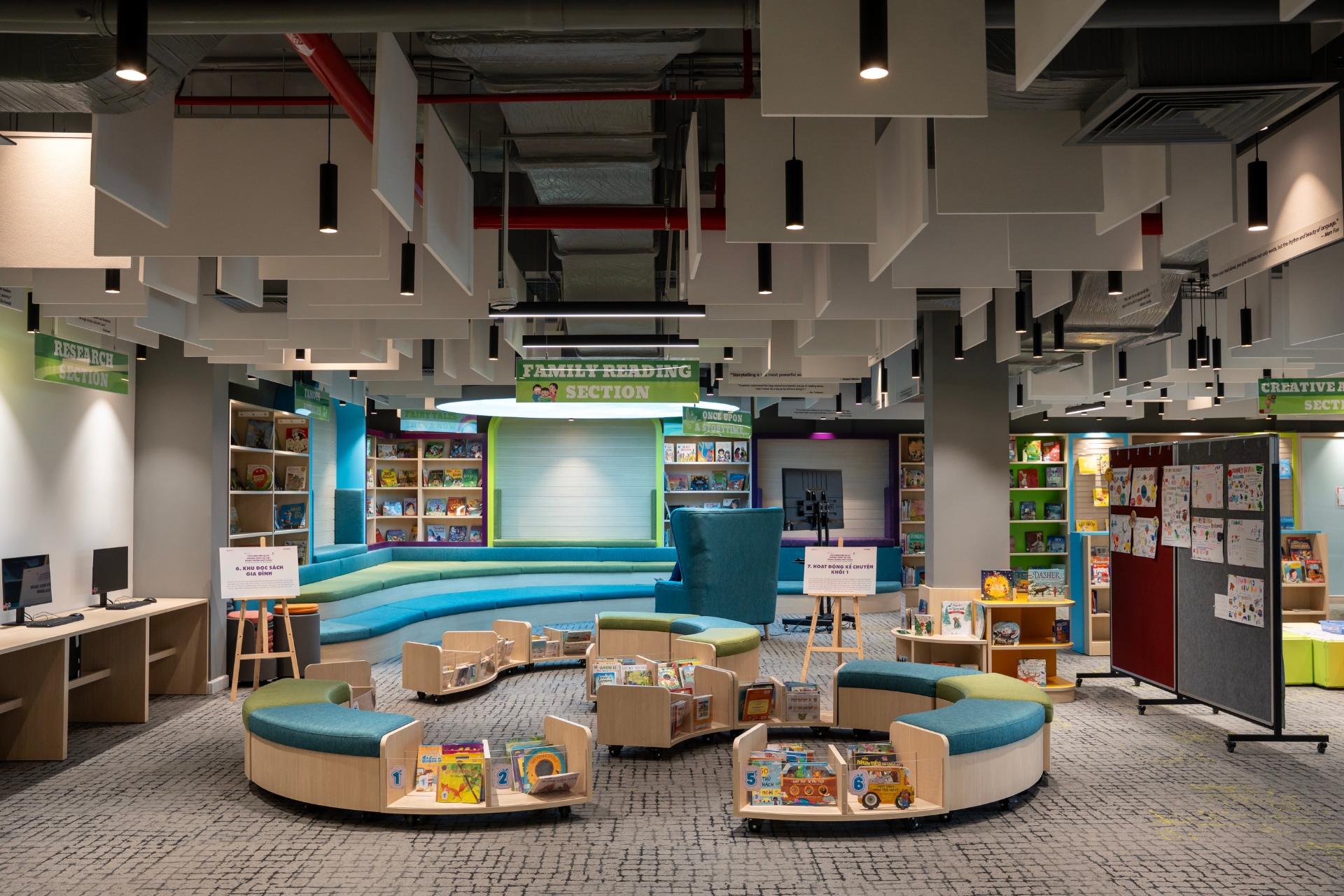
The library is designed as an open space with multiple functional rooms.
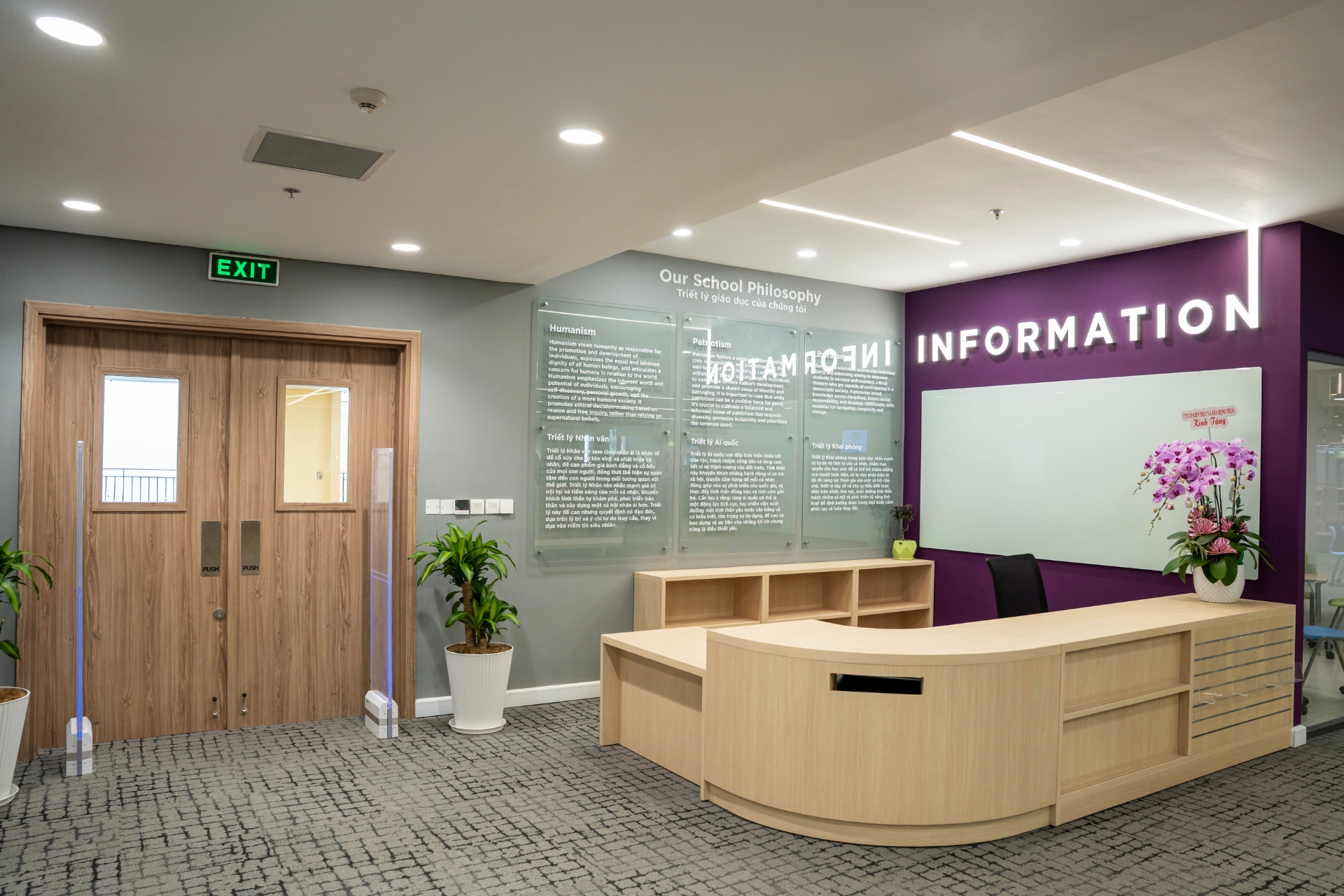
 The information guidance desk area of the EMASI Plus Waterpoint International Bilingual School Library.
 The highlight of the lighting exhibition area – the heart of the library.
 Each area is oriented toward a human-centered experience.
 Group study and discussion area.
 Art room within the library.
 A compact creative corner of the Emasi Plus Waterpoint library.
Conclusion
International school library interior design is a comprehensive equation combining functionality, aesthetics, and educational philosophy. A well-invested library not only serves reading needs but also becomes a center for learning, creativity, and global knowledge connection.
In the context of continuous educational innovation, modern libraries are a crucial foundation for international schools to enhance training quality and build inspiring learning environments for future generations. Contact TECO to create internationally standardized creative library spaces.