TECO – A reputable and high-quality international school design
In the context of globalized education, the demand for designing international schools in Vietnam is increasing. Not only stopping at building physical facilities, investors also require a learning environment that meets international standards, inspires, and optimizes student experience.
This poses a major challenge: choosing a design unit with sufficient capability, educational understanding, and the ability to implement in reality. TECO is a reliable partner, providing turnkey international school design and construction solutions, ensuring quality and investment efficiency.
TECO – A reputable and high-quality international school design unit
Why does international school design require distinct standards?
Differences between traditional and international schools
Traditional schools often focus on basic functions: classrooms, corridors, administrative areas. Meanwhile, international school design requires flexible, open, and multifunctional spaces.
Educational models such as Cambridge or IB emphasize experience, interaction, and creativity. Therefore, spaces need to support group learning, project-based learning, and extracurricular activities. This is the core difference in design thinking.
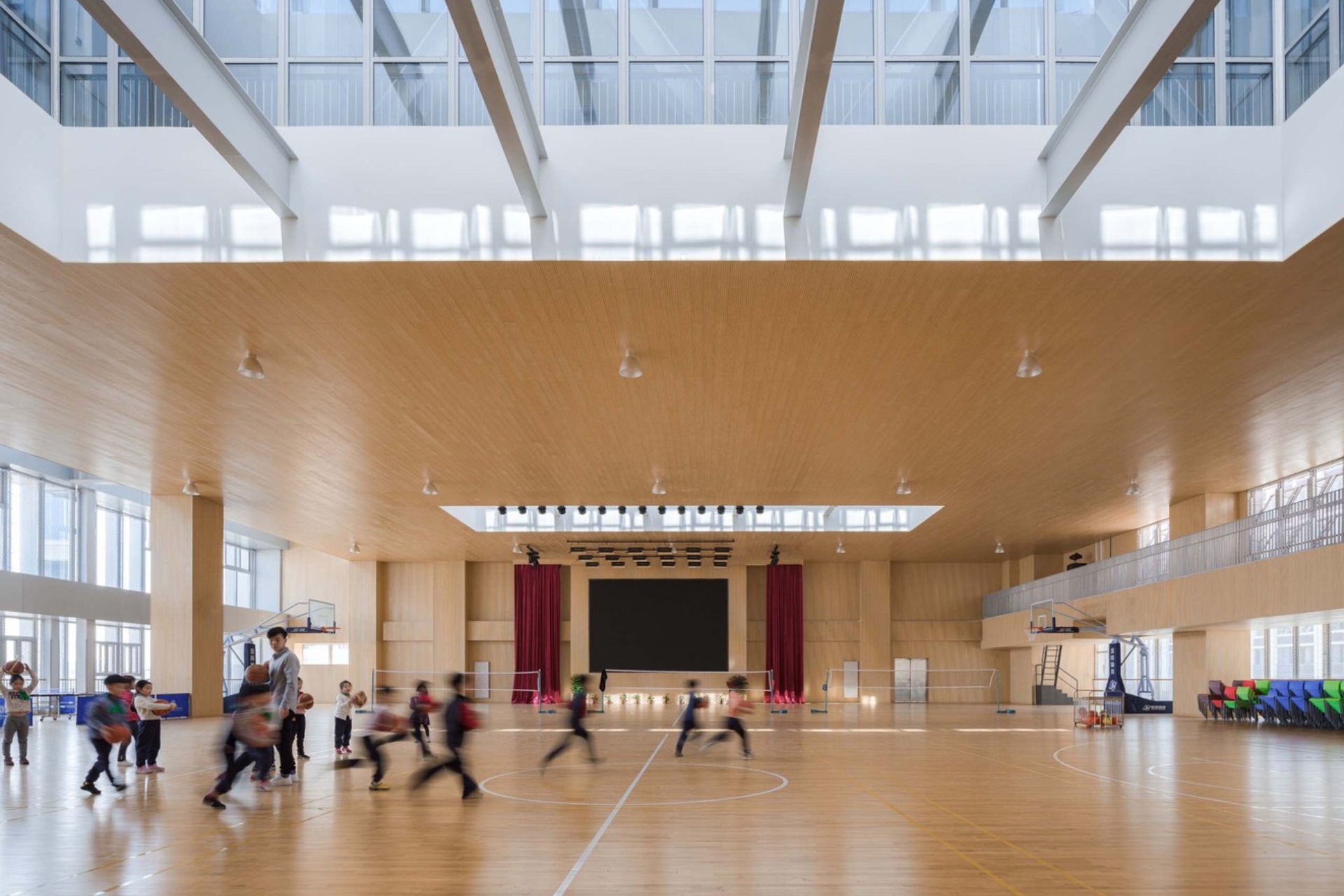 Differences between international and traditional schools
Design standard requirements
An international school project must meet many strict standards:
- Optimizing natural lighting and ventilation
- Ensuring safety according to international standards
- Ergonomic design suitable for students
- Integrating technology into teaching
- Green, environmentally friendly spaces
In addition, functional zoning needs to be clear and scientific. From classrooms and libraries to physical areas, everything must be carefully calculated.
The role of a professional design unit
A professional unit does not only create beautiful designs. More importantly, they must understand educational models and translate them into real spaces.
In international school design, the design unit plays the role of:
- Connecting educational philosophy with architecture
- Optimizing investment and operational costs
- Controlling quality and progress
- Minimizing risks during construction
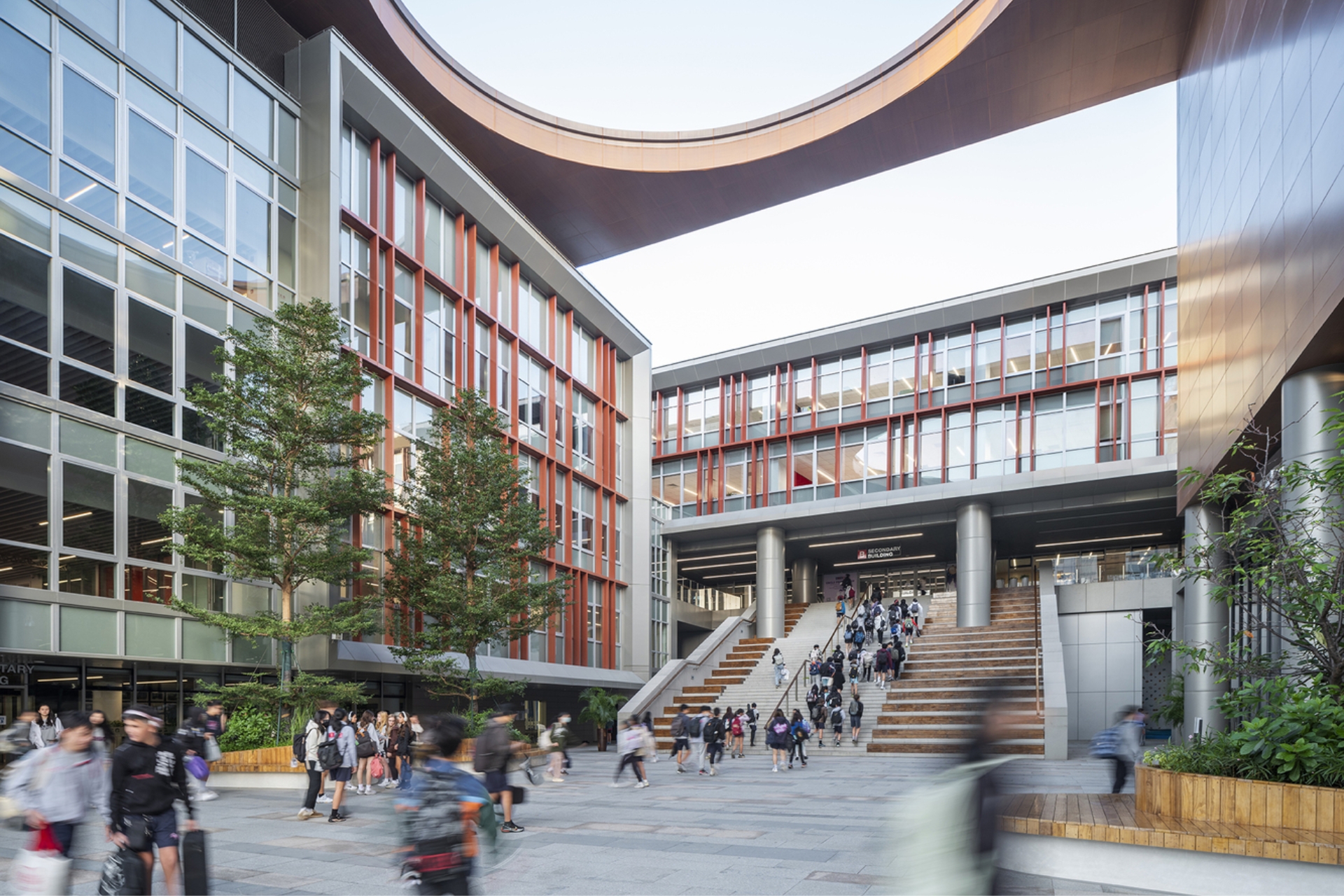 The role of a professional design unit
Criteria for selecting an international school design unit
Choosing the right partner is the decisive step for the success of the project. First, investors need to consider practical experience. A unit that has implemented educational projects will clearly understand the specific requirements of this field.
In addition, the ability to understand and apply international educational models is also very important. Design does not stop at appearance. It must directly serve teaching methods and learning experiences.
The ability to implement synchronously between design and construction is the next factor to be evaluated. The Design & Build model helps ensure consistency from drawings to reality. This minimizes discrepancies and helps better control costs.
A clear working process is also an important criterion. A professional unit always has a specific roadmap for each phase. From survey, design to construction and handover, everything is tightly controlled.
Finally is the commitment to quality. The design unit needs to have clear inspection standards and transparent warranty policies. This is the factor that helps investors feel secure when implementing international school design projects.
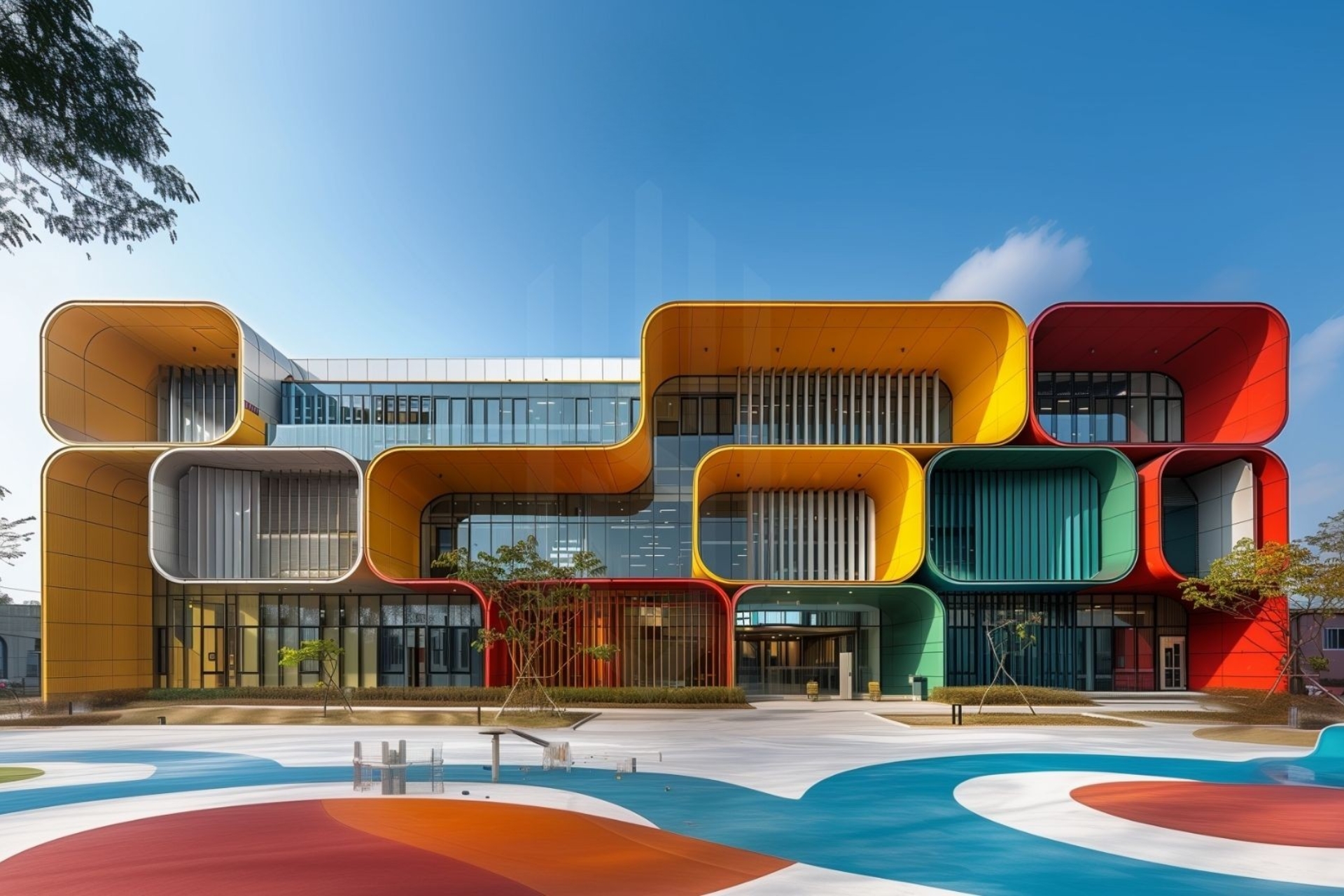 Criteria for selecting an international school design unit
Current trends in international school design
School design is changing strongly to meet modern educational needs.
Flexible space design trend: Classrooms can easily change layouts to suit different activities.
Open design is also widely applied: Reducing partitions helps increase connectivity between areas. Students can move and interact more naturally.
Integration of technology into education: Technology is an indispensable factor in international school design projects. Smart classrooms, interactive boards, and digital management systems are integrated from the design stage. This helps improve teaching efficiency.
Green and sustainable design is increasingly emphasized. Energy-saving solutions and environmentally friendly materials are becoming new standards. This is not only a trend but also a responsibility for the future.
Student-centered design: Spaces need to inspire, encourage creativity, and support comprehensive development. This is the core of international education.
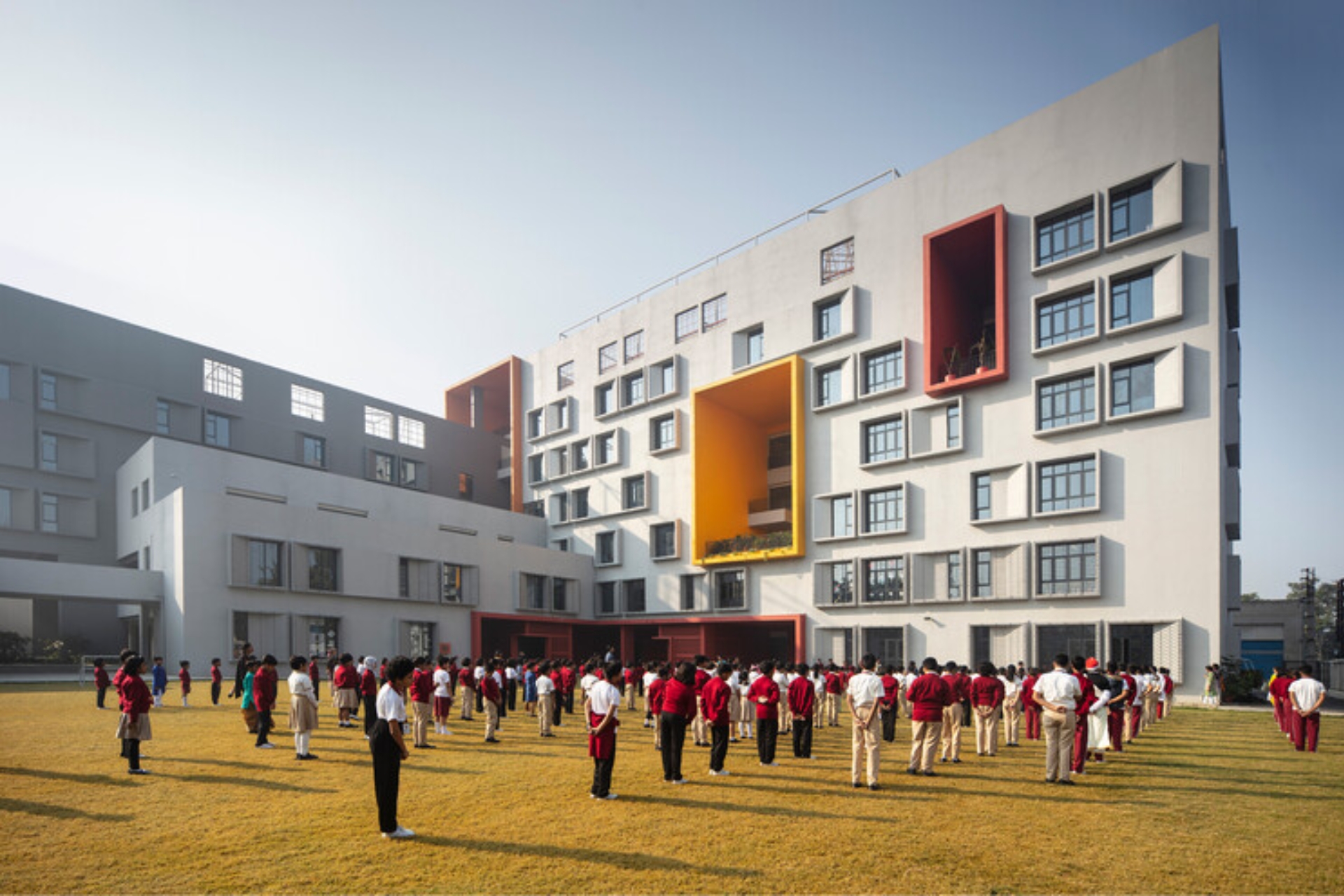 Current trends in international school design
TECO – A reputable international school design unit
TECO is a unit with many years of experience in the field of designing and constructing educational projects. With a specialized orientation, TECO focuses on international school design projects that meet high standards of quality and aesthetics.
TECO’s strength lies in its professional team. Architects and engineers all have practical experience and clearly understand international standards. This helps ensure feasibility in every design solution.
TECO does not only focus on appearance. Each solution is built based on functionality and user experience. Spaces are optimized to best serve teaching and learning activities.
A major advantage of TECO is the turnkey Design & Build model. From design to construction, everything is handled by a single unit. This ensures consistency and effective quality control.
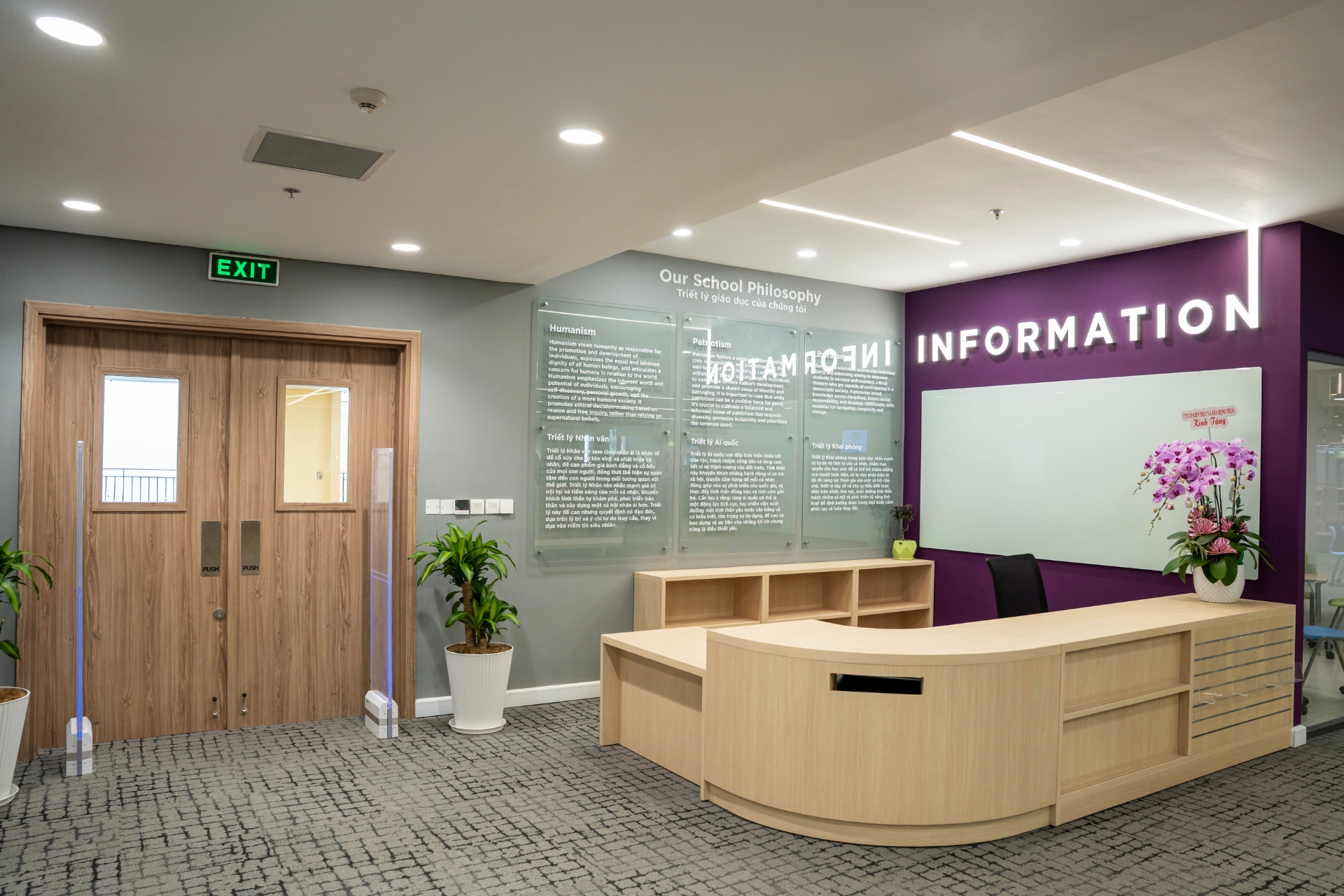
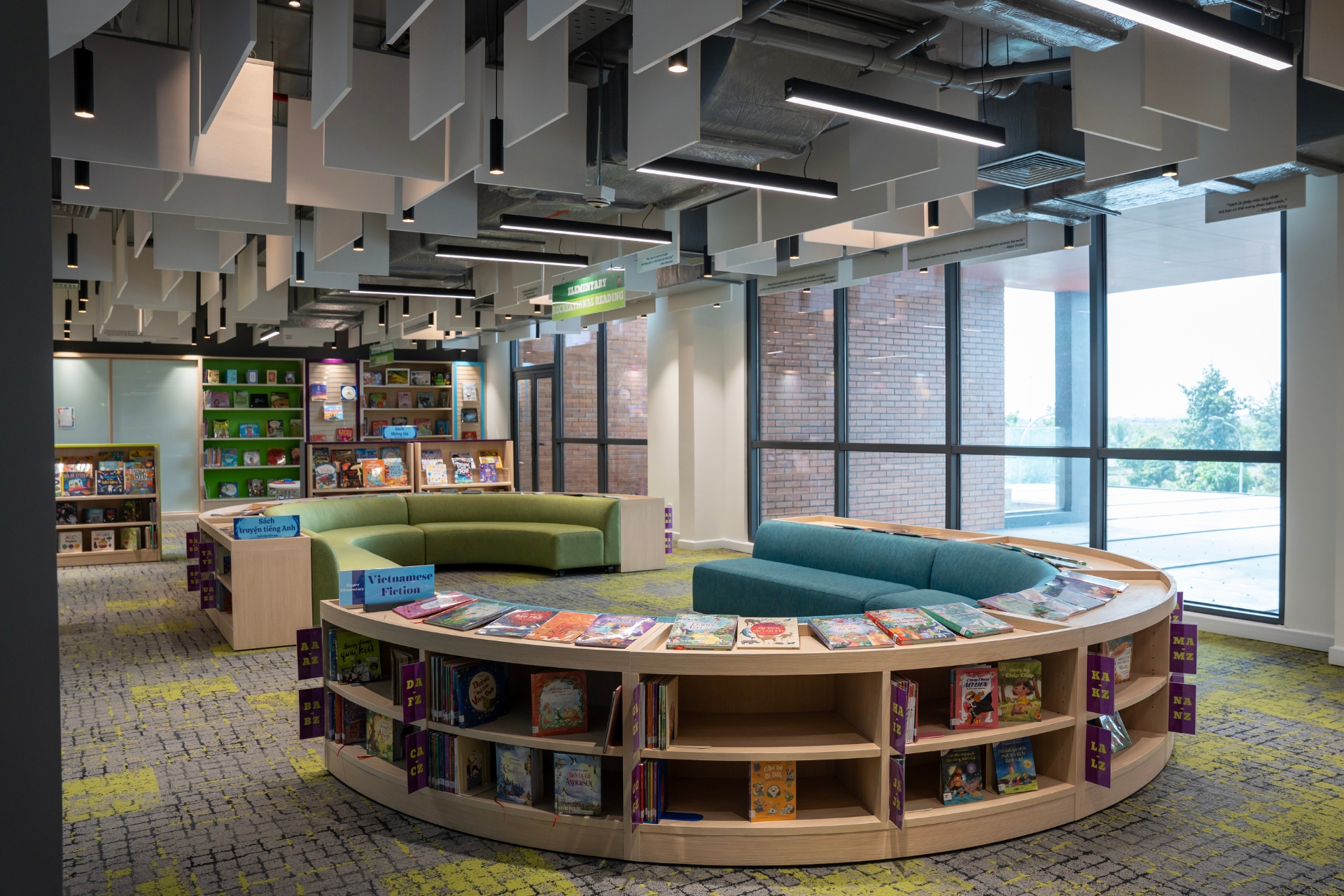
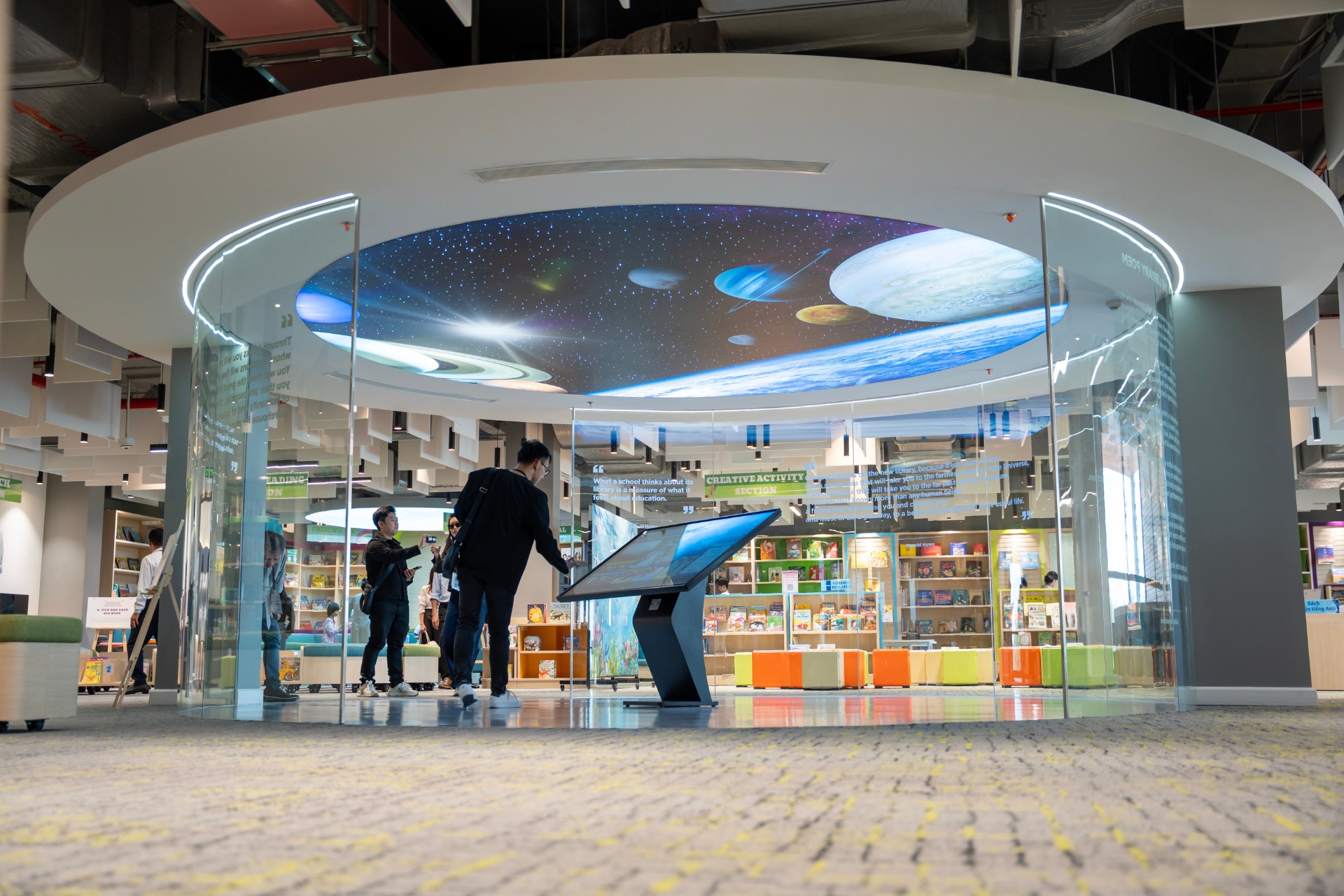
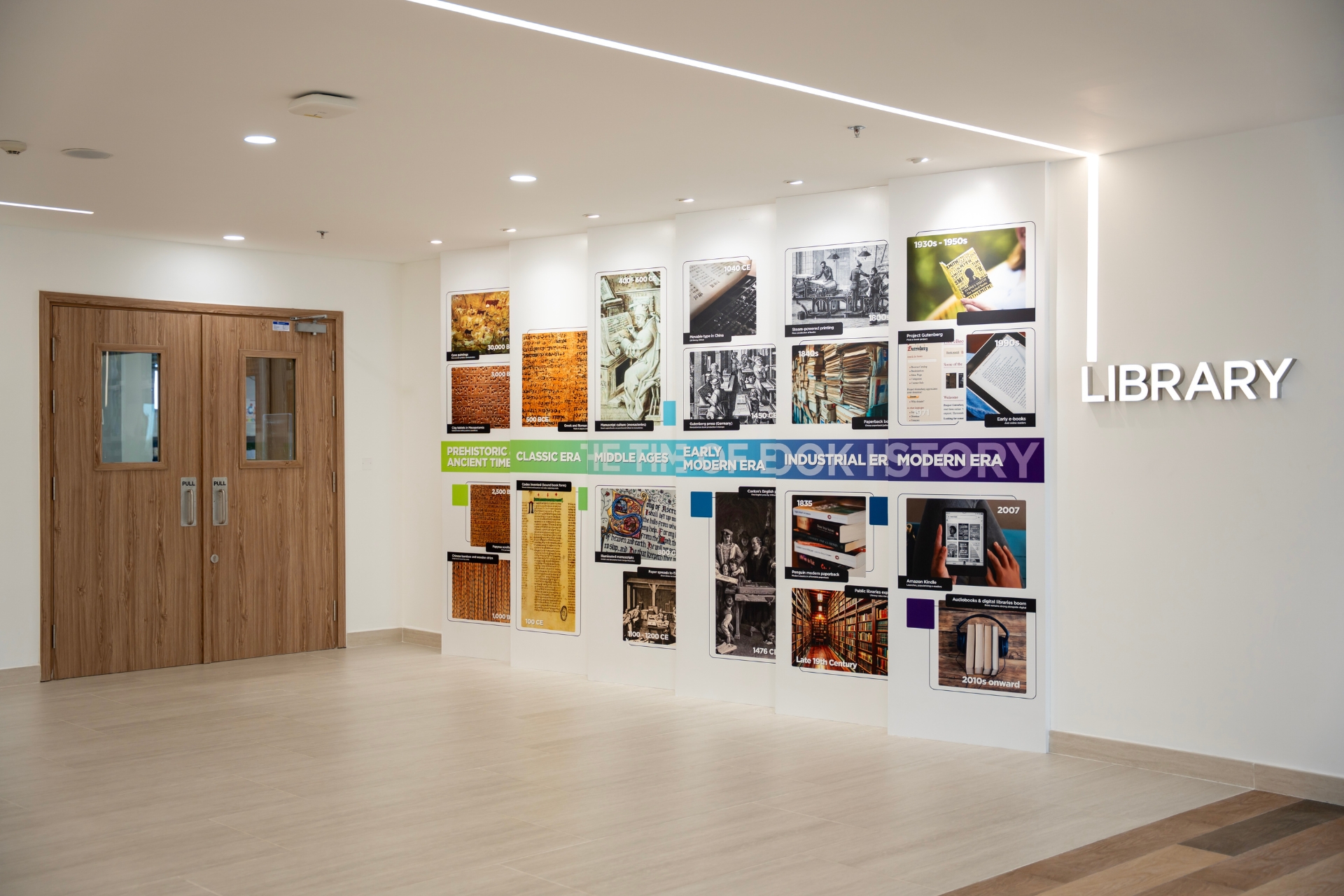
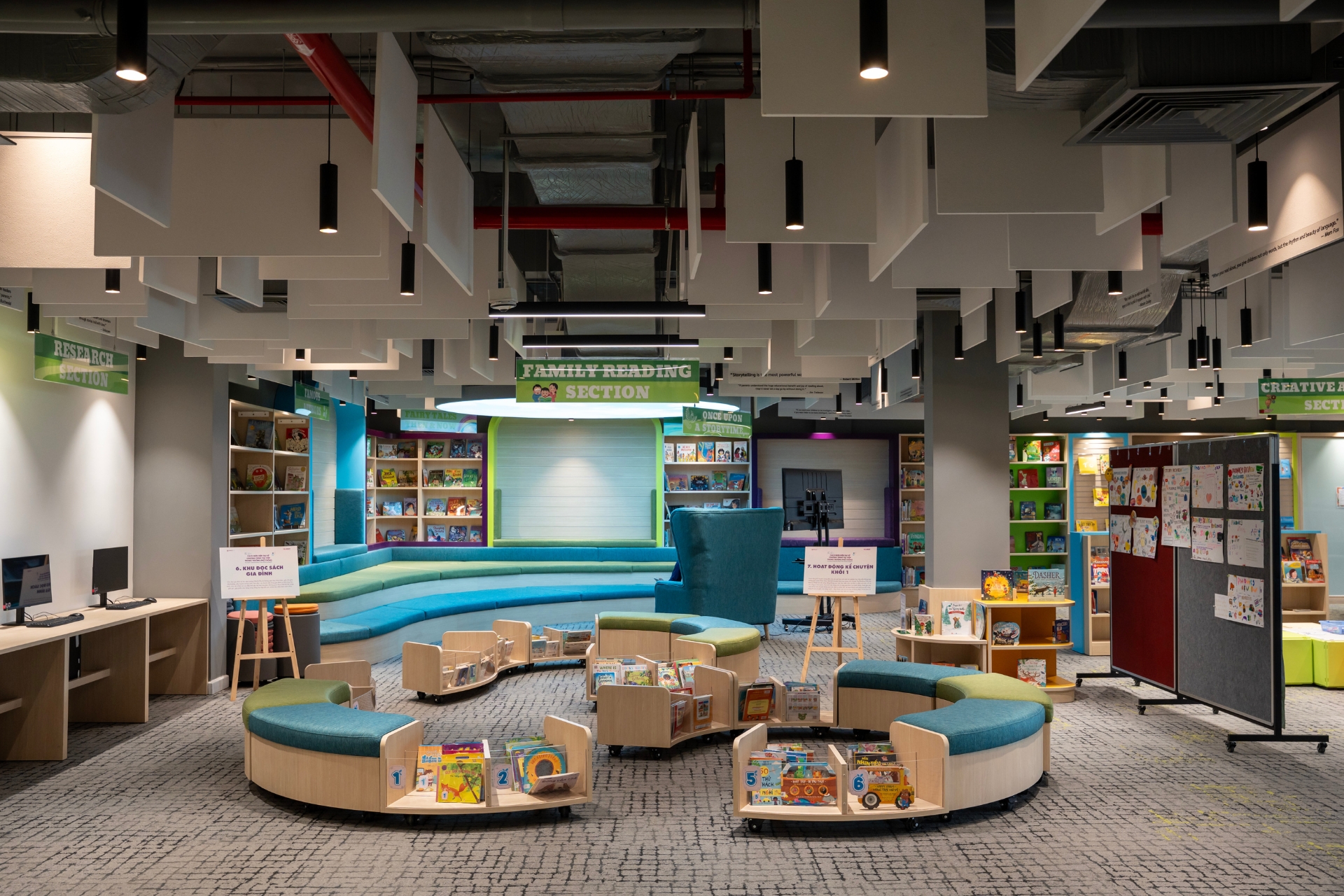
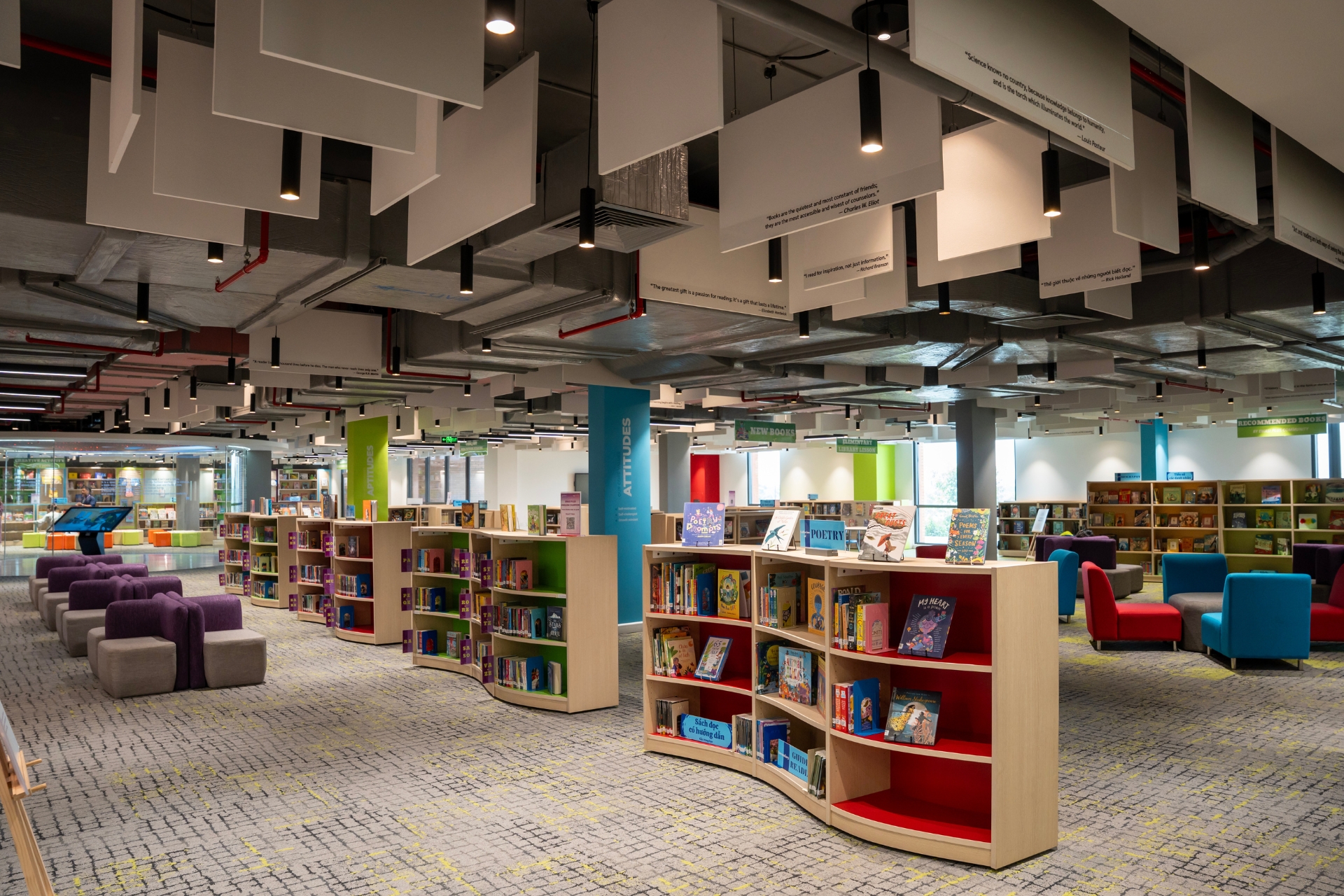
With a professional workflow, TECO commits to clear timelines and construction quality. This is the factor that makes TECO a trusted partner in international school projects. Below is the EMASI International Bilingual School Library project designed and constructed by TECO.
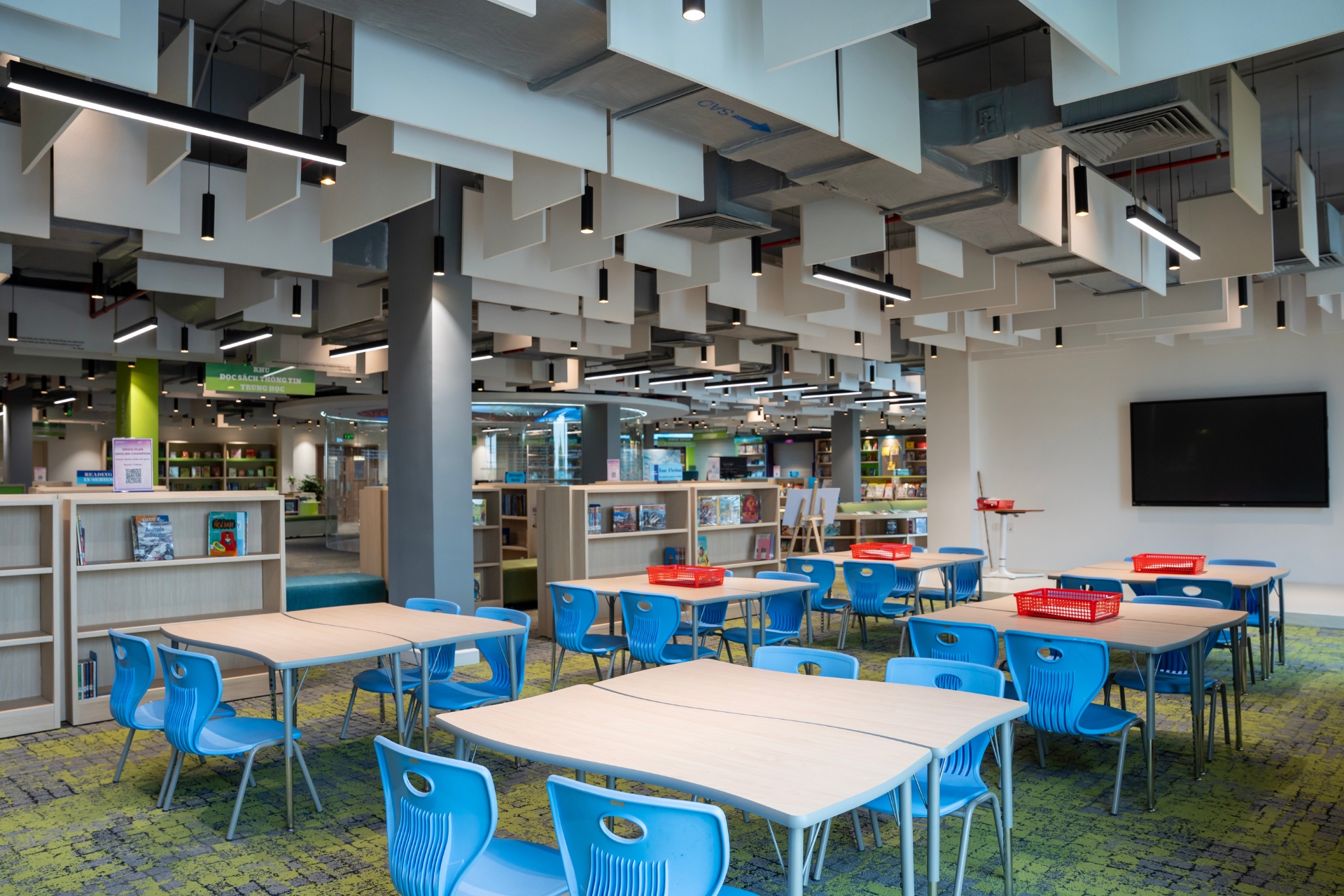
See more
- EMASI Plus Water Point International Bilingual School Library Project
- Horizon International Bilingual School Project – Campus 1
- Horizon International Bilingual School Project – Campus 2
- Horizon International Bilingual School Project – Campus 3
International school design process at TECO
The design process at TECO is built scientifically and rigorously. Each phase has clear objectives to ensure the overall effectiveness of the project.
The first stage is survey and needs analysis. TECO evaluates site conditions, environmental factors, and the investor’s development orientation. At the same time, the team studies educational models to propose suitable solutions.
Next is the concept design stage. This is the step of shaping the overall idea for the project. The concept not only expresses the architectural image but also reflects the educational philosophy. Investors can clearly visualize the space before detailed implementation.
After the concept is approved, TECO proceeds with technical drawings. All items from architecture, structure to technical systems are detailed. This ensures feasibility and helps optimize construction costs.
The construction and supervision phase is carried out strictly. TECO closely controls material quality, progress, and construction processes. Any errors are handled promptly to ensure the project meets standards.
Finally is handover and operational support. The project is carefully inspected before being put into use. TECO continues to accompany to ensure systems operate stably and effectively.
Conclusion
International school design is a specialized field that requires the combination of architecture, engineering, and education. A successful project is not only visually appealing but must also operate efficiently and create long-term value.
With experience, capability, and a professional process, TECO provides comprehensive design solutions for international school projects. This is the right choice for investors who are looking for a reputable, high-quality, and long-term partner. Contact us to co-create international school projects that are creative, inspiring, and sustainable.