Safety Standards in Industrial Factory Design and Construction
In the context of increasingly expanded production, industrial factory construction is no longer limited to meeting progress schedules and cost efficiency. Safety is becoming a core standard, directly affecting people, assets, and the sustainable operation capacity of enterprises. Fully complying with safety standards from the design stage through construction is a mandatory requirement for all modern factories. Join TECO in exploring in detail the safety standards applied in the design and construction of industrial factories.
Understanding Safety Standards in the Design and Construction of Industrial Factories
Why Safety Standards Are the “Backbone” of Industrial Factories
Factories are environments that concentrate high-capacity machinery and equipment, along with a high density of labor. Without proper safety solutions, the risks of accidents, fires, explosions, and production disruptions can easily occur.
Safety standards help to:
Protect the lives and health of workers
Minimize damage to assets and equipment
Ensure factories meet legal requirements for operation
Extend the service life of buildings and improve long-term operational efficiency
In practice, many serious incidents originate from industrial factory design and construction that fail to comply with safety standards from the outset.
Safety Standards in Industrial Factory Design
1. Safety in Overall Site Planning
Overall site planning is the first step that determines the safety level of the entire factory.
Key requirements include:
Clear zoning between production areas, warehouses, offices, and technical areas
Ensuring safe distances between functional zones
Providing access routes for fire trucks and technical vehicles
Separating areas with high fire and explosion risks
Scientific planning helps reduce hazardous intersections and facilitates smooth future operations.
2. Structural Load-Bearing and Stability Standards
The structure is the foundation that ensures long-term safety for industrial factories.
Design requirements include:
Accurate calculation of machinery and goods loads
Selecting appropriate steel or reinforced concrete structures
Ensuring stability under vibration and dynamic loads
Allowing for future expansion and upgrades
A structurally weak facility poses serious risks during production.
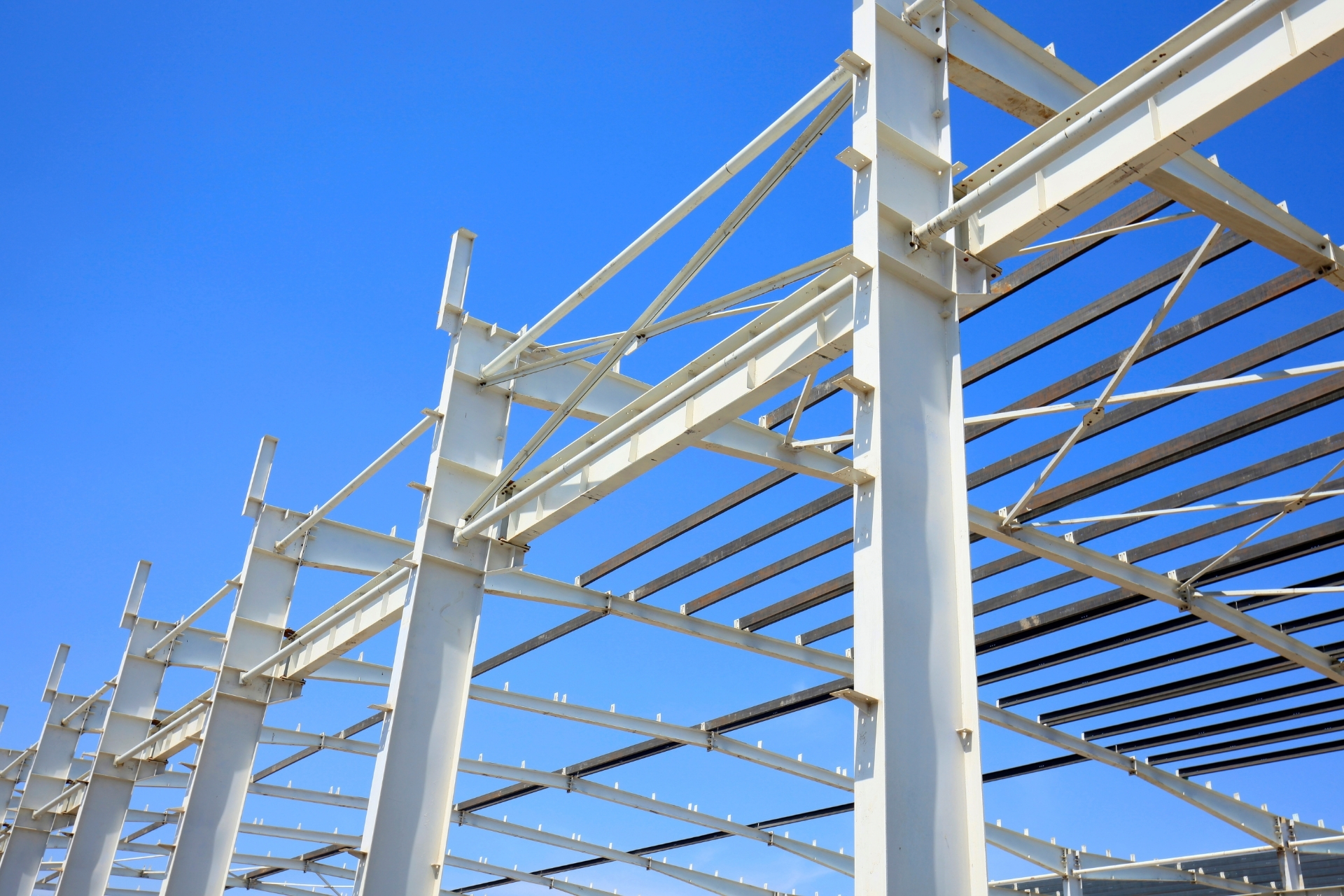
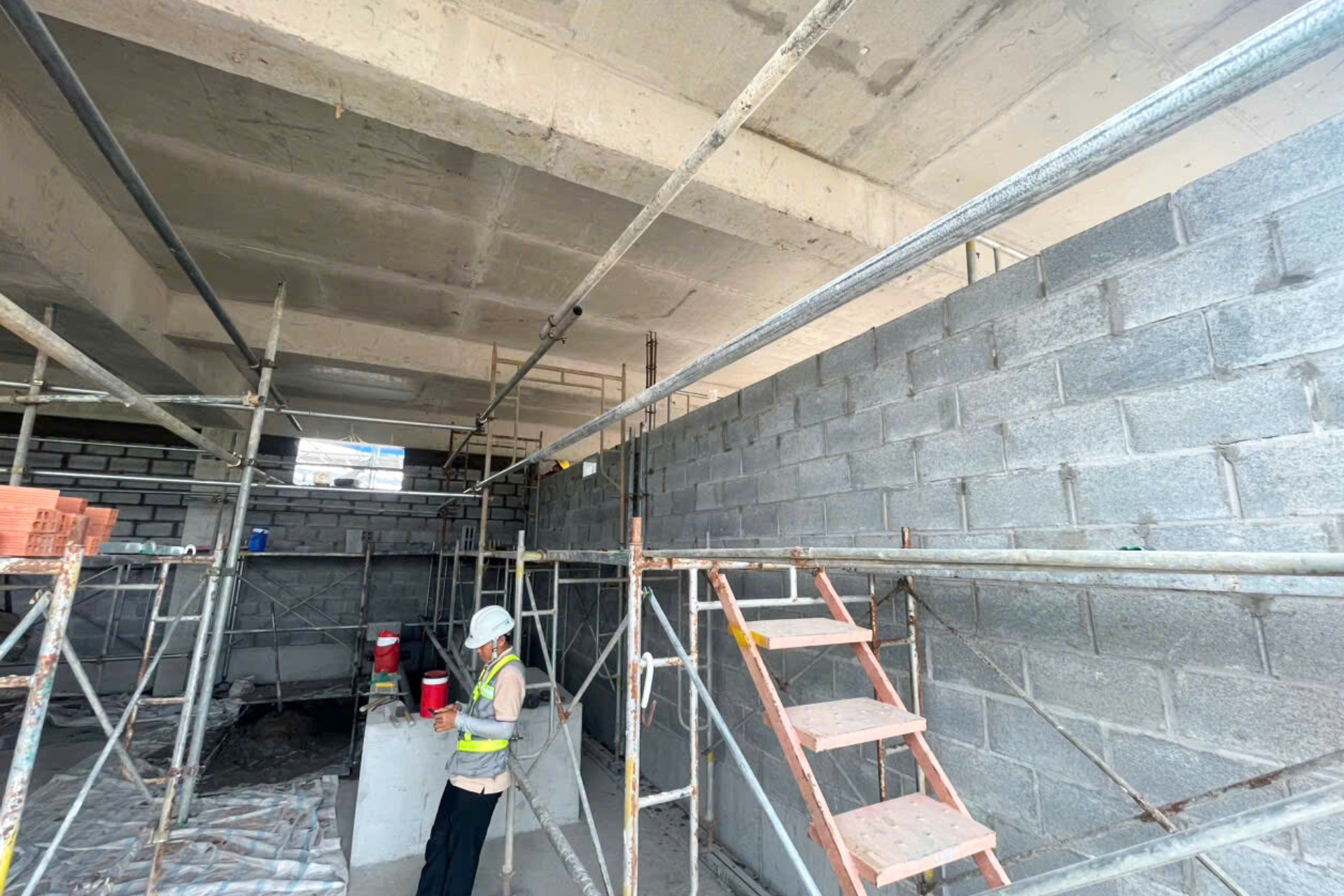 Structural load-bearing and stability standards
3. Internal Traffic Safety Standards
Internal traffic directly affects occupational safety within factories.
Key considerations include:
Separating pedestrian paths from forklift and transport vehicle routes
Providing sufficiently wide corridors without obstructions
Designing proper ramps with anti-slip measures
Installing clear safety signage and floor markings
Well-designed internal traffic systems help reduce collision-related accidents.
4. Lighting and Ventilation Safety Standards
Lighting and ventilation have a direct impact on workers’ health.
Basic requirements include:
Adequate natural and artificial lighting
Avoidance of glare and hazardous dark areas
Effective natural and mechanical ventilation systems
Control of temperature and exhaust gases in production zones
This is a factor often underestimated but with long-term impacts on productivity.
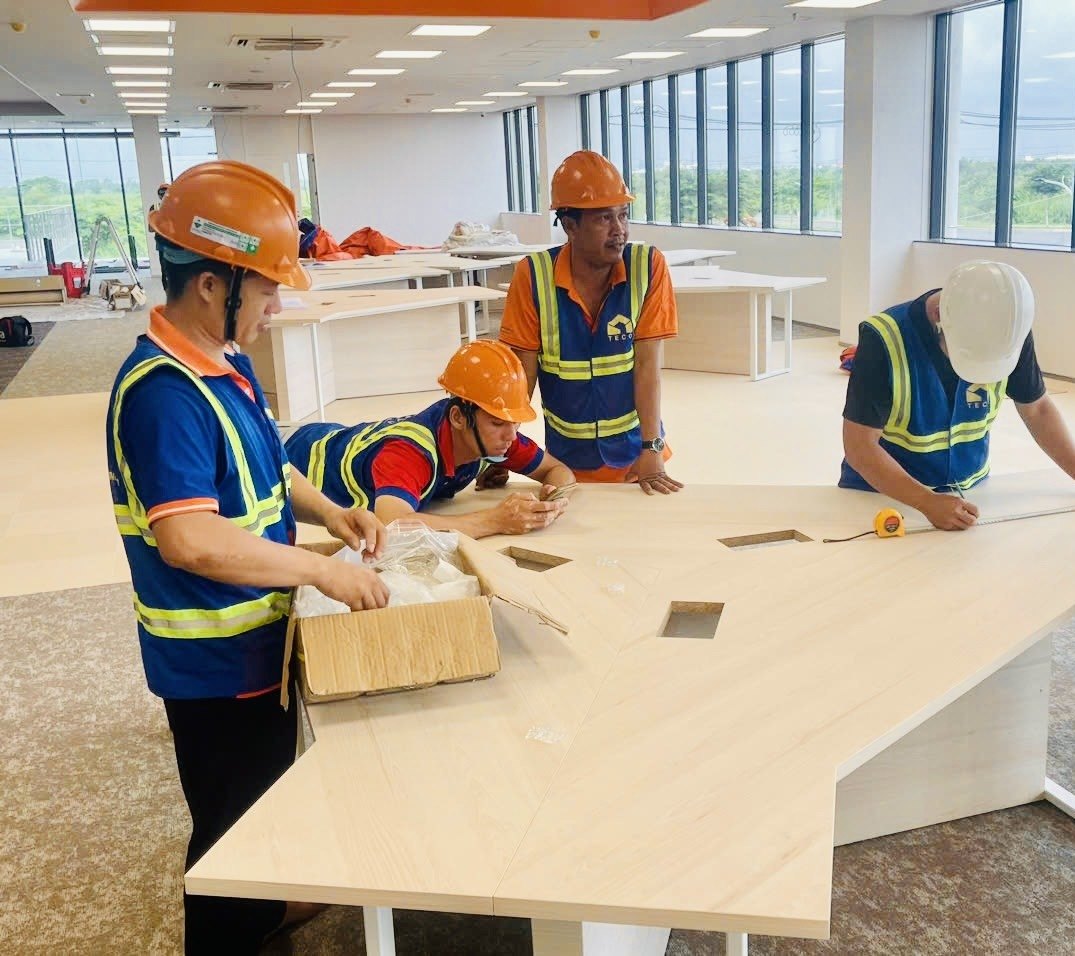
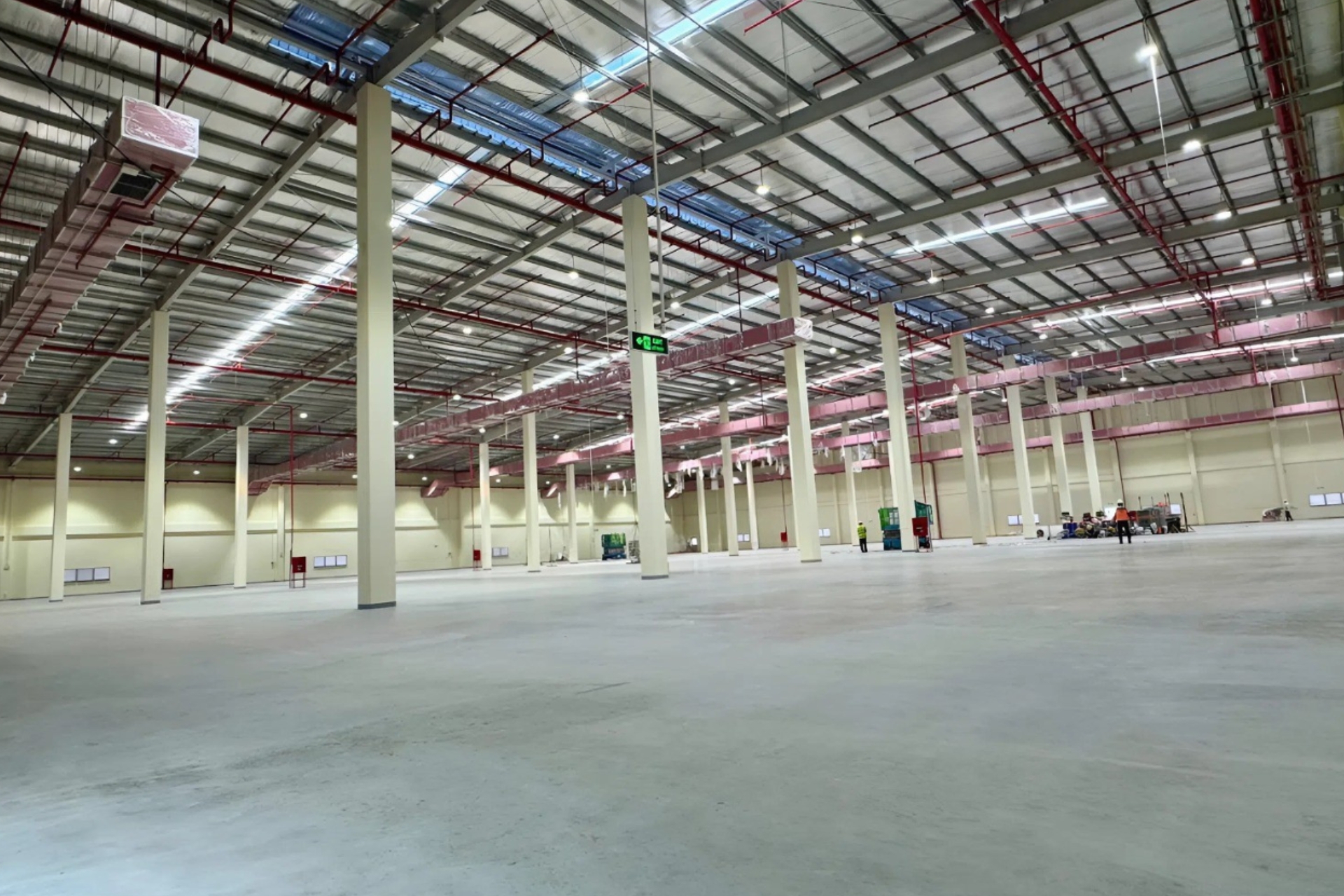 Lighting and ventilation safety standards
Safety Standards in Industrial Factory Construction
1. Occupational Safety During Construction
In industrial factory construction, occupational safety is the top priority.
Contractors must:
Provide full personal protective equipment (PPE) for workers
Apply safety measures for work at height
Control lifting and installation of steel structures
Conduct safety training prior to construction
Negligence during this phase can easily lead to serious accidents.
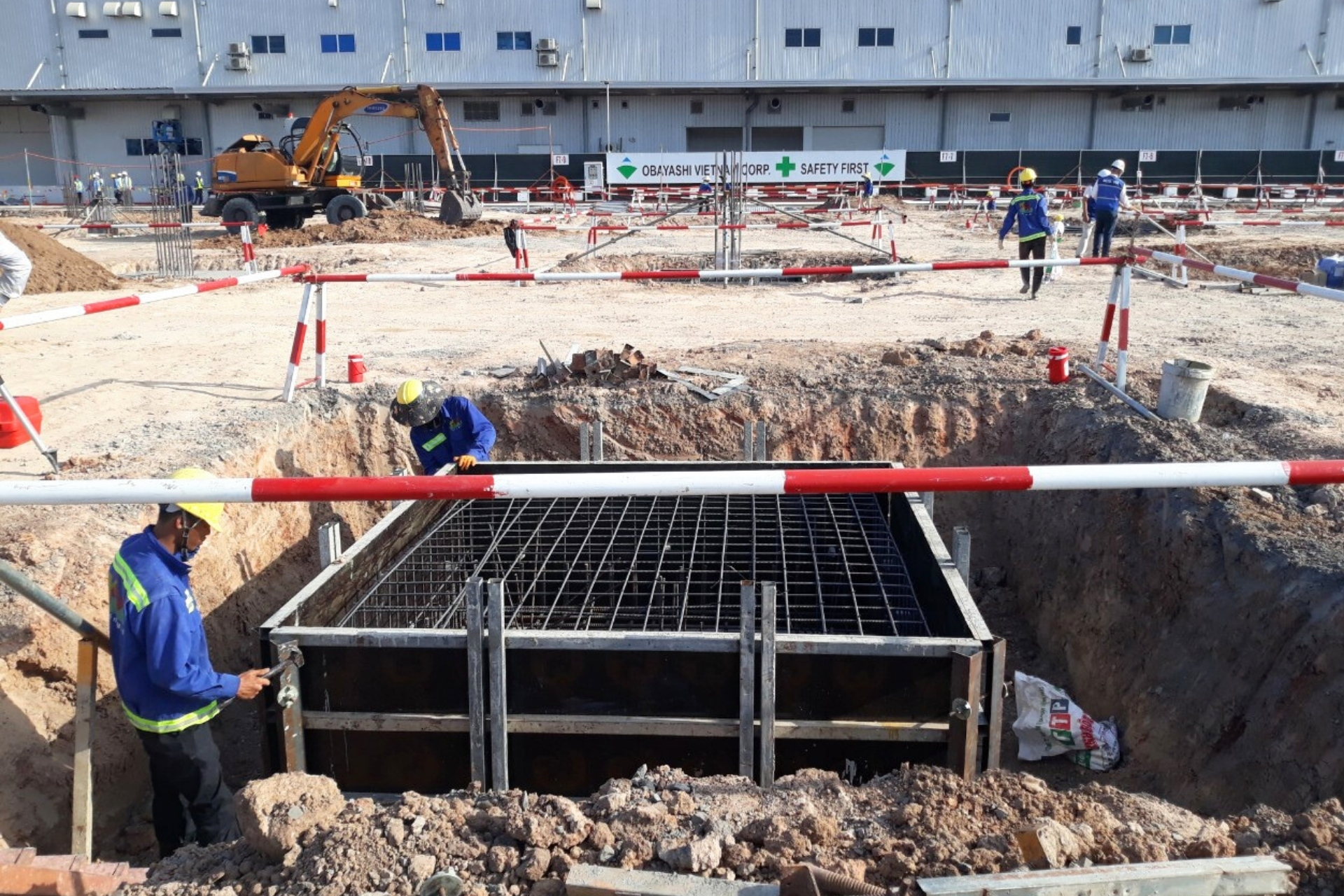
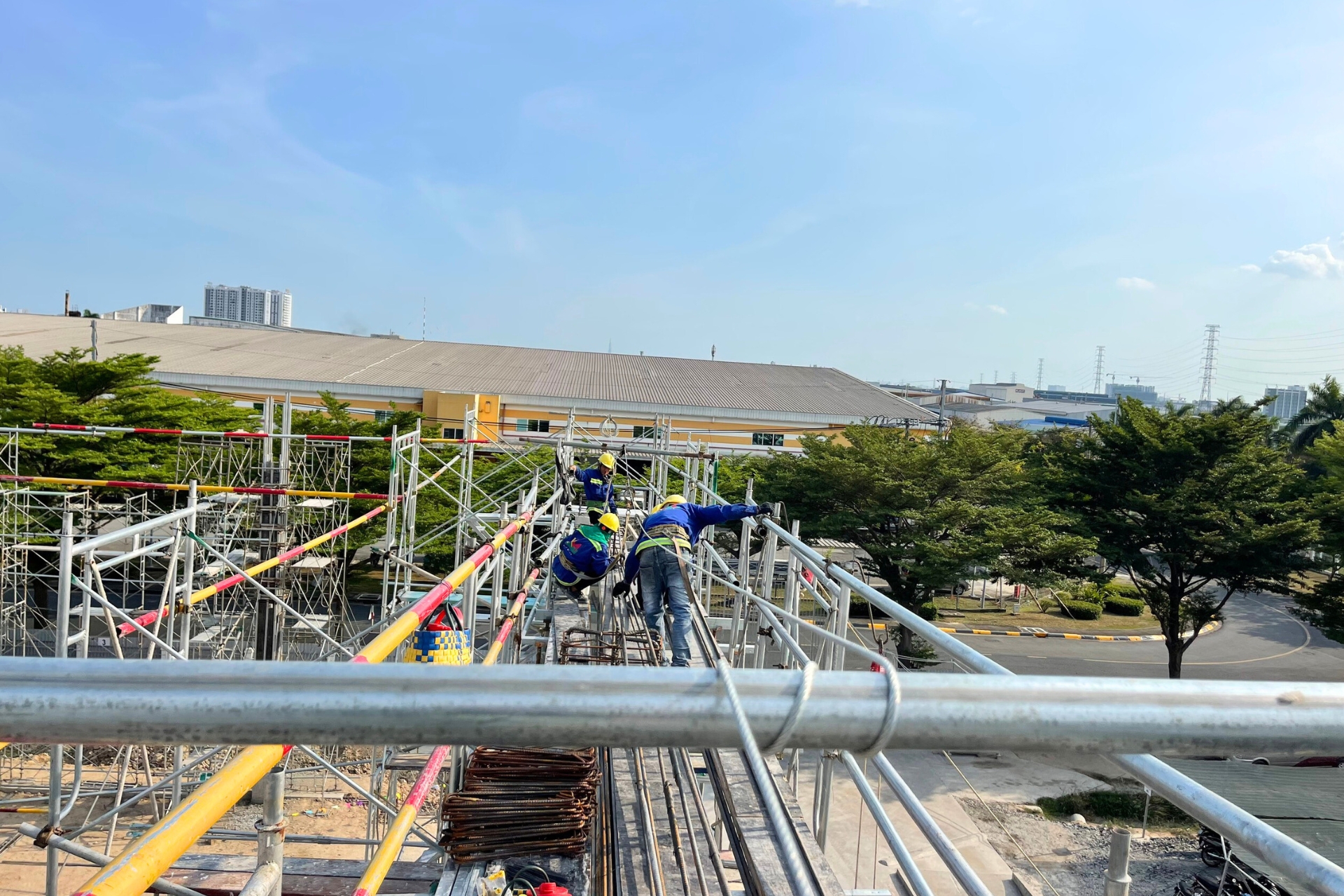 Occupational safety during construction
2. Safety of Construction Materials and Equipment
Construction materials and equipment must meet quality standards.
Key requirements include:
Inspection and certification of incoming materials
Proper storage in accordance with technical regulations
Strict management of construction machinery
Compliance with regulations for flammable and explosive materials
Material quality directly affects the durability and safety of the facility.
3. Safety in Technical System Installation
Technical systems are the “nervous system” of a factory.
Construction must ensure:
Electrical systems installed in compliance with safety standards
Proper layout of water supply and drainage systems
Thorough inspection before trial operation
Safety for both personnel and equipment
Minor errors in technical systems can lead to major consequences.
Fire Prevention and Firefighting (PCCC) Safety Standards in Factories
Fire prevention and firefighting is a mandatory requirement in all industrial factories.
Key standards include:
Clearly arranged and easily accessible emergency exits
Standard-compliant fire alarm and firefighting systems
Fire-resistant finishing materials
Zoning and isolation of high fire and explosion risk areas
Full provision of fire prevention and firefighting equipment within the factory
Fire safety design must be integrated from the initial stages, not treated as a formality.
 Fire prevention and firefighting safety standards in factories
Safety Standards in Factory Operation and Maintenance
After the completion of industrial factory construction, safety must be maintained throughout the entire lifecycle of the facility.
Enterprises should:
Conduct periodic inspections of structures and technical systems
Perform maintenance according to schedule
Provide occupational safety training for employees
Establish clear emergency response procedures
Safety is not a cost but a long-term investment in sustainable development.
Conclusion
Safety standards are an indispensable foundation in the design and construction of industrial factories. A factory that meets safety standards enables stable operations, reduces risks, and optimizes production efficiency. Investing correctly from the beginning is the most effective way to protect both the long-term value of the facility and human resources. Through this article, TECO hopes to have provided enterprises with a clearer and more comprehensive understanding of the safety standards required in industrial factory design and construction.
Related services: Factory construction, design & build · After-handover maintenance – TECO MSC