In apartment interior design and construction, materials not only determine aesthetic value but also directly affect durability, investment costs, and long-term living experience. An apartment may be well-planned and beautifully designed, but if the wrong materials are chosen, the space will deteriorate quickly, become difficult to maintain, and incur unnecessary repair costs.
So which interior materials are the most popular today in apartment interior design and construction? How can materials be selected to suit apartment characteristics, design styles, and investment budgets? In the article below, TECO will help you gain the most comprehensive and practical overview.
How to choose suitable interior materials when designing and constructing apartment interiors?
Apartments have their own characteristics compared to townhouses or villas: limited floor area, floor load restrictions, ventilation conditions, and strict construction regulations. Therefore, material selection must be based on multiple criteria, not just visual appeal.
When designing and constructing apartment interiors, materials should be considered based on:
-
The actual area and layout of the apartment
-
The main design style (modern, minimalist, Japandi, neoclassical, etc.)
-
The family’s usage needs and daily living habits
-
The investment budget and long-term usage plan
The key principle is to choose materials that suit functionality, are durable over time, and easy to maintain, rather than chasing short-term trends.
 Key principles to note when choosing suitable interior materials
Engineered wood – The primary material in apartment interiors
In current apartment interior design and construction projects, engineered wood is the most widely used material. This comes from its good balance between aesthetics, cost, and practicality.
Common types of engineered wood:
-
MDF, HDF, MFC
-
Moisture-resistant plywood
-
Surface finishes: Melamine, Laminate, Acrylic, Veneer
The main advantages of engineered wood are its lightweight nature, suitability for apartment structures, and reasonable cost, making budgets easy to control. In particular, its wide range of designs, diverse colors, and ease of synchronized installation help ensure overall design consistency.
Engineered wood is commonly used for kitchen cabinets, wardrobes, beds, TV units, decorative partitions, and more, making it the optimal choice for most areas in apartment interiors.
Note: When designing and constructing apartment interiors, it is necessary to prioritize moisture-resistant cores and high-quality hardware to ensure durability during use.
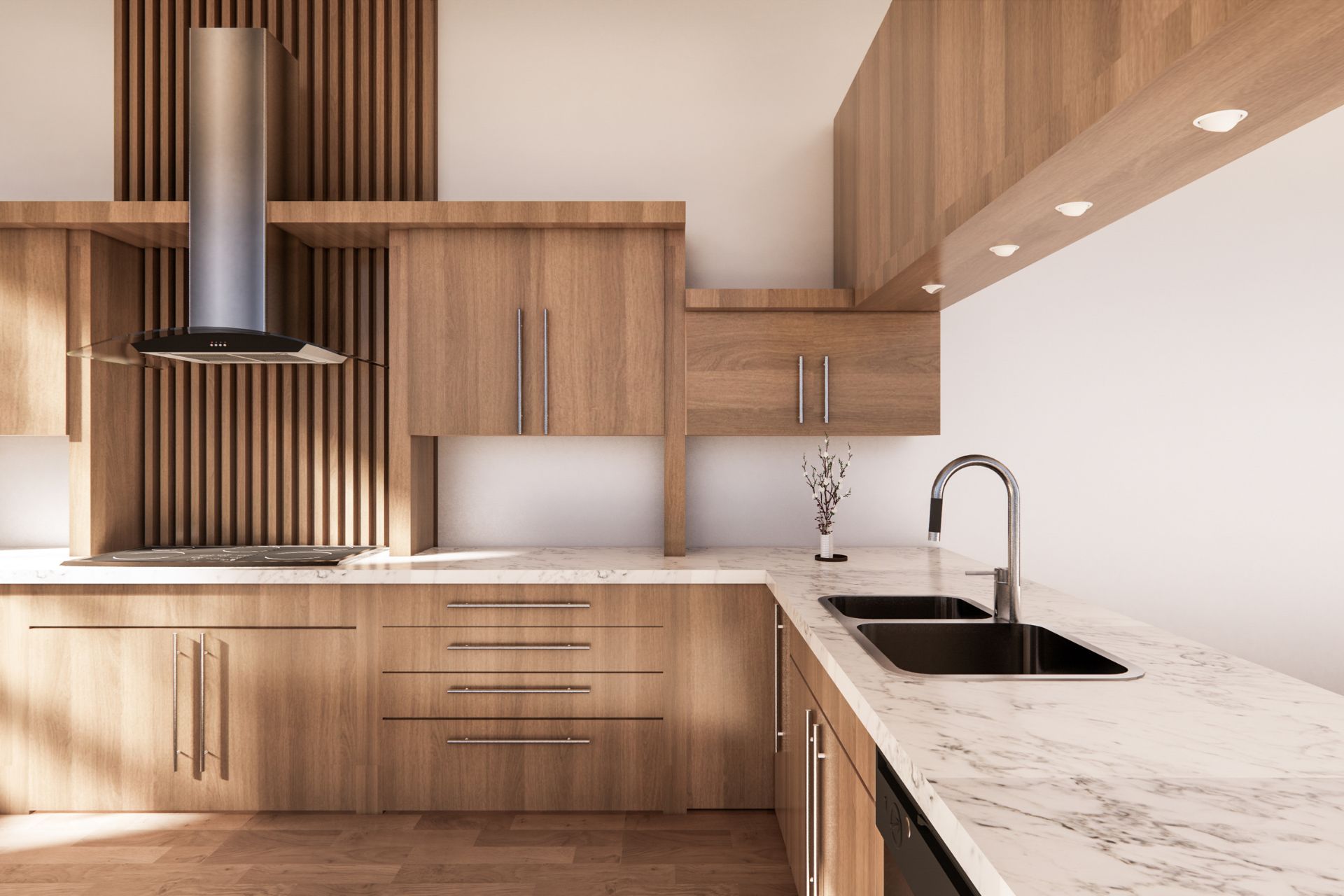 Engineered wood – A preferred material in apartment interiors
Natural wood – A premium accent in apartment spaces
Alongside engineered wood, natural wood still plays an important role in spaces that require a sense of luxury and emotional warmth. Commonly used types include oak, walnut, and cherry wood. The outstanding advantages of natural wood are its beautiful natural grain, high aesthetic value, and excellent durability.
However, in apartment interior design and construction, natural wood should not be used extensively due to its heavy weight and high cost. Instead, it is suitable for items such as dining tables, handrails, decorative details, and selected high-end interior elements used as focal points.
Skillful combination of engineered wood and natural wood helps create a space that is both beautiful and cost-efficient.
Natural stone & artificial stone – Materials for durable surfaces
Stone is an indispensable material in apartment interior design and construction, especially in areas that require durability and easy cleaning.
Natural stone
-
Marble, granite
-
Elegant and luxurious veining
-
High hardness but high cost and heavy weight
Artificial stone
-
Quartz stone
-
Solid surface stone
-
Uniform appearance, easy maintenance
-
More suitable for modern apartments
Stone is commonly used for kitchen countertops, washbasins, dining tables, and decorative wall cladding. In apartments, artificial stone is often preferred due to its lighter weight and higher stability.
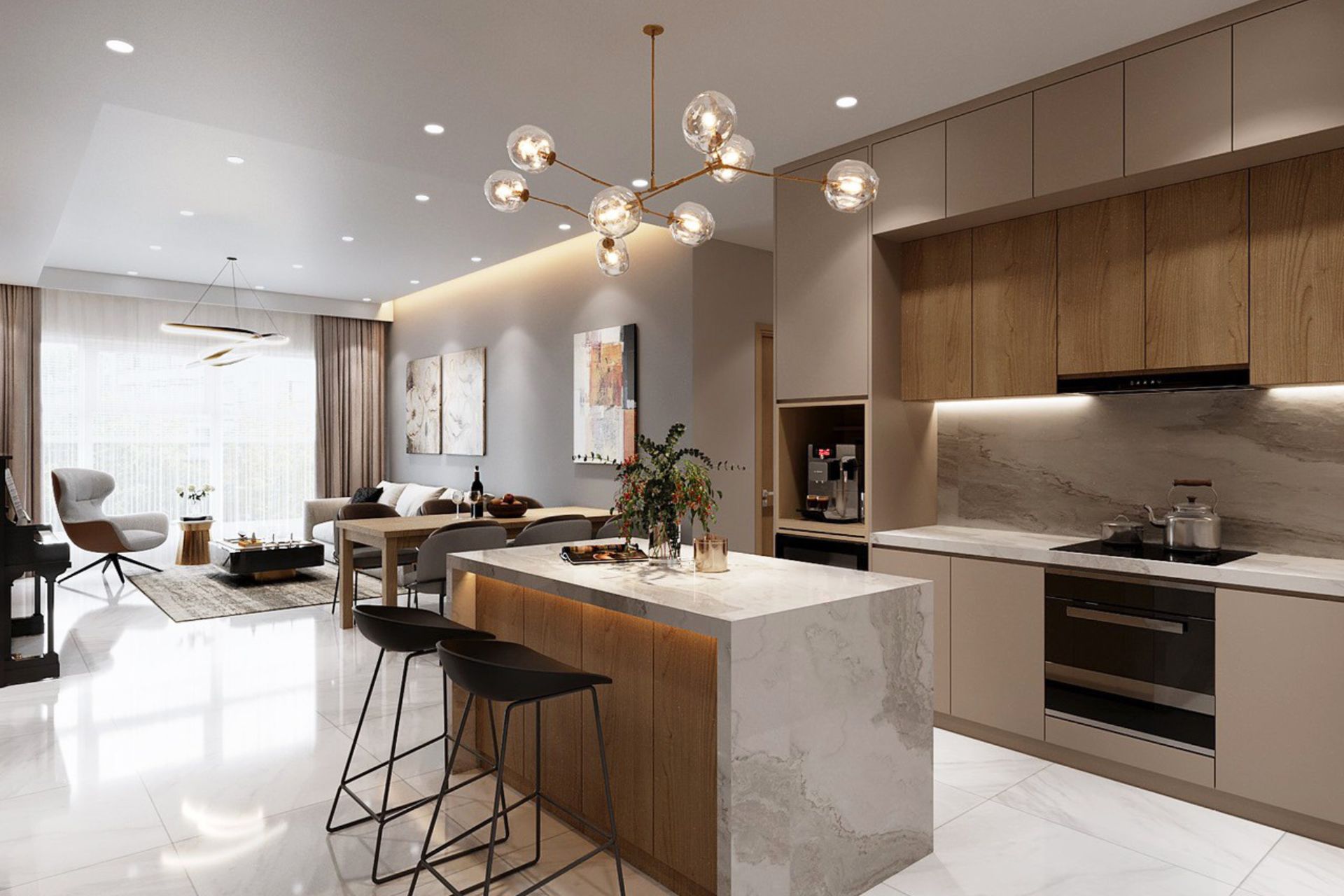 Natural stone & artificial stone for kitchen spaces
Glass – A material that expands space
For small- to medium-sized apartments, glass is a “powerful” material in modern apartment interior design and construction. Glass is often used for partitions, glass doors, railings, coffee tables, and tabletops. Incorporating glass into interior design helps increase natural light and create an airy, spacious feeling. Tempered glass, frosted glass, or colored glass is commonly chosen to ensure safety while meeting aesthetic requirements.
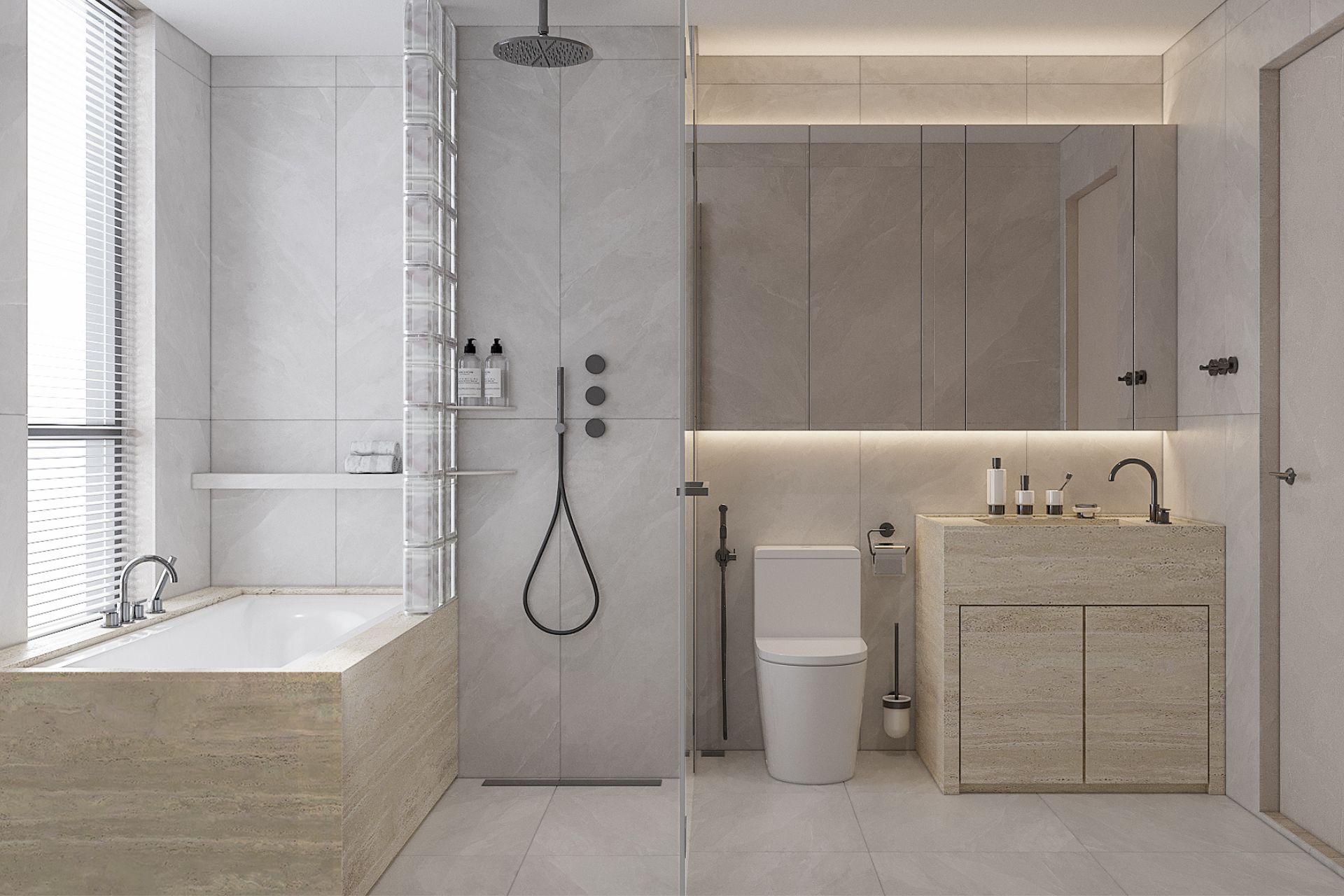 Glass is used in bathroom interior spaces.
Metal – Creating a modern and luxurious feel
Metal is increasingly used in apartment interior design and construction, especially in modern, luxury, or industrial styles. Common metal materials include powder-coated steel, stainless steel, and aluminum. Metal often appears in furniture frames, handles, fittings, and decorative lighting. When combined with wood, stone, or soft materials, metal creates a balanced, refined, and modern space.
Other materials – Completing the emotional quality of the space
In addition to the materials above, other supplementary materials play an important role in completing the living experience. For example, fabric and leather used in sofas, chairs, and beds create a soft and relaxing feel. Carpets and curtains help regulate light and add warmth to the space. Wallpaper and premium plastics can also be incorporated to create decorative accents and allow easy updates and renewal of the interior.
In apartment interior design and construction, a harmonious combination of hard and soft materials helps prevent the apartment from feeling cold or rigid, while enhancing daily emotional comfort.
 Other materials that complete the emotional experience of the space
Conclusion
Material selection is one of the most important steps in apartment interior design and construction. Suitable materials not only make the space more beautiful but also ensure durability, convenience, and long-term usage value.
Instead of following trends, homeowners should prioritize materials that suit apartment characteristics and focus on balancing aesthetics and functionality. A truly livable apartment is not defined by the most expensive materials, but by smart material selection and combination—used correctly, for the right purpose, and according to actual needs.
Contact TECO to receive detailed consultation solutions for your home.