Classroom Design for International Schools: Criteria for an Effective Learning Environment
Classrooms are not merely places where knowledge is delivered. They are also spaces where students develop their thinking, creativity, and skills. Therefore, classroom design for international schools must meet various criteria related to functionality, comfort, and safety. A well-planned space supports teaching, enhances the learning experience, and meets long-term usage needs. Explore the details with TECO in the article below.
1. Why Is Classroom Design Important in International Schools?
The learning environment affects students’ ability to concentrate and interact. Lighting, acoustics, temperature, and furniture arrangement all contribute to the learning experience.
At international schools, educational methods often emphasize active participation and practical learning. Students do not simply acquire knowledge; they also participate in discussions, work in groups, and present their ideas. Therefore, classrooms must accommodate different forms of learning.
Appropriate design also helps optimize space and improve operational efficiency. This provides a foundation for building a modern educational environment.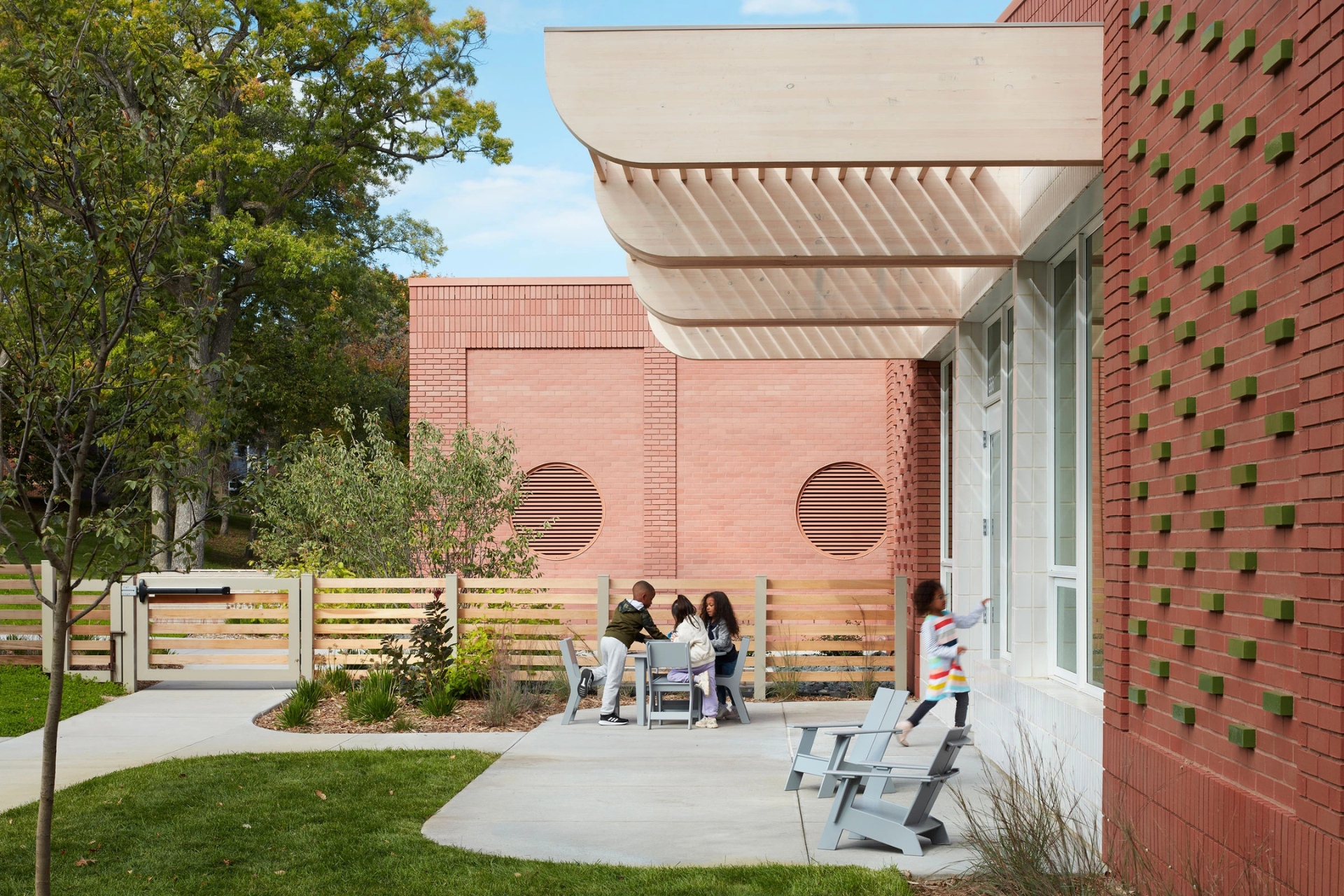
The importance of international school design.
2. Key Criteria for Effective Classroom Design in International Schools
2.1. Optimize Space and Functionality
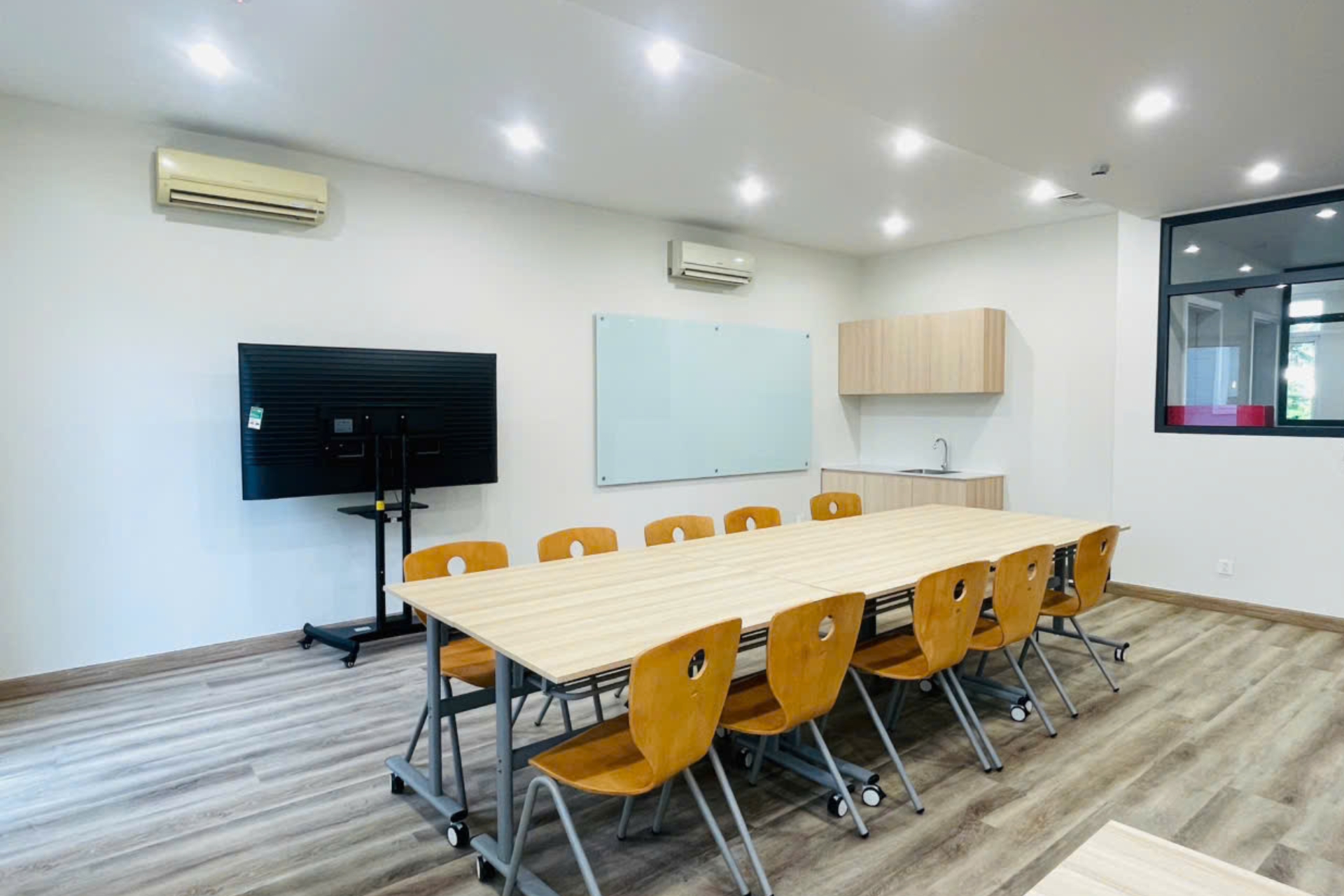
Classroom layouts must suit the number of students and teaching requirements. Desks, chairs, writing boards, and walkways must be arranged systematically. This allows students to move around conveniently and enables teachers to manage the classroom more easily.
In addition, the space must be flexible. Furniture can be rearranged to accommodate individual activities, group discussions, or presentations. As a result, classrooms can support various teaching methods without requiring structural changes.
2.2. Maximize Natural Light
Appropriate lighting helps students see clearly and reduces fatigue during learning. Therefore, designs should maximize natural light through windows and effective floor plan layouts.
However, direct sunlight and glare on writing boards must be minimized. Artificial lighting systems must also be arranged appropriately. Light should be distributed evenly across desks and teaching areas.
Combining these two light sources helps create a comfortable and effective learning environment.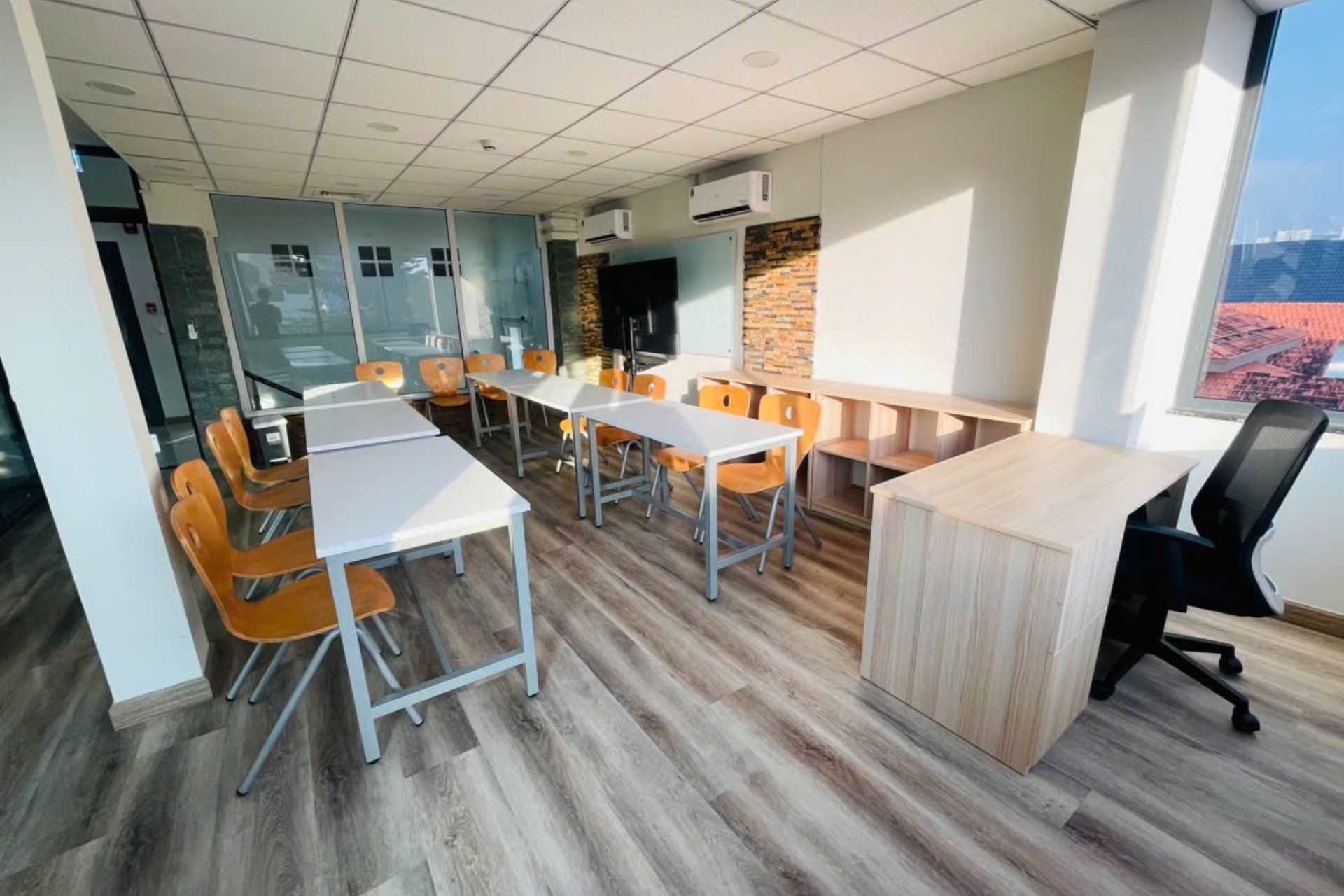
Maximize natural light.
2.3. Ensure Ventilation and Thermal Comfort
Classrooms often have high occupancy levels. Therefore, ventilation systems must be carefully calculated to maintain air quality.
Depending on the building’s conditions, natural and mechanical ventilation can be combined. Air conditioning systems must also be appropriately arranged. Overheating, stagnant air, and cold air blowing directly onto students should be avoided.
An integrated solution helps improve comfort. In addition, planning these systems from the outset helps control operating costs.
2.4. Control Acoustics and Noise
Noise can disrupt the learning process. Echoes can also make it difficult for students to hear lessons clearly.
To address these issues, noise from corridors and adjacent areas must be minimized. Appropriate sound-absorbing materials can be used on ceilings, walls, or other necessary surfaces. The spatial layout should also support clear hearing and communication.
This criterion is particularly important in international schools, where discussions, presentations, and group activities take place regularly.
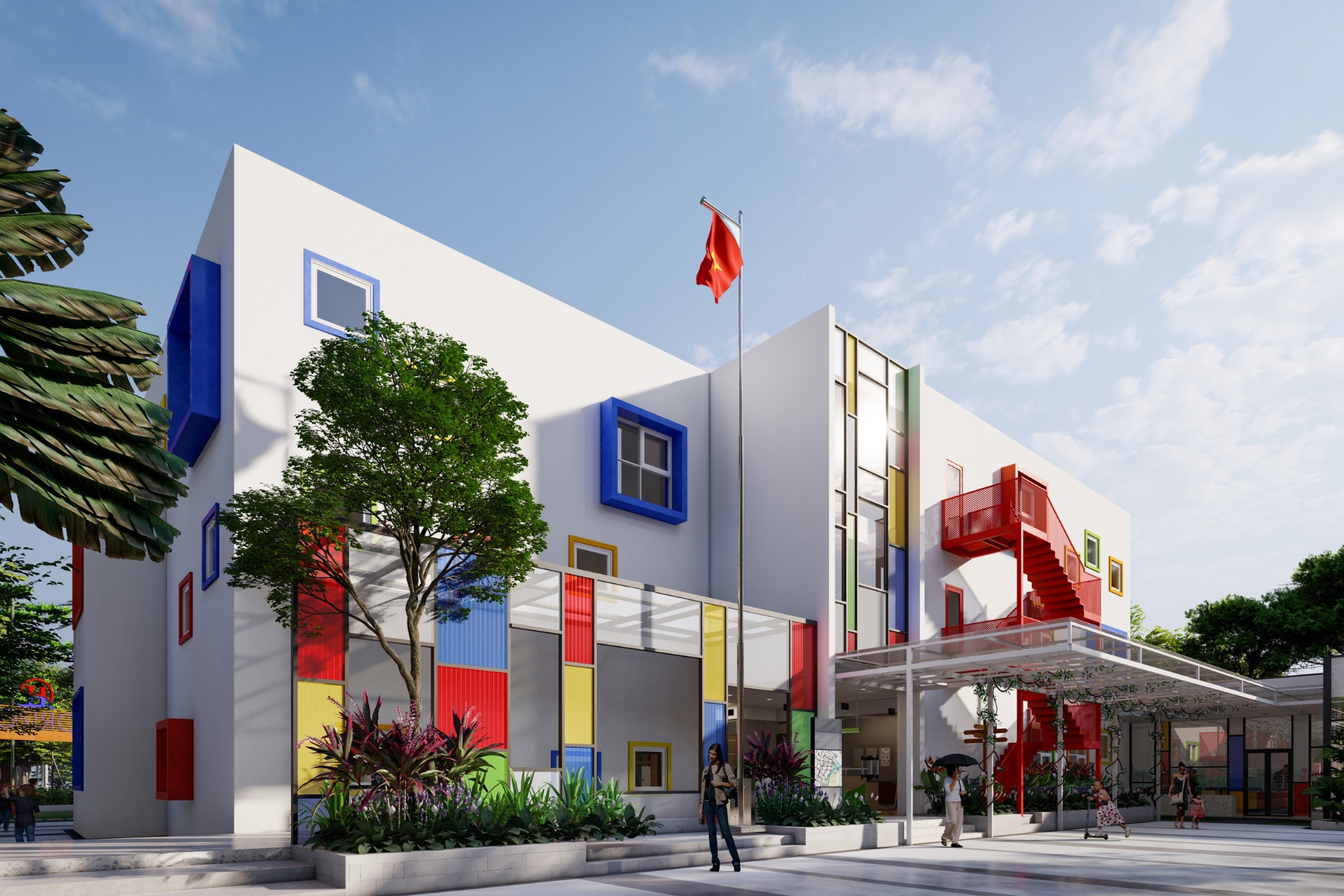
Control acoustics and noise.
2.5. Choose Safe Furniture and Materials
Desks and chairs must suit students’ ages and body sizes. Furniture design should also support proper sitting posture and provide comfort during use.
Beyond functionality, materials must be durable and easy to clean. Details such as edges, contact surfaces, and storage systems must all be carefully considered.
In addition, materials with clear origins that are easy to maintain should be prioritized. This solution helps extend the building’s service life and optimize usage costs.
2.6. Integrate Technology into Classrooms
Technology is becoming increasingly common in modern education. Therefore, classrooms must have suitable infrastructure for interactive displays, presentation equipment, and connectivity systems.
Installation positions must ensure clear visibility for students. Electrical and network systems must also be planned during the design stage. This helps minimize renovation work after the building becomes operational.
However, technology must serve teaching objectives. Equipment selection should be based on the school’s actual needs.
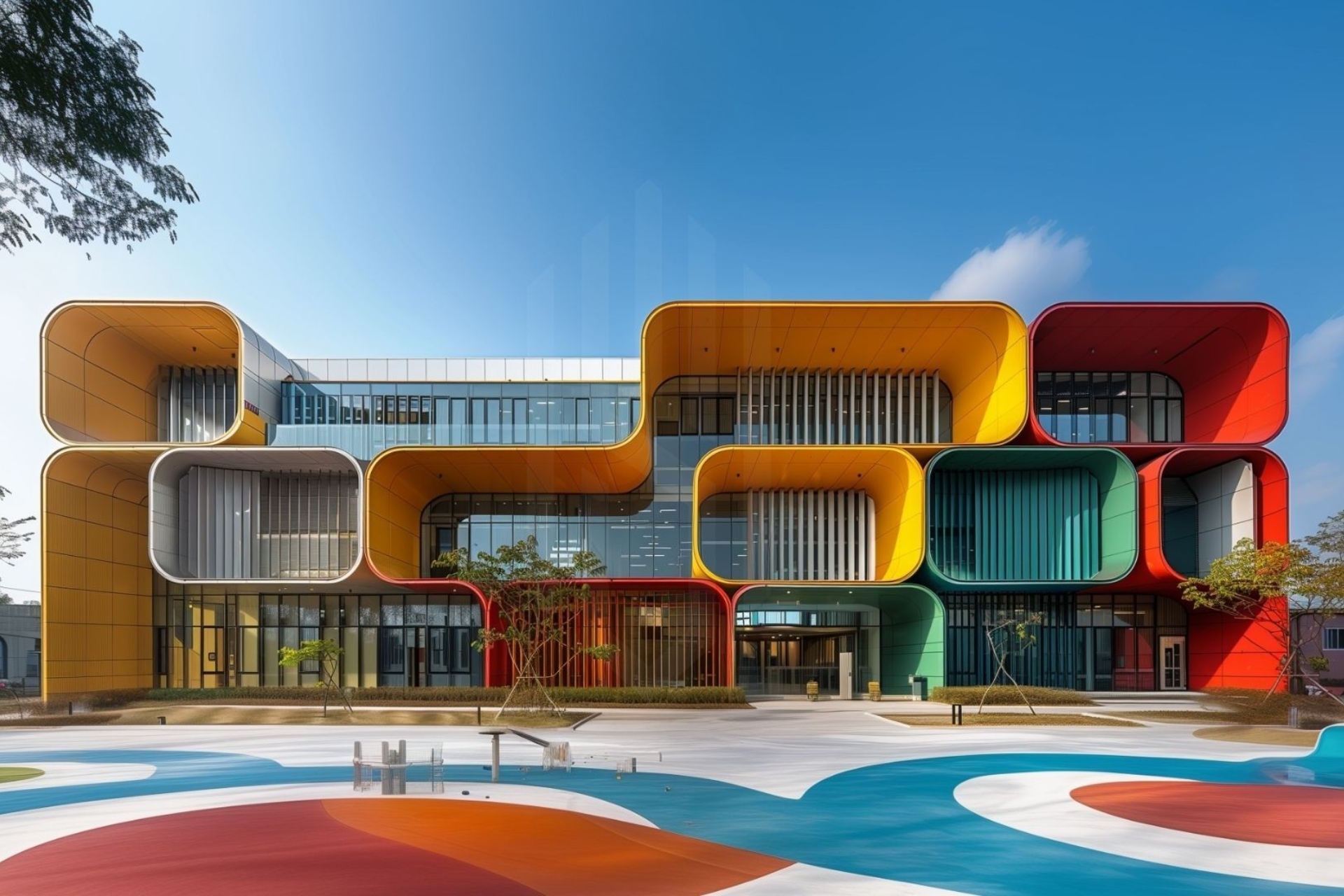
Integrate technology into classrooms.
3. TECO – A Design and Construction Partner for International Schools
A high-quality educational facility requires coordinated investment from design through construction. Coordination between architecture, functionality, and technical systems helps minimize operational issues.
TECO provides building design and construction solutions focused on suitability, efficiency, and sustainability. For international school projects, studying usage requirements from the outset provides a basis for selecting appropriate implementation solutions.
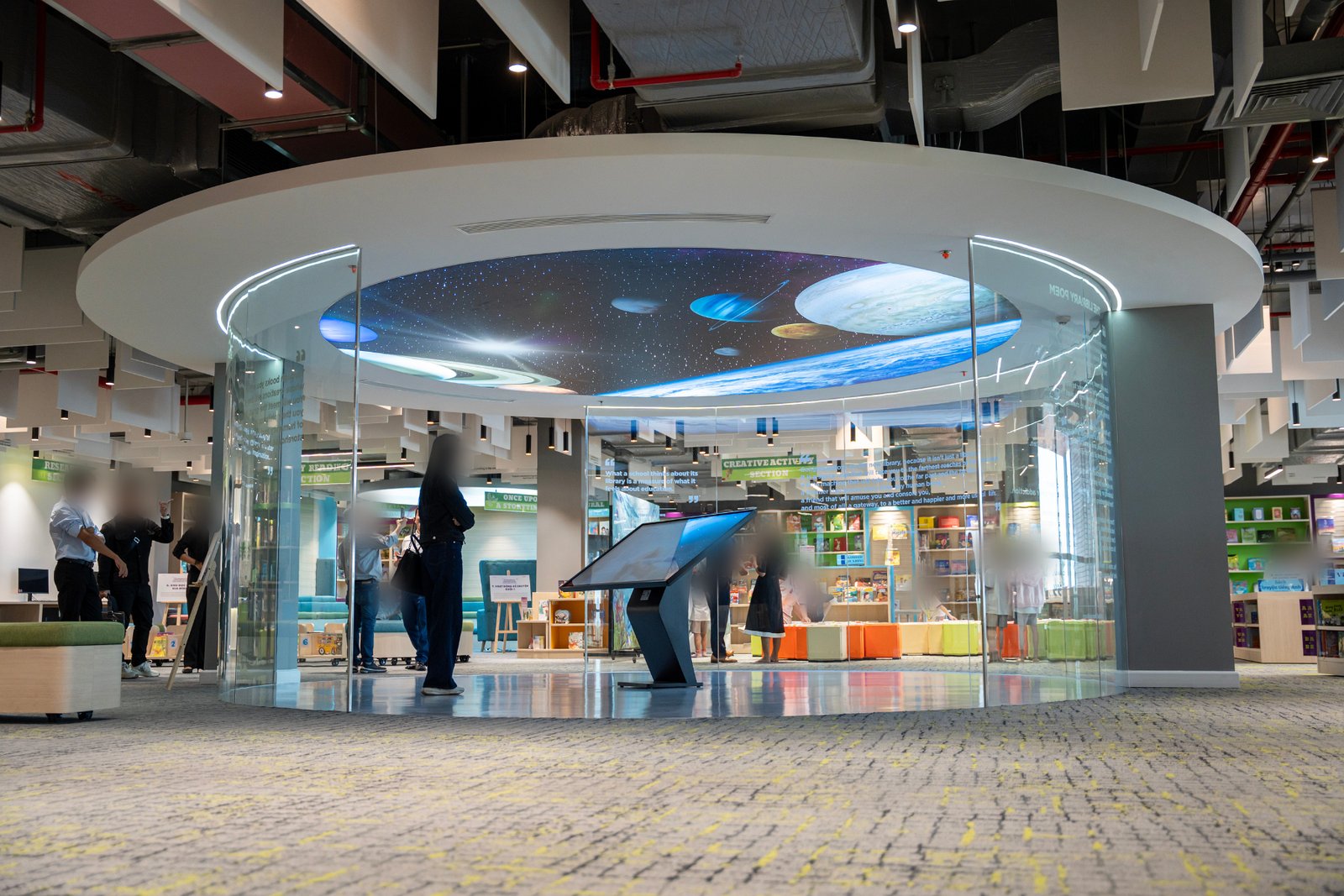
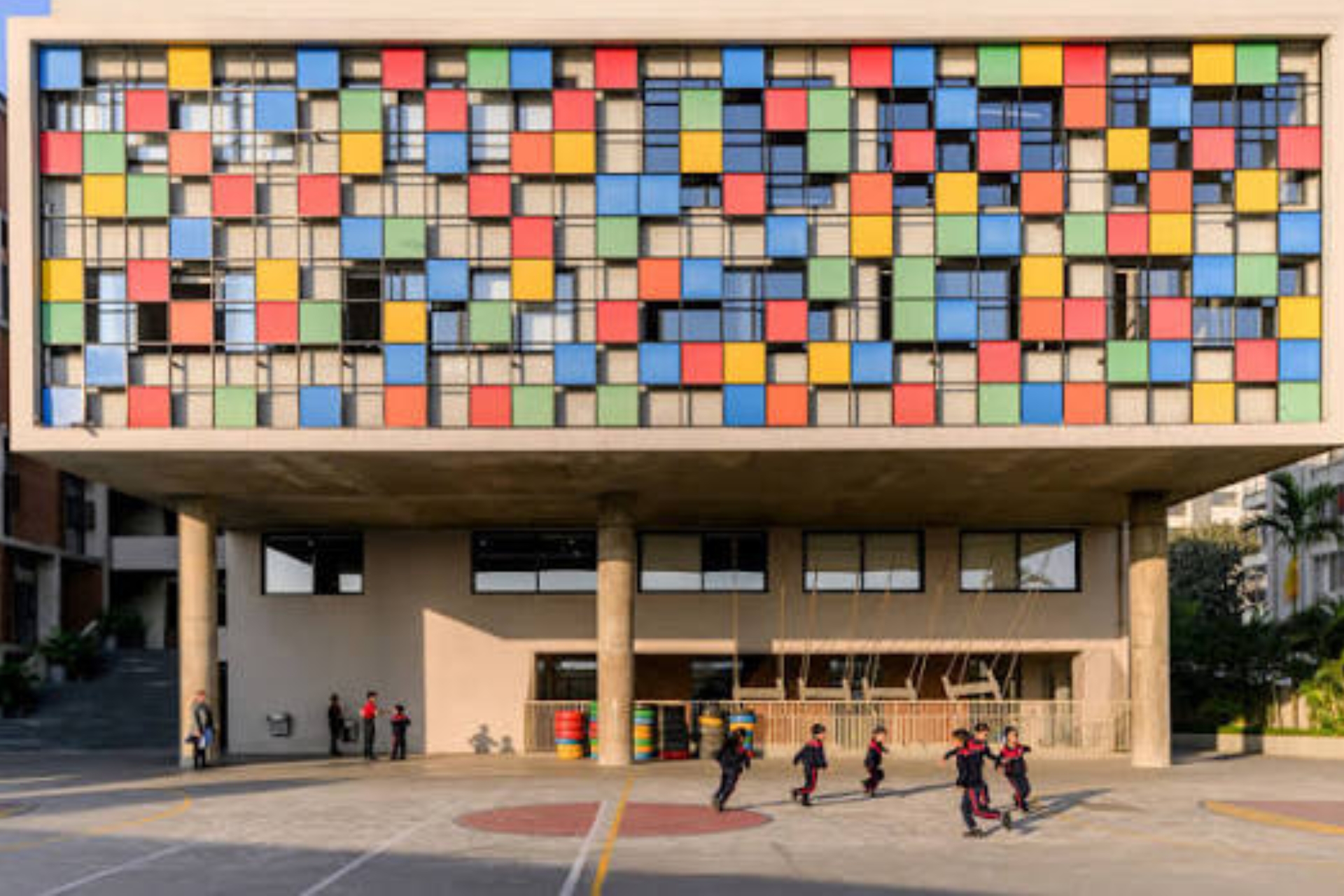
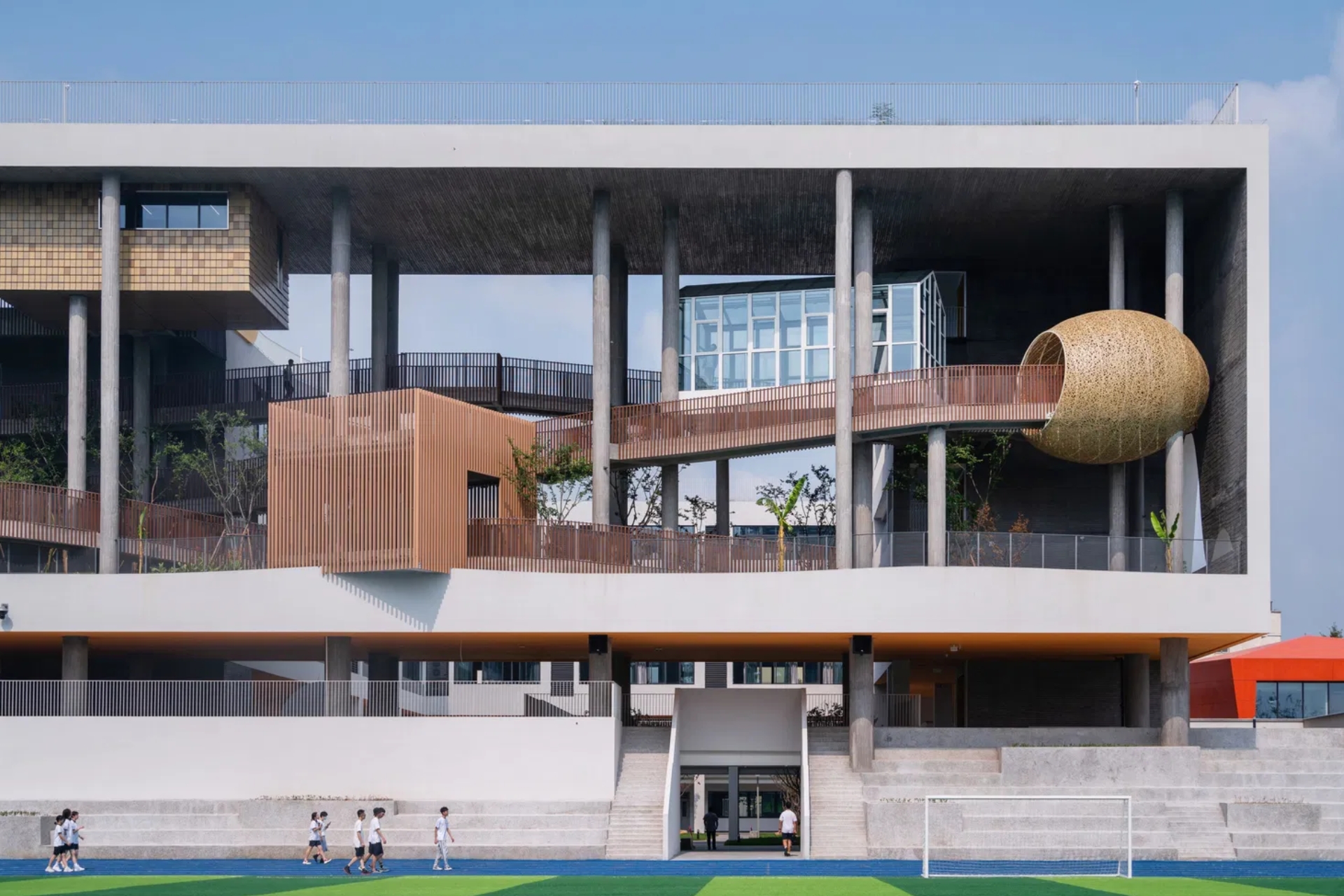
Educational facility design requires coordination between architecture, functionality, and engineering. With its focus on building design and construction, TECO aims to deliver solutions that meet actual usage requirements. TECO’s notable educational projects include Horizon Bilingual School, the EMASI Plus Waterpoint International School Library, and the International German School (IGS).
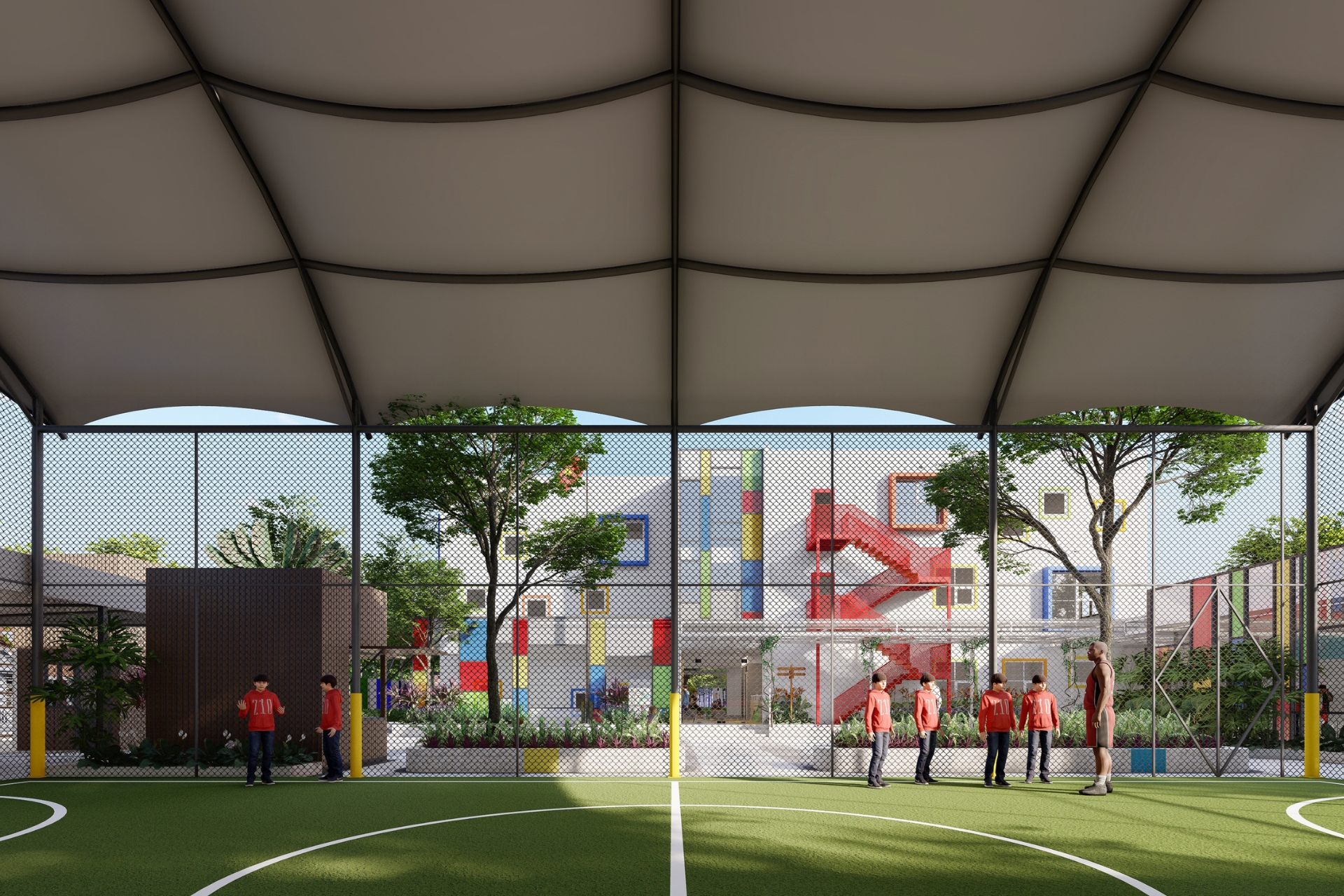
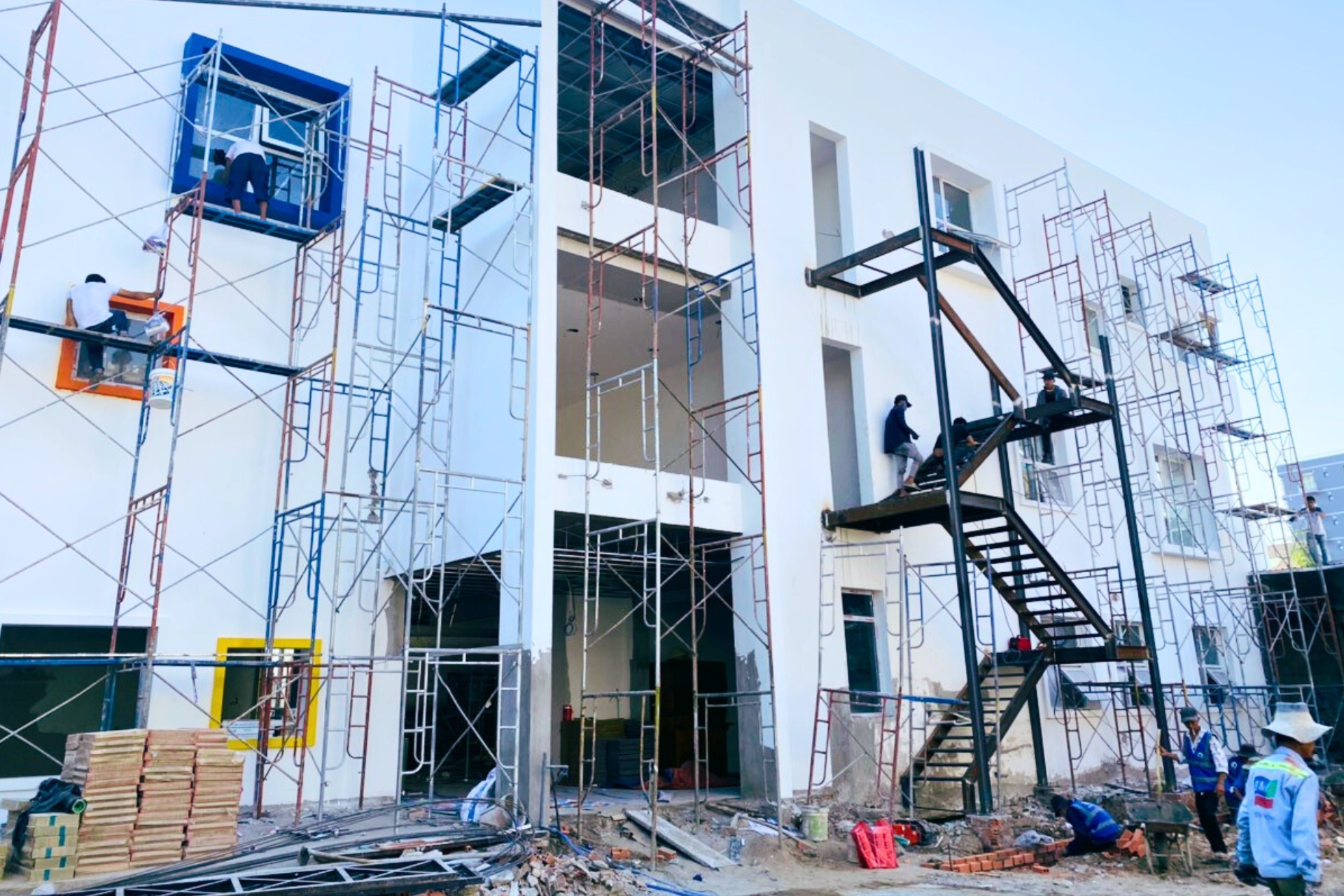 TECO’s design and construction of Horizon Bilingual School.
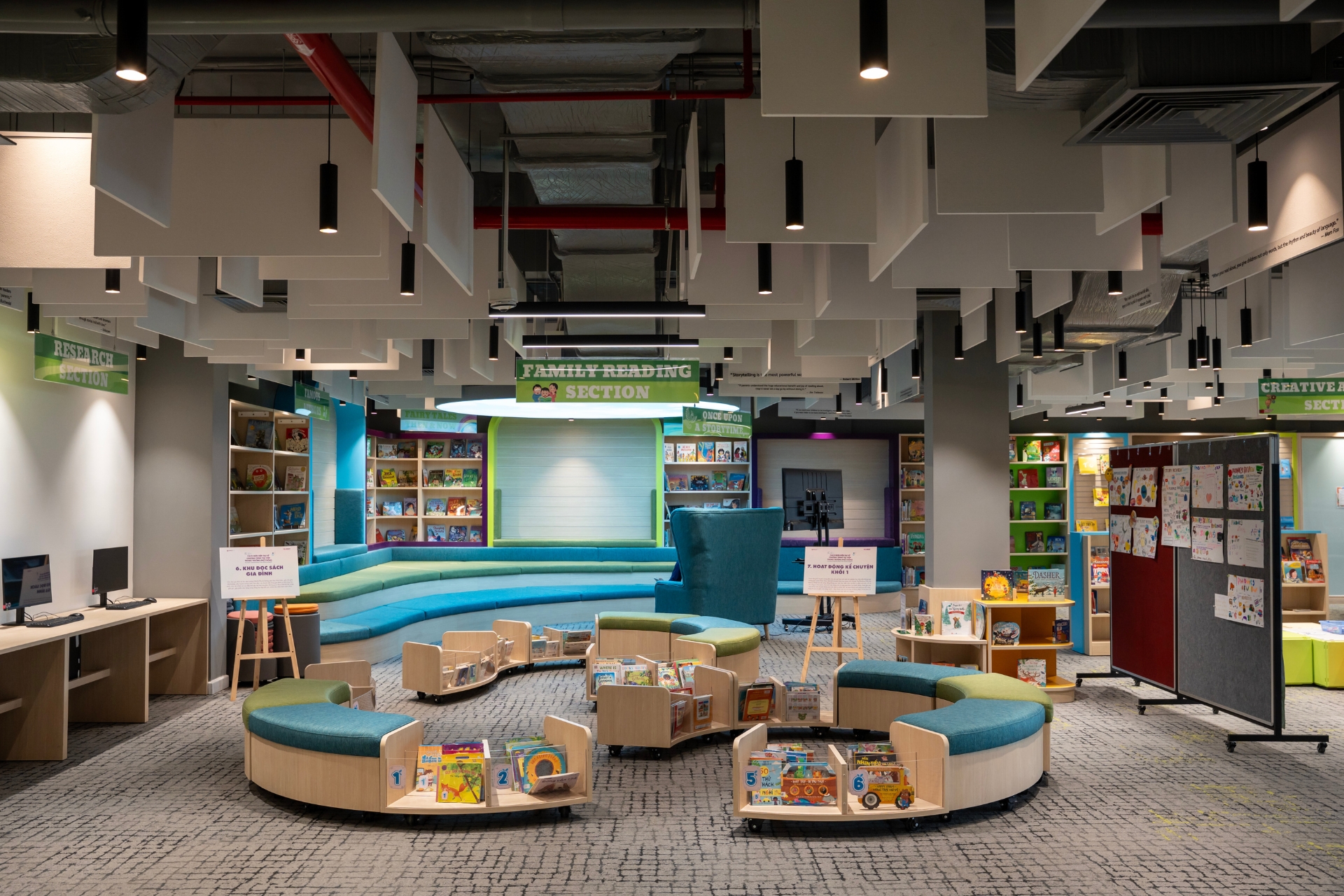
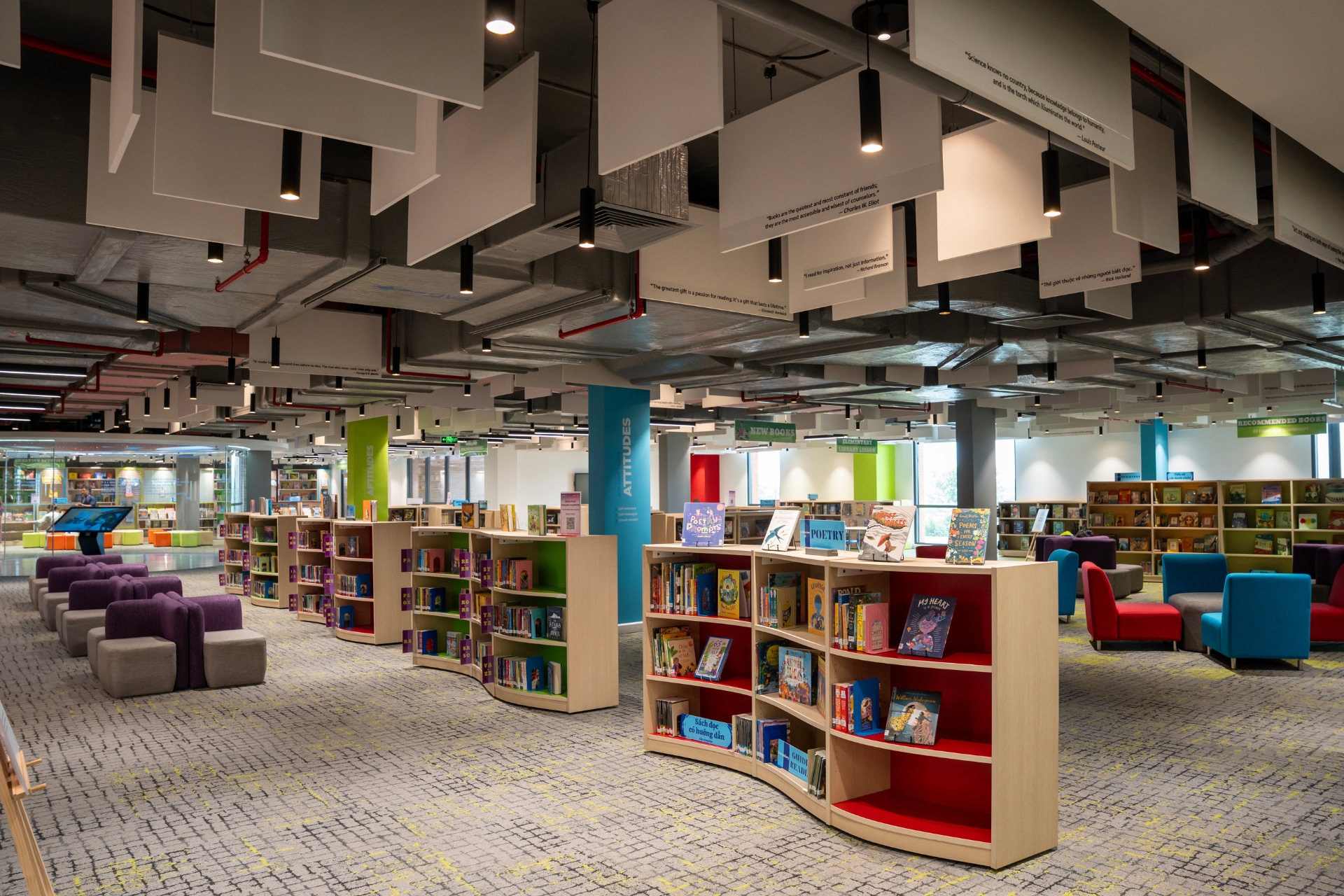
TECO’s construction of the EMASI Plus Waterpoint International School Library.
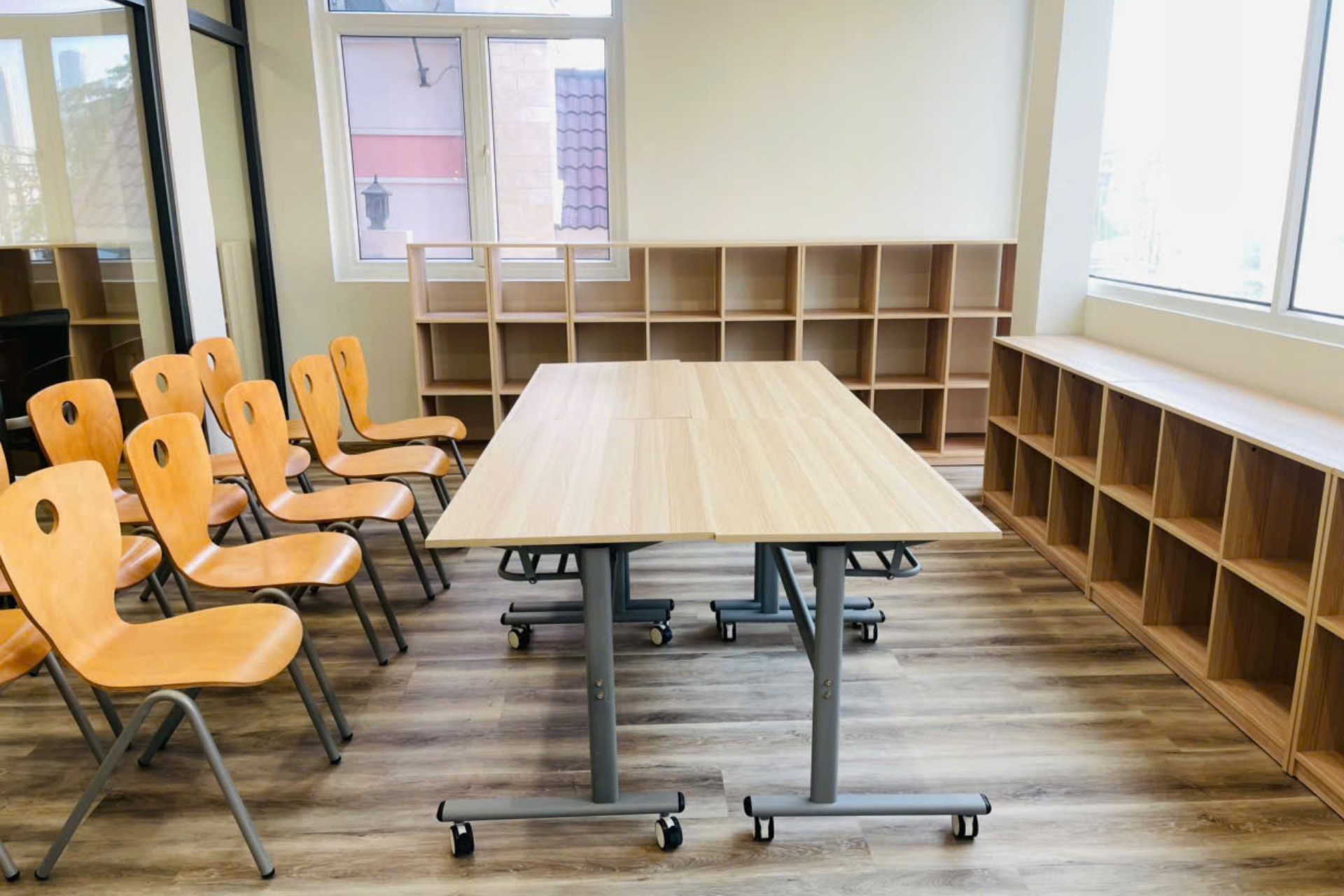
TECO’s construction of the International German School (IGS).
4. Conclusion
Classroom design for international schools must balance functionality, comfort, safety, and technology. A suitable space supports teaching and enhances the learning experience. It also provides a foundation for the school’s long-term development.
Contact TECO for consultation on design and construction solutions for international schools that align with your investment direction.
For site surveys or reviews of design documentation against currently effective regulations, call 0911 111 929.