
What Does Turnkey Bank Transaction Office Construction Include?
A bank transaction office needs to meet multiple requirements simultaneously in terms of functionality, aesthetics, security, and brand identity. Therefore, construction does not only stop at interior works but needs to be implemented comprehensively, from building finishes and technical systems to equipment and brand identity.
So, what work items are included in the turnkey construction of a bank transaction office? Below, TECO summarizes the common groups of work that need to be implemented in a transaction office project.
Bank transaction office construction work items.
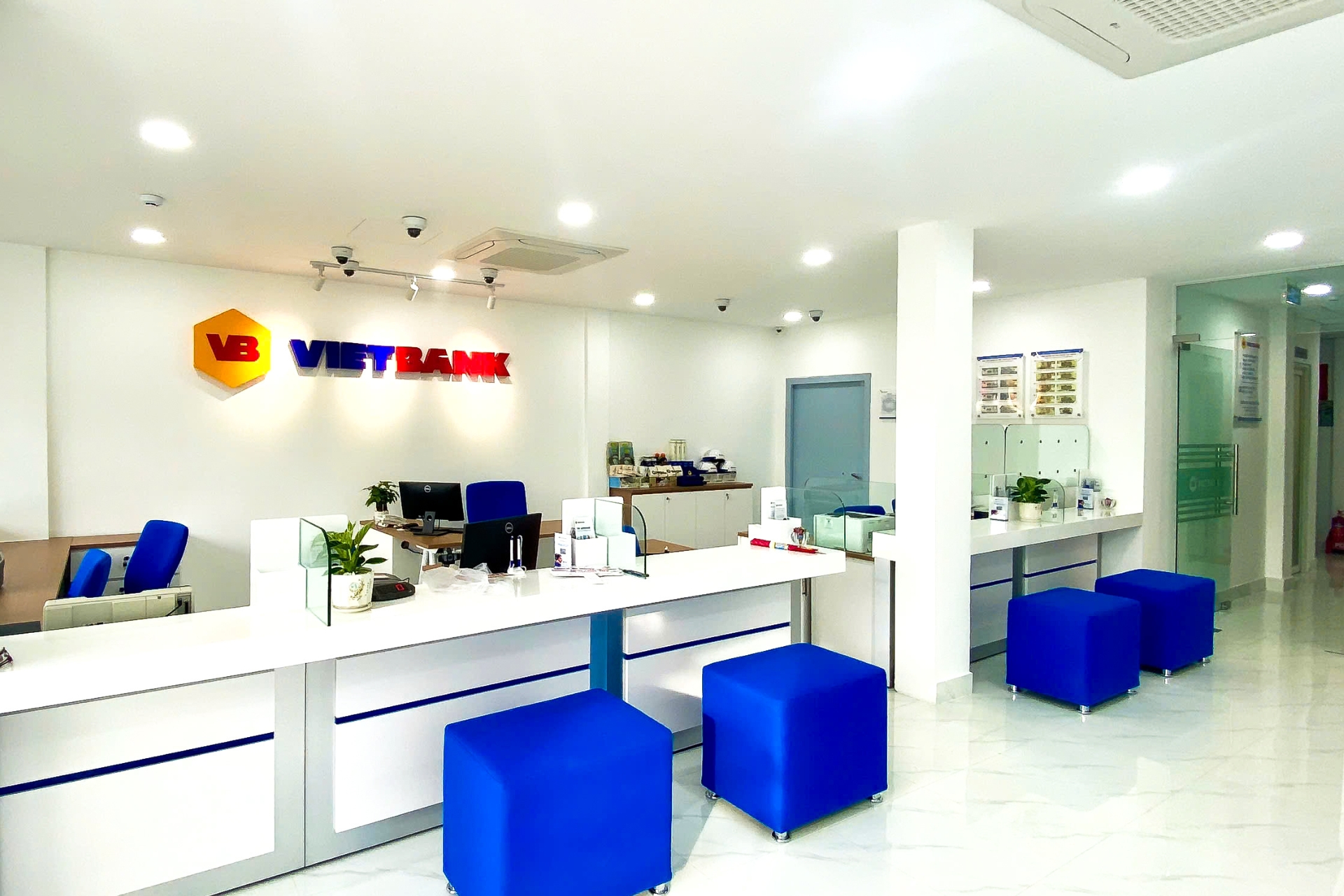
Construction of the Lobby and Reception Area
The lobby is the first point of contact between customers and the bank. The space needs to create a professional, clear, and convenient environment for movement.
Common work items include:
- Floor, ceiling, and wall finishing.
- Reception desk or information desk.
- Brand identity area.
- Logo, signage, and signs.
- Lighting system.
- Information guidance and display equipment.
The layout needs to ensure that customers can easily identify the entrance, waiting area, and transaction counters.
Construction of the Customer Waiting Area
The waiting area is usually arranged near the lobby and transaction counters. This is where customers can rest while waiting for their turn.
The work items may include chairs or sofas, side tables, partitions, queue number display screens, product information boards, and necessary electrical systems. The space needs to be organized appropriately to avoid intersections between customer traffic and staff work flows.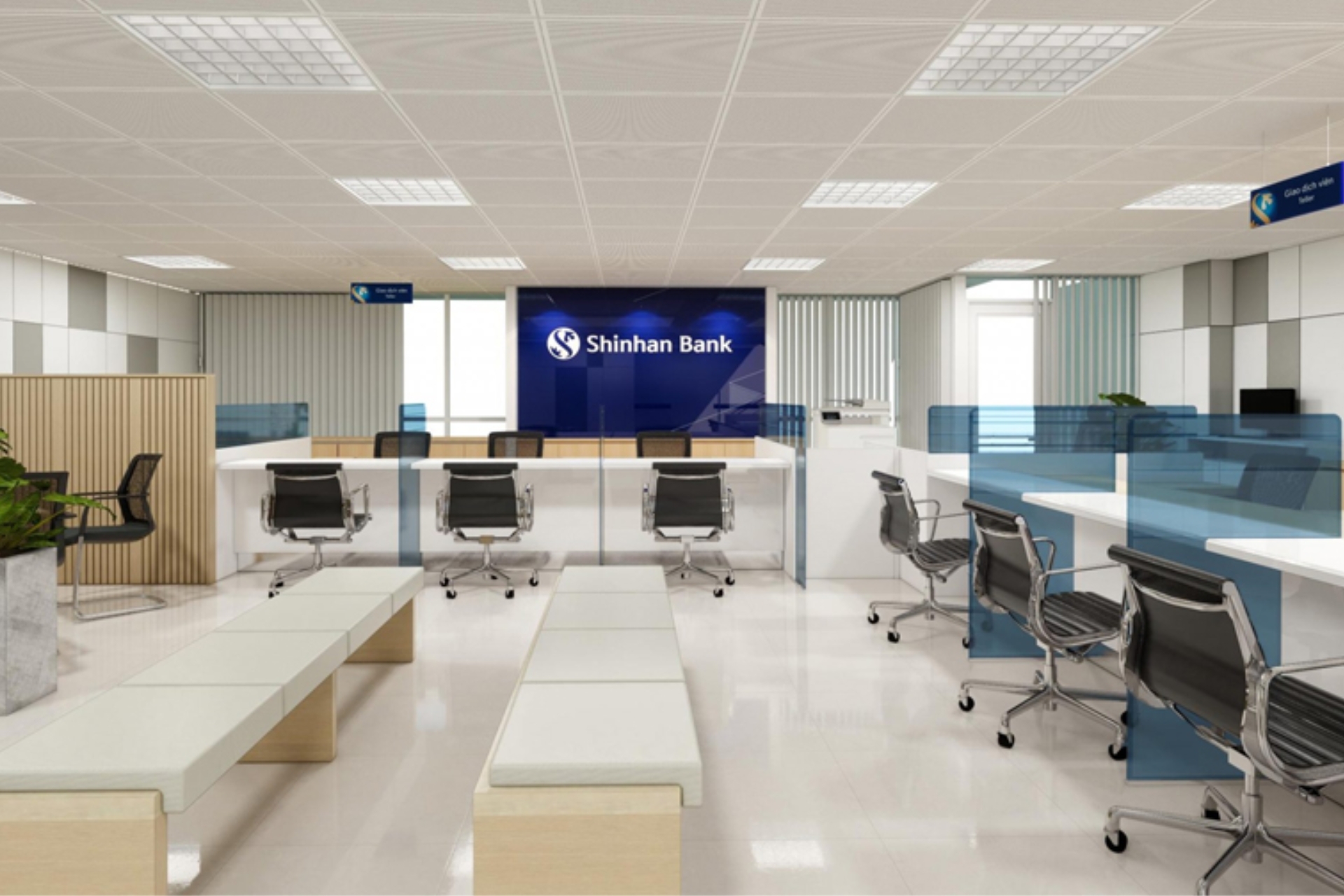
Customer waiting area.
Construction of the Transaction Counter Area
The transaction counter is the most important functional area in a bank transaction office. This is where direct customer requests are received and processed.
The main work items include:
- Transaction counters.
- Partitions between positions.
- Work desks and chairs.
- Filing cabinets.
- Electrical and network systems.
- Counter area lighting.
- Counter number signs.
- CCTV cameras and security equipment as required.
The design and construction of the counters need to balance aesthetics, functionality, and security requirements during transactions.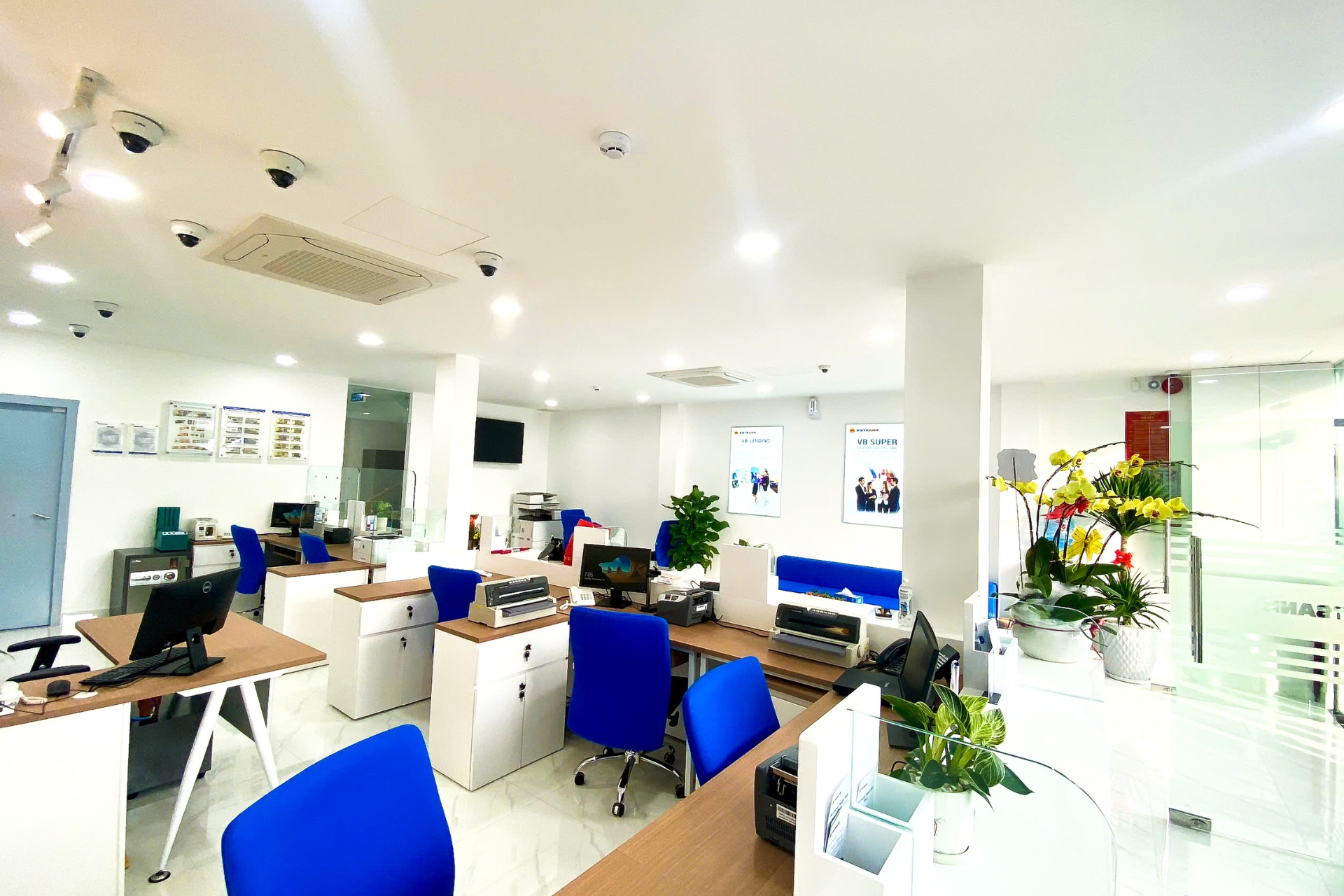
Bank transaction counter area.
Construction of the Customer Consultation Area
In addition to the transaction counters, a transaction office usually has an area dedicated to consultation. This is a space that requires greater privacy for staff to discuss products and services with customers.
This area may include consultation desks, chairs, glass partitions or dividers, document cabinets, electrical and network systems, and lighting. Appropriate separation helps improve the customer experience and create a professional environment during consultations.
Construction of the Internal Working Area
The space behind the customer area is usually reserved for bank staff. Depending on the scale, this area may include workstations, filing cabinets, a management room, a small meeting room, and a storage area. Electrical, network, air-conditioning, and lighting systems also need to be implemented in an integrated manner.
A good construction solution needs to ensure that employees can move, communicate, and handle their work conveniently without affecting the customer service area.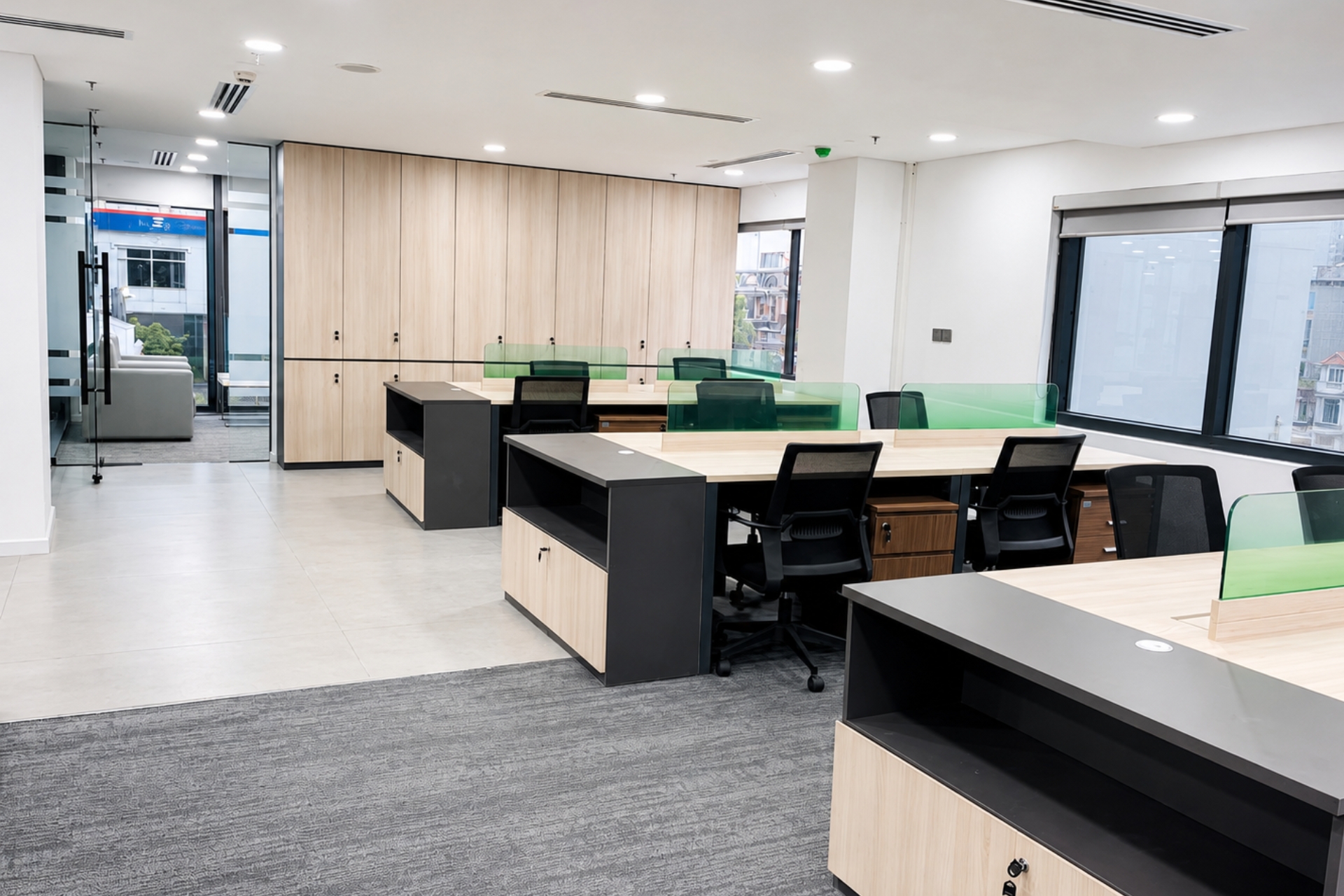
Internal working area.
Construction of the Treasury and Secure Areas
The treasury and areas for storing assets and important documents have high security requirements. Therefore, this is a group of work items that needs to be strictly controlled during construction.
Depending on the requirements of each bank, the work items may include controlled-access doors, surveillance cameras, access control systems, alarm systems, and other safety solutions.
Secure areas also need to be clearly separated from customer service spaces and general working areas.
Architectural and Interior Finishing
In addition to functional areas, architectural finishing determines the overall appearance of the transaction office. Common work items include:
- Flooring and ceilings.
- Wall painting.
- Glass partitions.
- Entrance doors.
- Dividers.
- Wall cladding.
- Loose furniture.
- Fixed furniture.
Materials need to ensure durability, ease of maintenance, and compatibility with the bank’s brand identity standards.
Construction of Electrical, Lighting, and MEP Systems
A transaction office cannot operate effectively without technical systems being implemented in an integrated manner. MEP work items commonly include:
- Power electrical systems.
- Lighting systems.
- Air-conditioning systems.
- Water supply and drainage systems, if any.
- Network and telecommunications systems.
- Fire alarm and fire protection systems.
- CCTV and security systems.
- Specialized technical systems as required.
These systems need to be coordinated with the architecture and interior design from the beginning to minimize conflicts during construction.
Brand Identity Implementation
Brand identity is an indispensable part of a banking space. From the façade to the transaction area, brand elements need to be presented consistently.
Common work items include signage, logos, dimensional lettering, backdrops, wayfinding signs, counter number signs, and brand communication touchpoints. Implementing the design in accordance with the brand guidelines helps the transaction office ensure functionality while maintaining consistency with the bank’s branch network.
What Are the Benefits of Turnkey Bank Transaction Office Construction?
Instead of separating each contractor, turnkey construction allows all work items to be managed consistently from beginning to end.
The contractor can coordinate work including building finishes, interior works, MEP, brand identity, and technical systems. As a result, the investor can more easily control the schedule and quality while minimizing issues caused by a lack of coordination between different contractors.
Especially for banks, schedule is an important factor. A well-planned construction solution needs to minimize the time during which the operation of the transaction office is affected.
Key Factors to Consider When Constructing a Bank Transaction Office
To ensure project effectiveness, the construction process needs to focus on four key factors: functionality, security, brand identity, and schedule.
Functionality needs to be aligned with actual operational processes. Security must be controlled according to each area. Brand identity needs to be consistent with the bank’s brand. The schedule needs to be clearly planned to minimize any impact on transaction activities. An effective transaction office is not only aesthetically pleasing upon completion. It also needs to be convenient, secure, and capable of operating stably over the long term.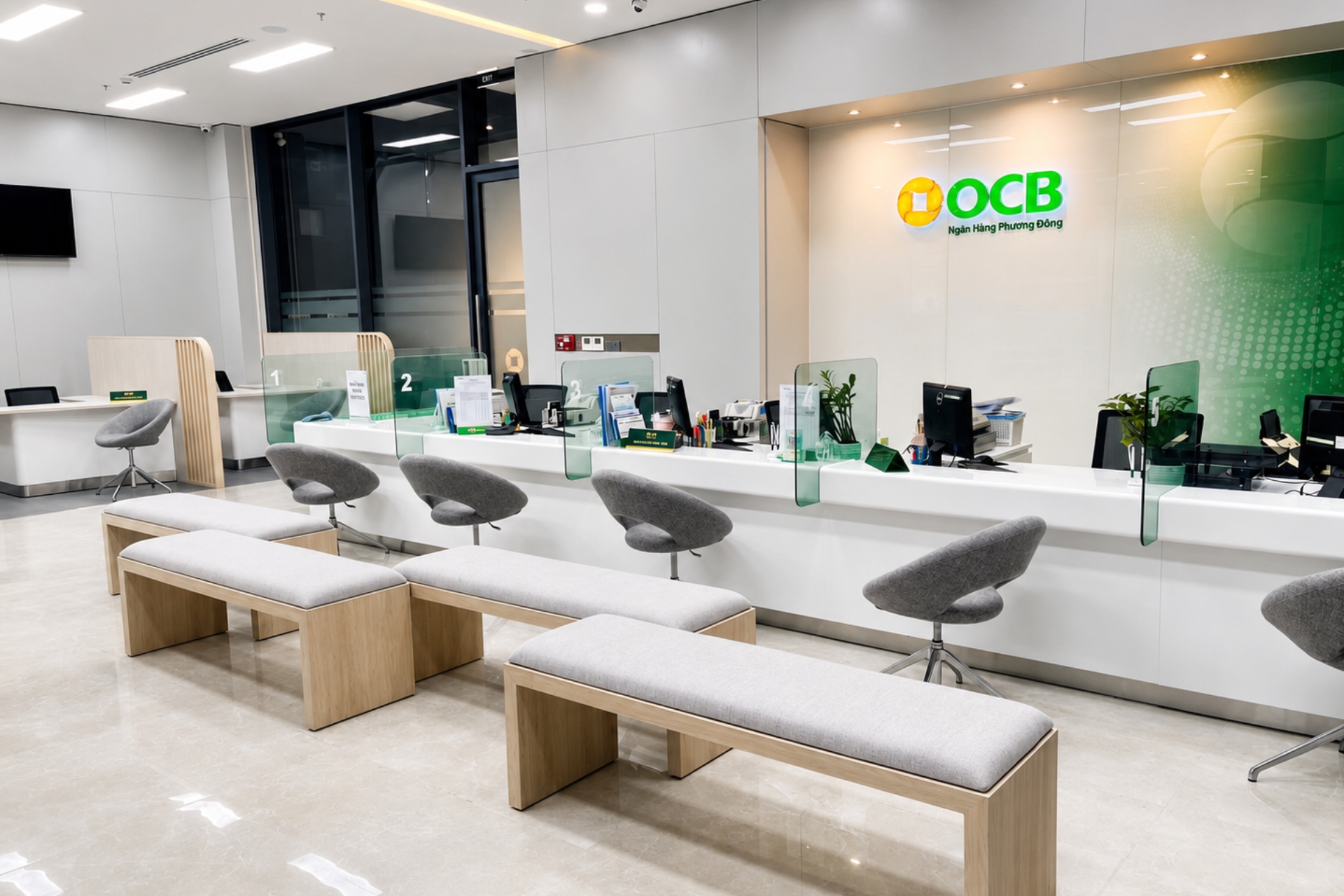
Key considerations when constructing a bank transaction office.
TECO – Bank Transaction Office Construction Contractor
For banking projects, choosing a capable construction contractor is an important factor. TECO provides implementation solutions ranging from site surveys and finishing construction to interior works and technical systems according to project requirements.
The process is controlled at each stage to ensure quality, schedule, and coordination between design and construction. If a business is looking for a turnkey bank transaction office construction solution, TECO can provide consultation on an approach that is suitable for the area, operational functions, and brand identity standards of each brand.
Related services: Bank branch & transaction office design & build · After-handover maintenance – TECO MSC