Reinforced Concrete Factory Construction: Things You Need to Know
Reinforced concrete is one of the structural solutions commonly used in factory construction. This material has good load-bearing capacity, high stability, and is suitable for many types of industrial buildings.
Depending on the scale, functionality, and construction conditions, businesses can use reinforced concrete structures for foundations, columns, beams, floors, or combine them with steel structures. Each solution has its own advantages and construction requirements.
So, what components does a reinforced concrete factory include? What is the construction process? What factors does the cost depend on? Let’s explore the details with TECO in the article below.
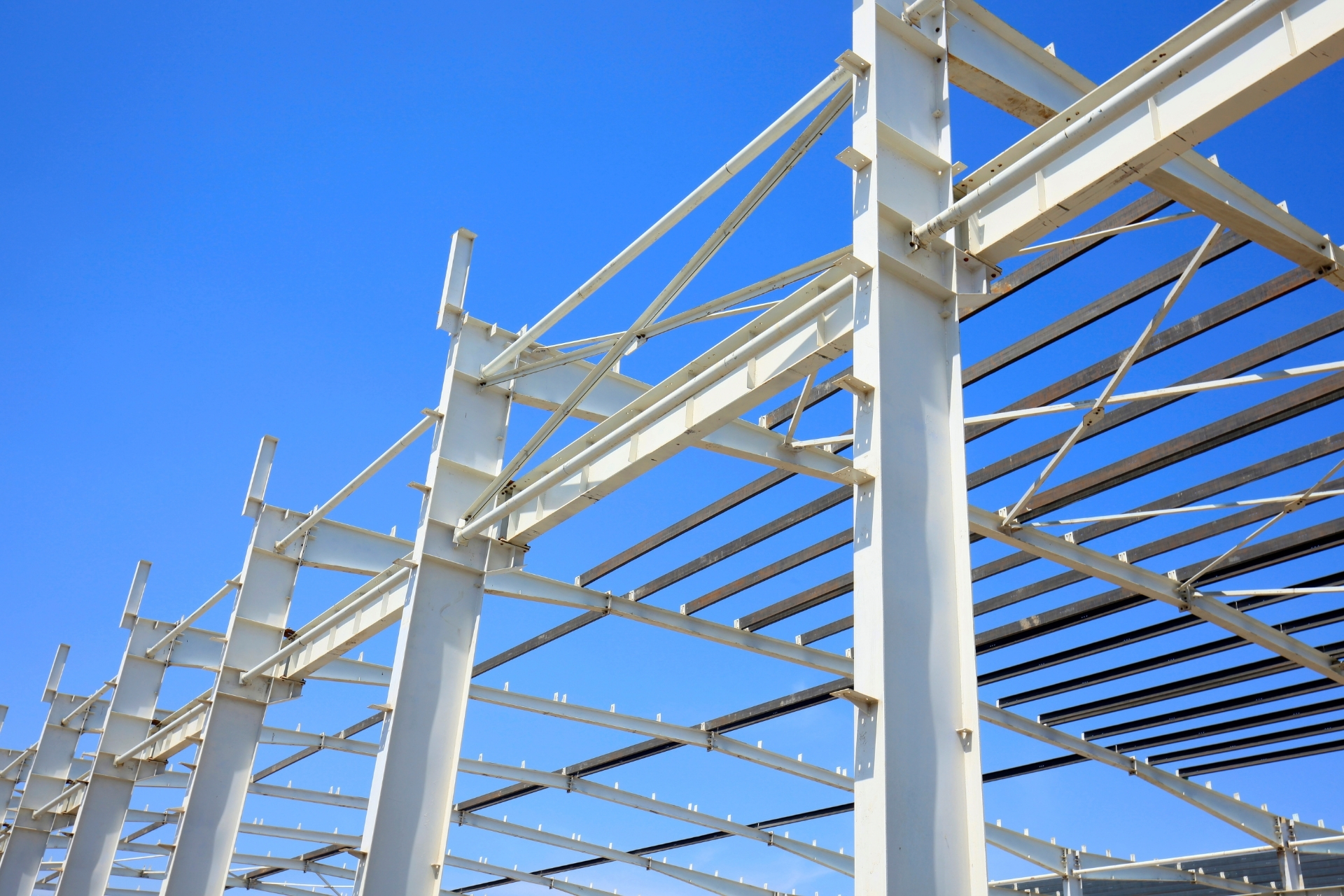
Reinforced concrete factory construction.
What Is Reinforced Concrete?
Reinforced concrete is a material that combines concrete and reinforcing steel. These two materials complement each other during the load-bearing process. Concrete has good compressive strength. Reinforcing steel provides tensile strength. When combined, they form a structural system with high load-bearing capacity and stability.
In factories, reinforced concrete can be used for foundations, columns, beams, floors, and many other structural components. Depending on the project requirements, this system can also be combined with steel structures to take advantage of the benefits of each type of material.
The important point is that reinforced concrete structures must be calculated according to loads, functionality, and actual conditions. A fixed solution should not be applied to every project.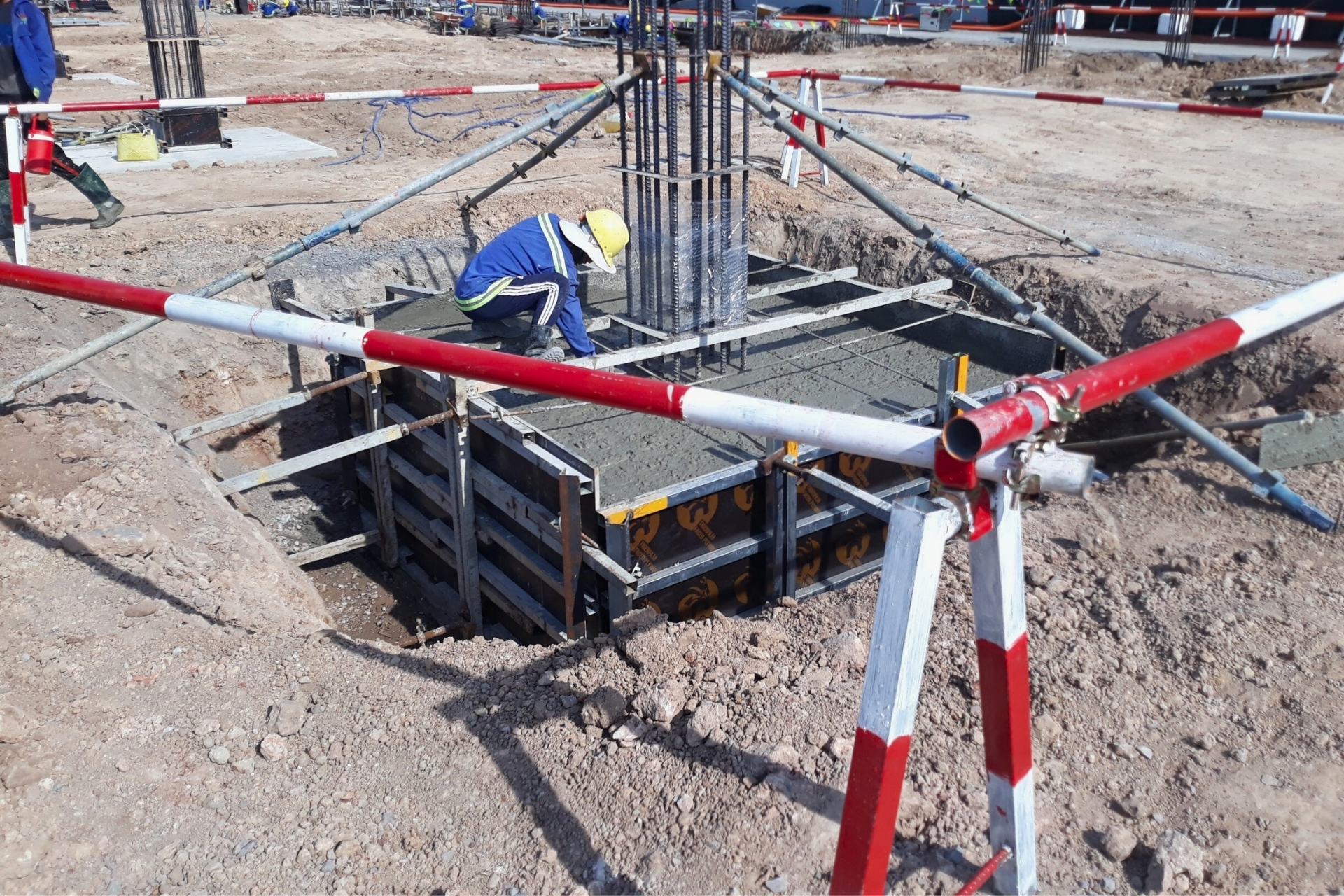
What is reinforced concrete?
What Does the Structure of a Reinforced Concrete Factory Include?
A factory using reinforced concrete usually consists of many components. Each component performs a function but is connected into a unified system.
Reinforced Concrete Foundation
The foundation is located beneath the building. It is the component that transfers loads from the superstructure to the ground.
Depending on geological conditions and loads, isolated footings, strip footings, raft foundations, or pile foundations may be used. The selection needs to be based on the results of the geological survey and structural calculations.
A properly designed foundation helps minimize the risk of settlement, cracking, and impacts on the stability of the factory.
Reinforced Concrete Columns and Beams
Columns and beams form the load-bearing frame of the building. Columns transfer loads to the foundation. Beams receive and distribute loads from the floor or upper structural components.
The size and arrangement of columns and beams need to be suitable for the span, height, and functionality of the factory.
Reinforced Concrete Floor
The floor bears loads from people, goods, machinery, and production activities. Therefore, this is an item that requires careful calculation.
For factories with heavy machinery or forklifts operating frequently, the requirements for load-bearing capacity and floor durability are even higher.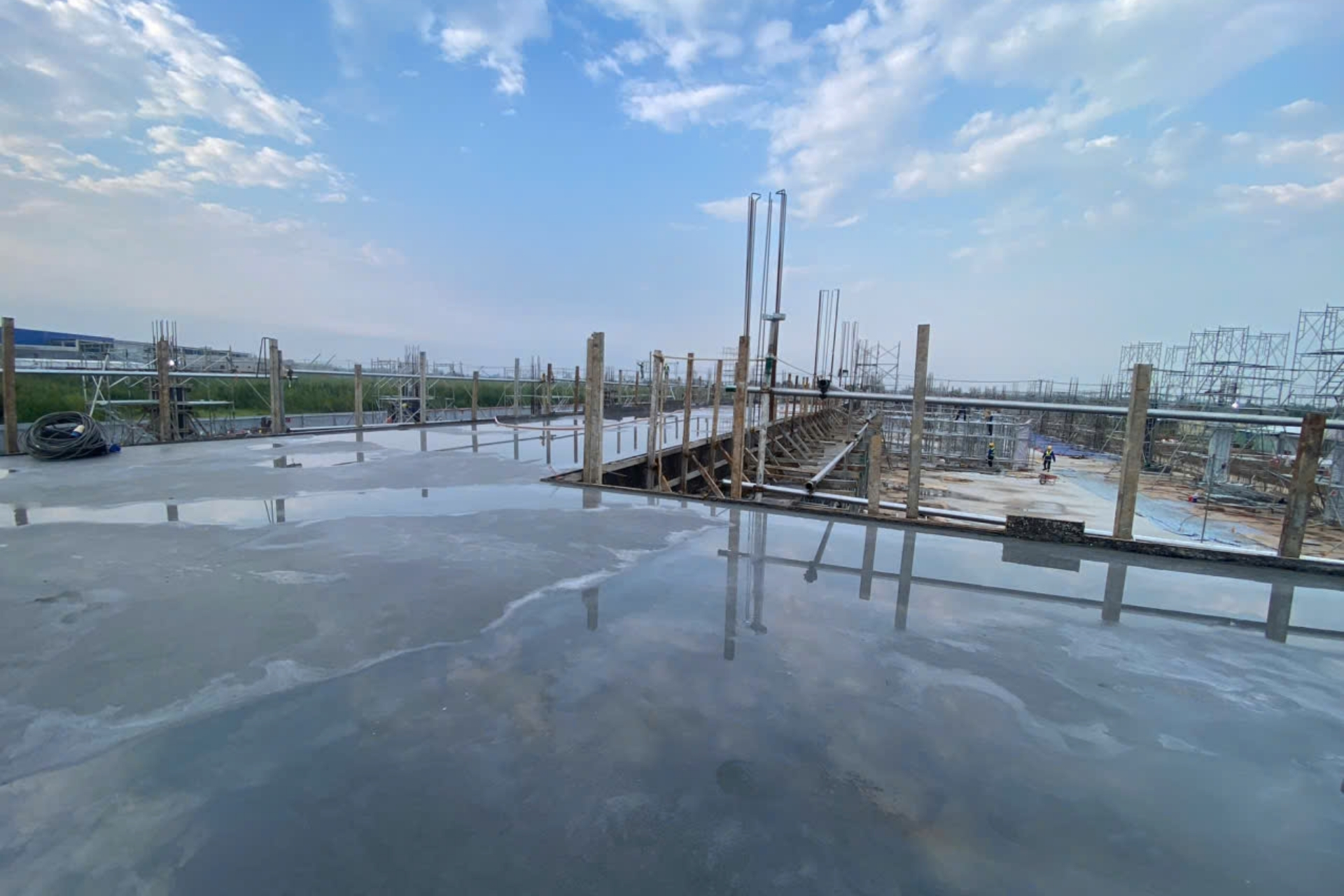
Reinforced concrete floor
Roof and Auxiliary Structural Components
Depending on the design, the roof may use reinforced concrete or be combined with a steel structural system. Items such as staircases, machine bases, and technical floors may also use reinforced concrete.
The specific solution needs to be determined based on the usage requirements of each building.
Advantages of Reinforced Concrete Structures in Factory Construction
Reinforced concrete structures have many advantages suitable for buildings requiring high stability.
Good Load-Bearing Capacity
The combination of concrete and reinforcing steel creates a structural system capable of bearing various types of loads. This is an important advantage for factories with large machinery, equipment, and goods.
High Durability and Stability
When properly designed and constructed, the building can be used for a long time. The structural system also has good stability under normal operating conditions.
Fire Resistance
Concrete has relatively good heat resistance. This is an advantage that should be considered for buildings with high fire safety requirements.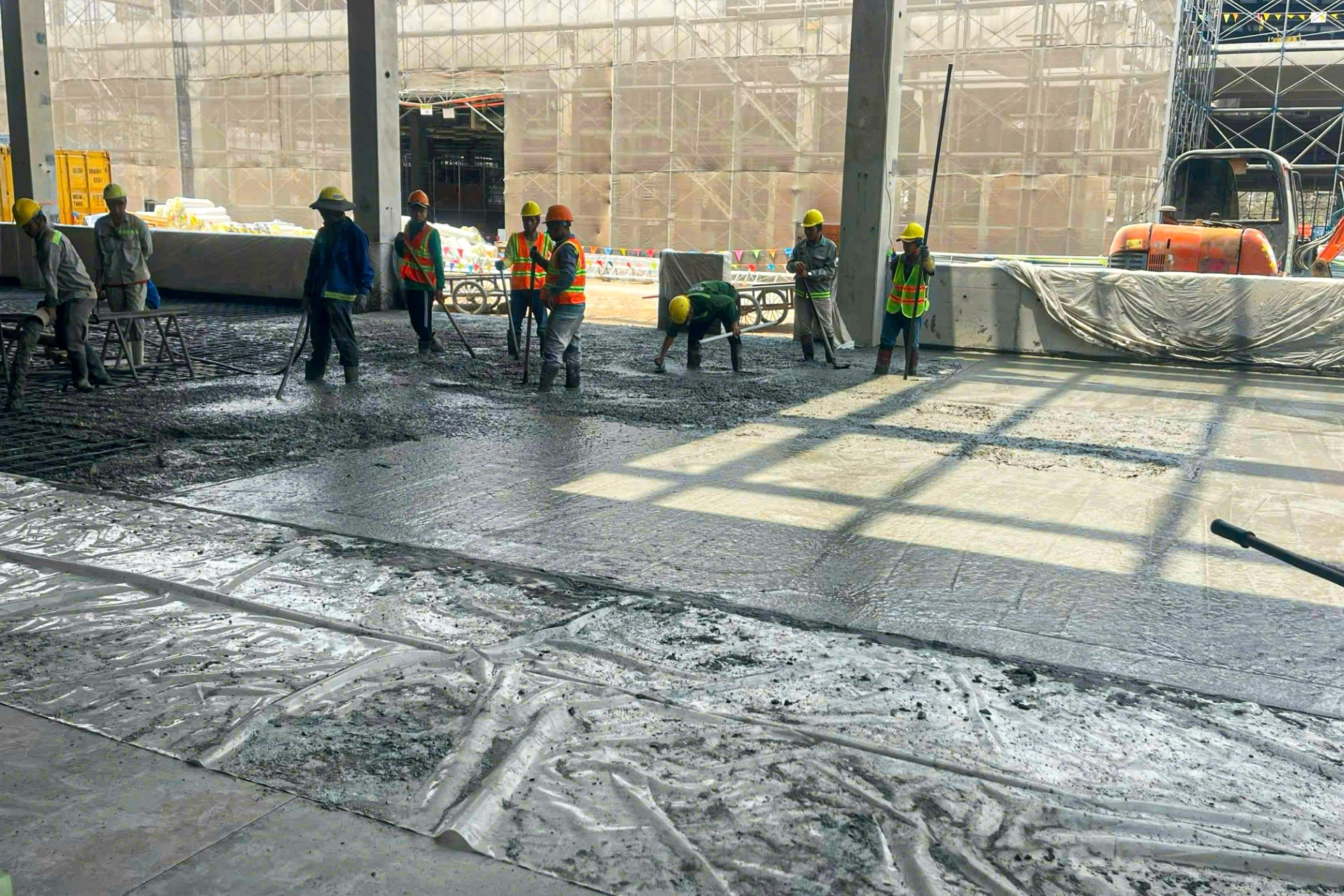
Advantages of reinforced concrete structures.
Flexible Applications
Reinforced concrete can be used for many work items. At the same time, this material can be combined with steel structures to create a more suitable solution for each building.
Disadvantages of Reinforced Concrete Factories
Besides its advantages, reinforced concrete also has some limitations.
The first is its high self-weight. This creates additional loads on the foundation. For sites with weak soil, the foundation solution may need to be calculated more carefully.
Construction time is also often longer than some fast-assembly solutions. The process requires multiple stages such as reinforcing steel fabrication, formwork installation, concrete pouring, and curing.
In addition, modifying or expanding a concrete structure after completion is usually more complicated. Therefore, expansion needs should be calculated from the design stage.
Businesses should not evaluate reinforced concrete as absolutely good or bad. The important point is to choose the right solution for the right building.
Reinforced Concrete Factory Construction Process
A well-organized construction process helps control quality and minimize additional issues.
1. Site Preparation
The first task is to clear and prepare the site. The construction team then carries out the setting out of grid lines and prepares the area for material storage.
The conditions required for construction also need to be prepared before foundation works begin.
2. Foundation Construction
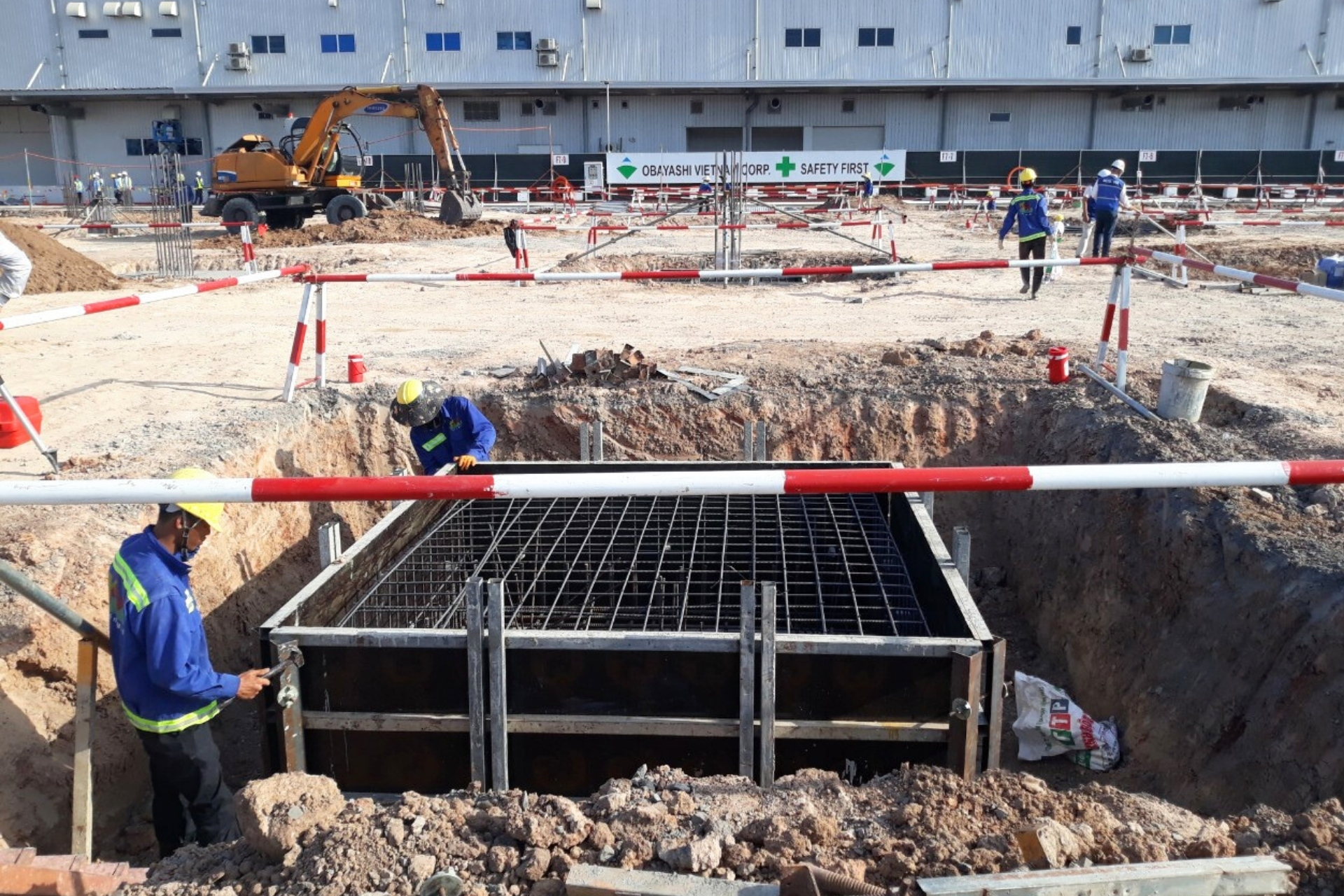
Depending on the solution, the work may include excavation, ground treatment, reinforcing steel installation, formwork installation, and concrete pouring.
After pouring, the concrete needs to be cured according to technical requirements. The quality of the foundation directly affects the stability of the entire building.
3. Construction of Columns, Beams, and Floors
Reinforcing steel is fabricated and installed according to the design documents. This is followed by formwork installation and inspection before concrete pouring.
After the concrete meets the required standards, the next steps are carried out according to the construction method. Controlling each stage helps minimize deviations and ensure structural quality.
4. Roof and Auxiliary Works Construction
The roof is implemented according to the selected solution. Items such as staircases, machine bases, and technical floors are also constructed according to the documents.
During this stage, coordination with MEP and fire prevention and firefighting systems is necessary to avoid conflicts between disciplines.
5. Finishing and Acceptance
After completion, the project is inspected for structural components and related technical systems.
Any items that do not meet the requirements need to be addressed before acceptance and putting the factory into operation.
TECO – Professional Factory Design and Construction Company
TECO operates in the fields of architecture and construction. The company has experience in implementing factories, manufacturing plants, and industrial buildings.
For each project, TECO starts from actual needs. Scale, functionality, production lines, loads, and operational orientation are all considered during the implementation process. The reinforced concrete structural solution is coordinated with architecture, MEP, and fire prevention and firefighting. This integrated approach helps make the solution more feasible when implemented in construction.
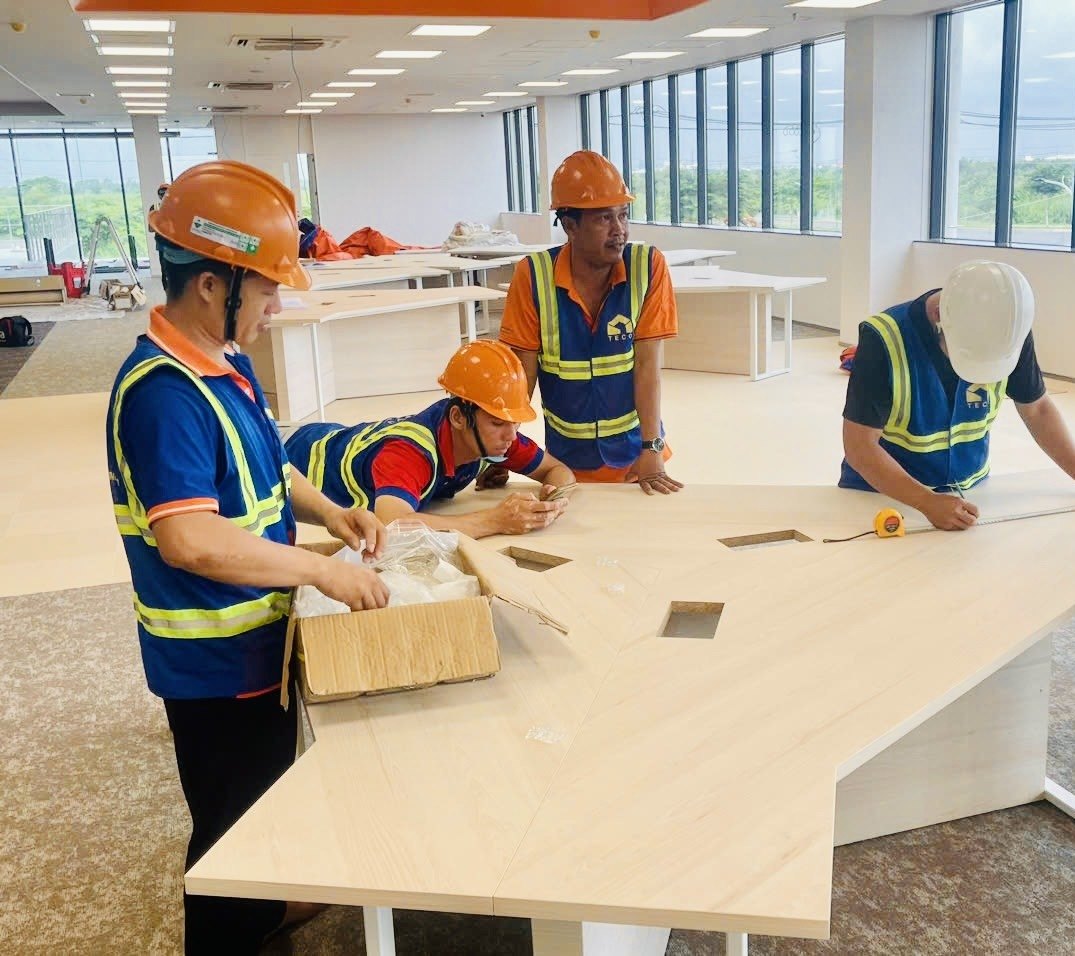
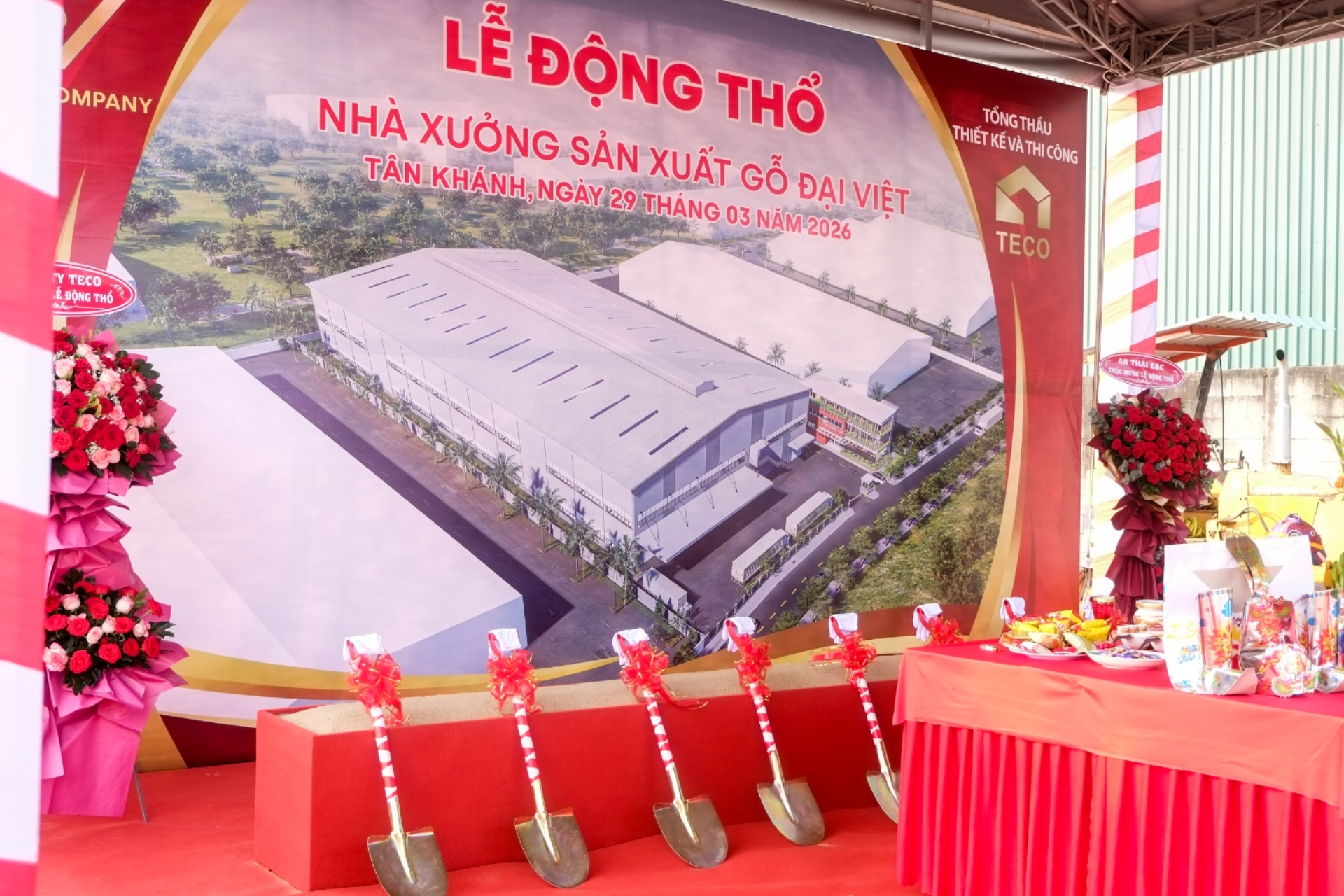 TECO – General Contractor for the Design and Construction of the Dai Viet Wood Manufacturing Factory.
See also:
Dai Viet Wood Manufacturing Factory Project
Pocari Sweat Factory Construction Project
SMC Long Duc Factory Construction Project
Fujiya Long An Factory Construction Project
Showa Gloves Factory Construction Project – Binh Duong
Conclusion
Reinforced concrete is a solution with good load-bearing capacity, high stability, and suitability for many work items in factories. However, project performance depends on the design, materials, and construction quality.
Businesses need to evaluate based on scale, functionality, loads, geological conditions, and development plans. Most importantly, the appropriate solution should be selected from the beginning.
TECO provides factory design and construction solutions based on actual needs, with a focus on integration, safety, and long-term investment efficiency.
Related services: Factory construction, design & build · After-handover maintenance – TECO MSC