7 Interior Design Ideas for International Schools That Inspire Learning
In modern education, the learning environment has a direct impact on students’ ability to absorb knowledge and support their overall development. Therefore, investing in interior design is not only about meeting functional requirements but also about creating a creative, safe, and inspiring learning environment.
A well-designed international school enables students to learn more effectively while enhancing the school’s professional image. Below are seven interior design ideas that have been widely adopted by many international schools. Join TECO as we explore each of these ideas.
Why Is Interior Design Important for International Schools?
Interior design plays a key role in shaping the daily learning experience of both students and teachers. A thoughtfully designed space optimizes functionality, encourages interaction, and creates a comfortable learning environment throughout the school day.
In addition, modern interiors reflect the school’s educational philosophy. They also help an international school make a strong impression on parents while enhancing its competitive advantage.
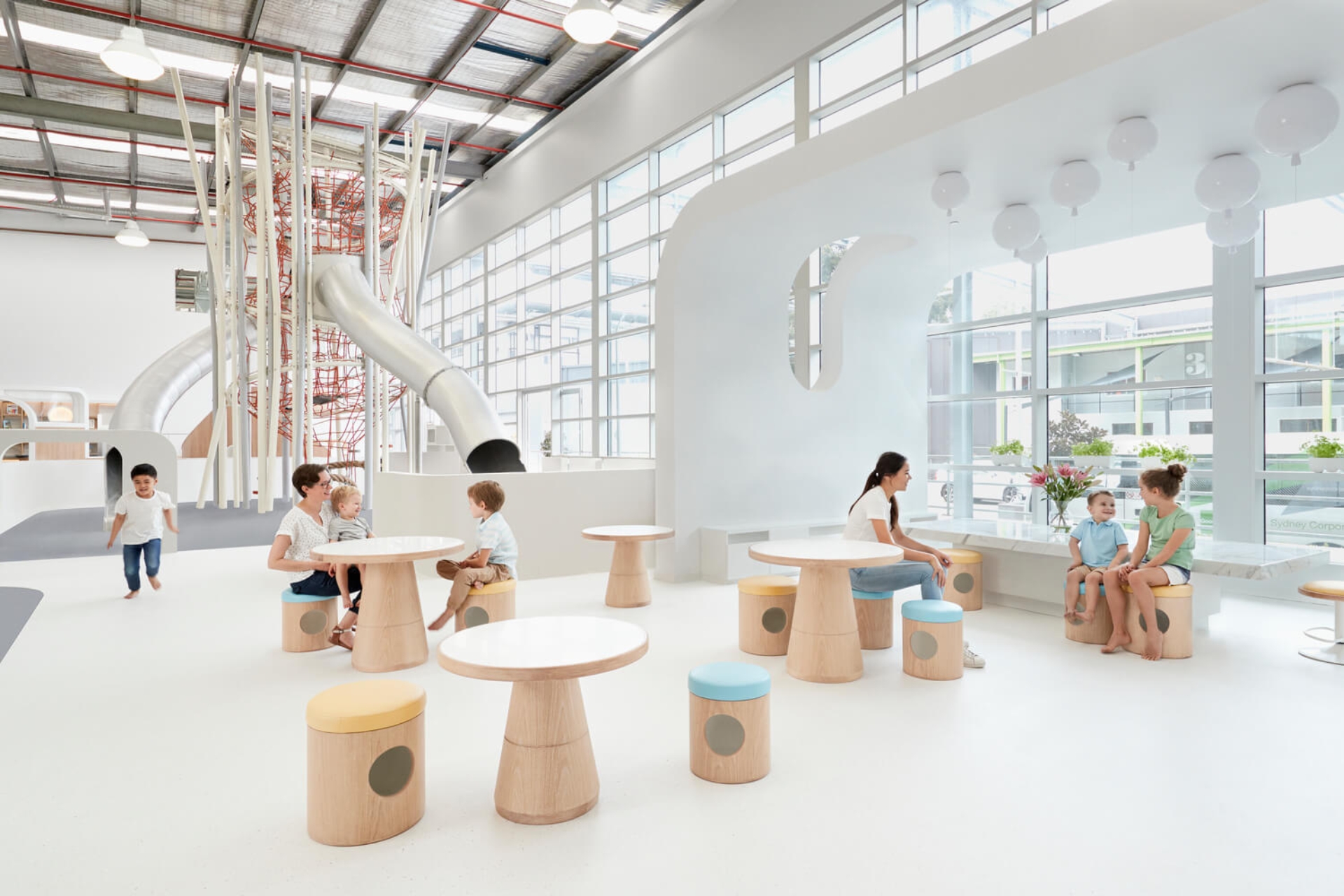
1. Open and Flexible Learning Spaces
Open-plan learning spaces have become a popular trend in many international schools today. Instead of using numerous fixed partitions, different areas are seamlessly connected to create a spacious environment and encourage interaction among students.
Movable desks and chairs allow teachers to easily rearrange classroom layouts for different learning activities. This design is especially suitable for project-based learning, group discussions, and communication skill development.
Open and flexible learning spaces.
2. Multi-Purpose Classrooms
Modern classrooms are no longer designed solely for traditional teaching.
Many international schools choose modular furniture with desks and chairs that can be connected or separated easily. The classroom can quickly be transformed from an individual learning environment into a collaborative workspace or presentation area.
The integration of interactive whiteboards and presentation screens also enhances teaching effectiveness while increasing student engagement.
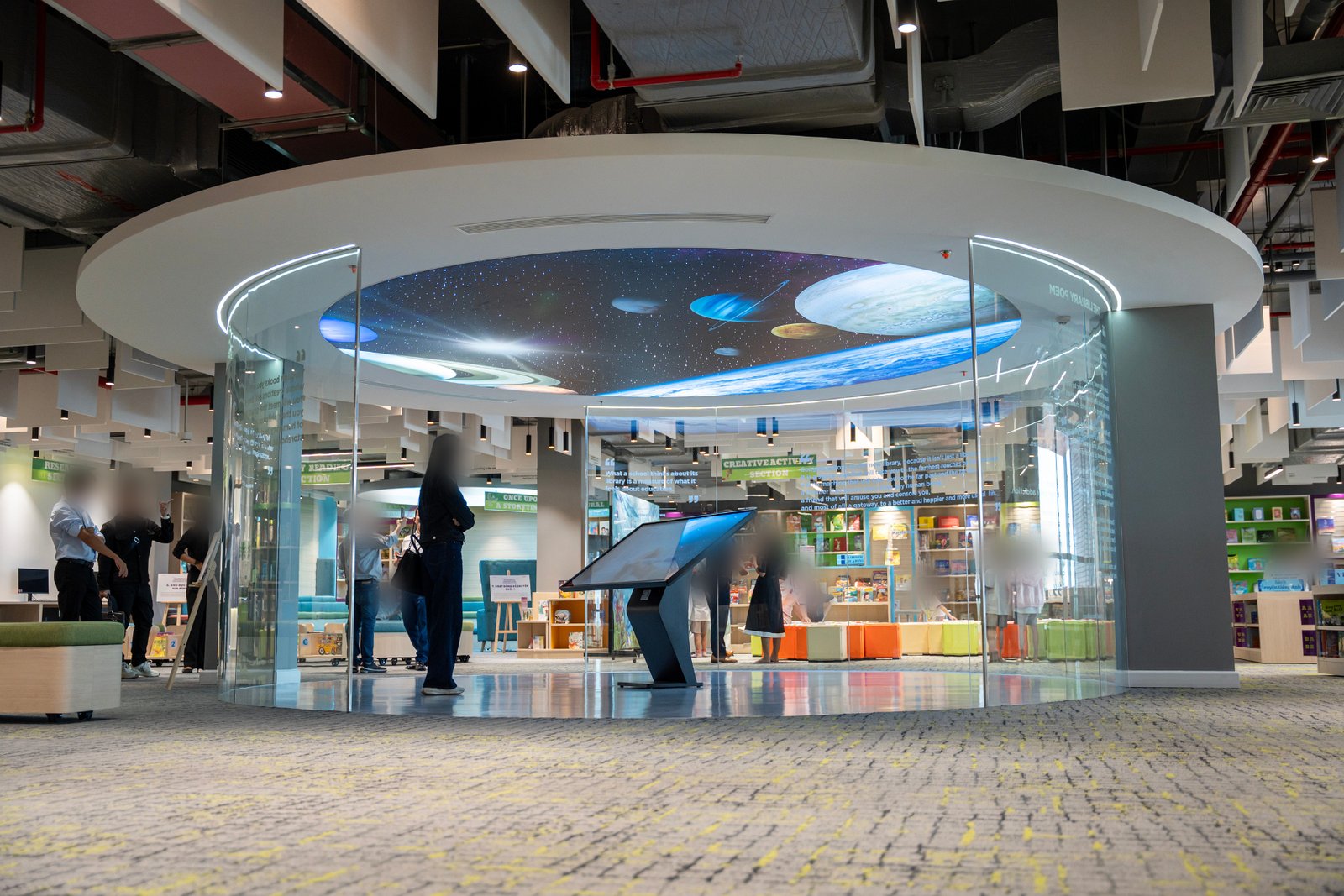
3. Open Libraries Combined with Creative Learning Spaces
Today’s libraries are more than just places to store books. In an international school, the library is often designed as a multifunctional learning center.
The space typically includes reading areas, group study rooms, digital library facilities, and research corners.
In addition, many libraries incorporate sofas, bean bags, and relaxing reading zones to create a welcoming atmosphere and encourage a reading culture. This design allows students to actively explore knowledge while developing independent learning skills.
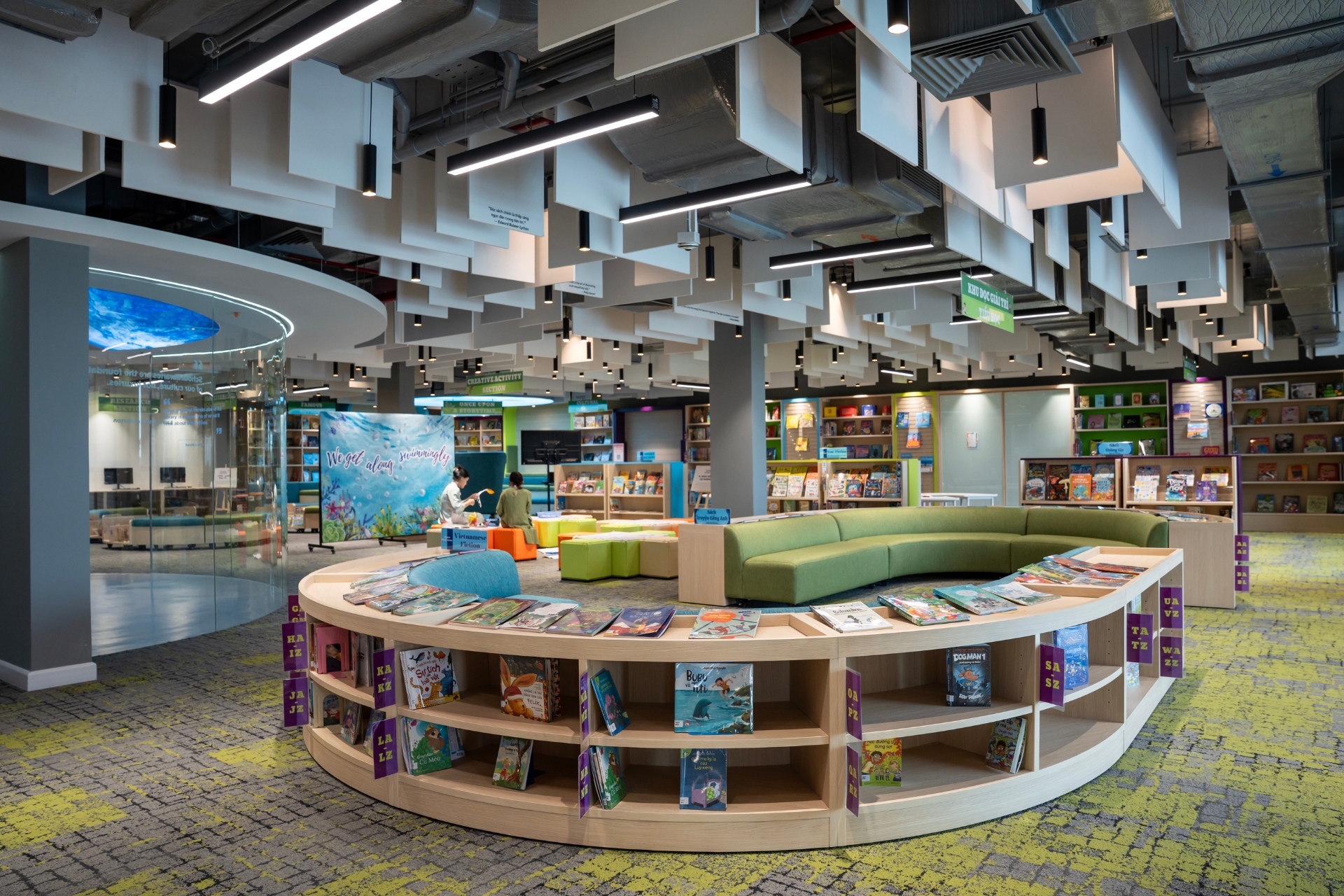 Open libraries combined with creative learning spaces.
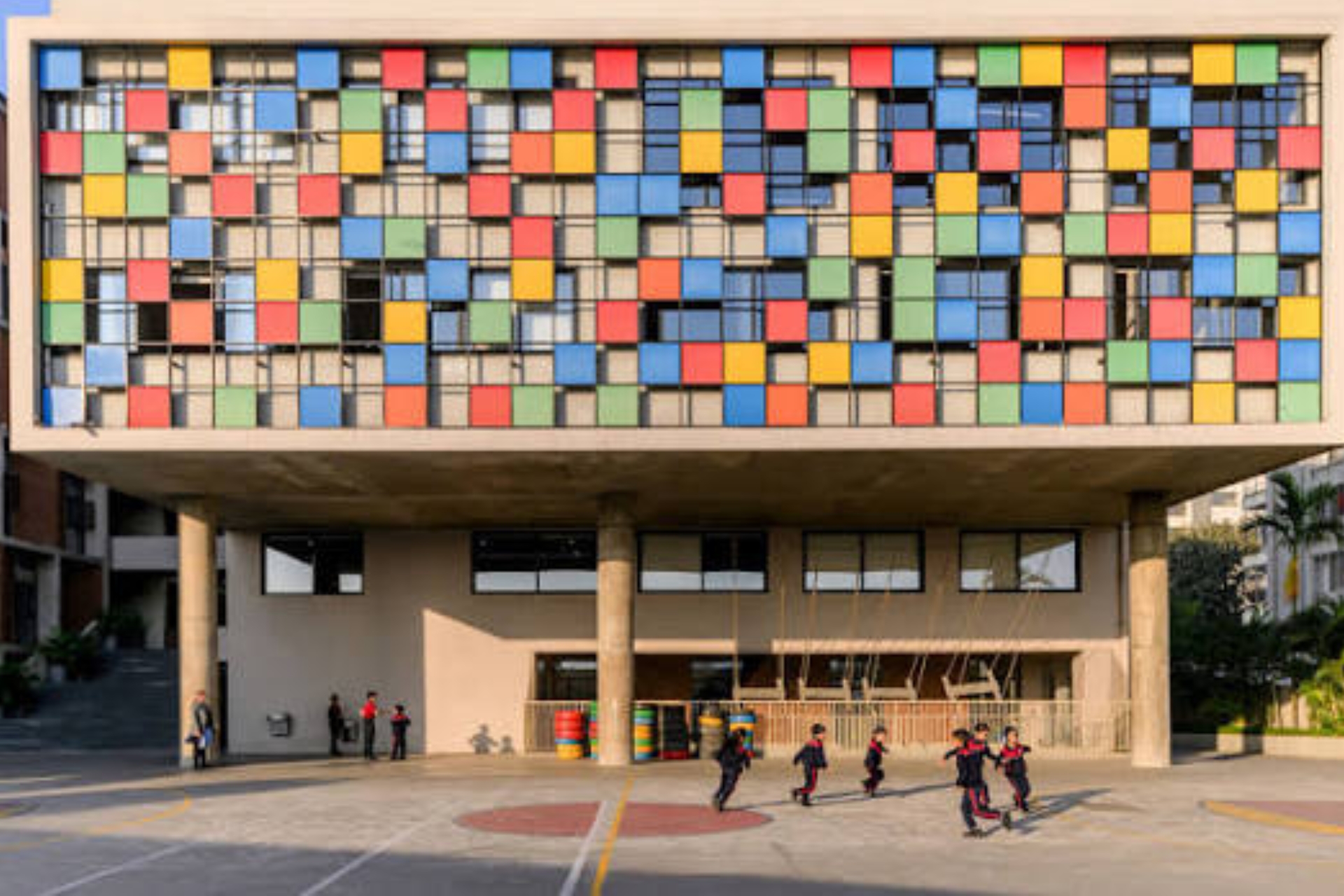
4. Color Design That Influences Children’s Emotions
Color has a direct impact on students’ psychology and emotions. Therefore, many international schools carefully select color palettes that suit different age groups and functional areas.
Bright colors such as green, blue, and soft yellow create a positive atmosphere, helping improve concentration and stimulate creativity.
For preschool areas, vibrant colors are commonly used to spark curiosity and encourage exploration.
Spaces designed for older students generally feature softer color tones to create a calm, focused, and professional learning environment.
A well-balanced color scheme not only enhances aesthetics but also contributes to building a positive educational environment.
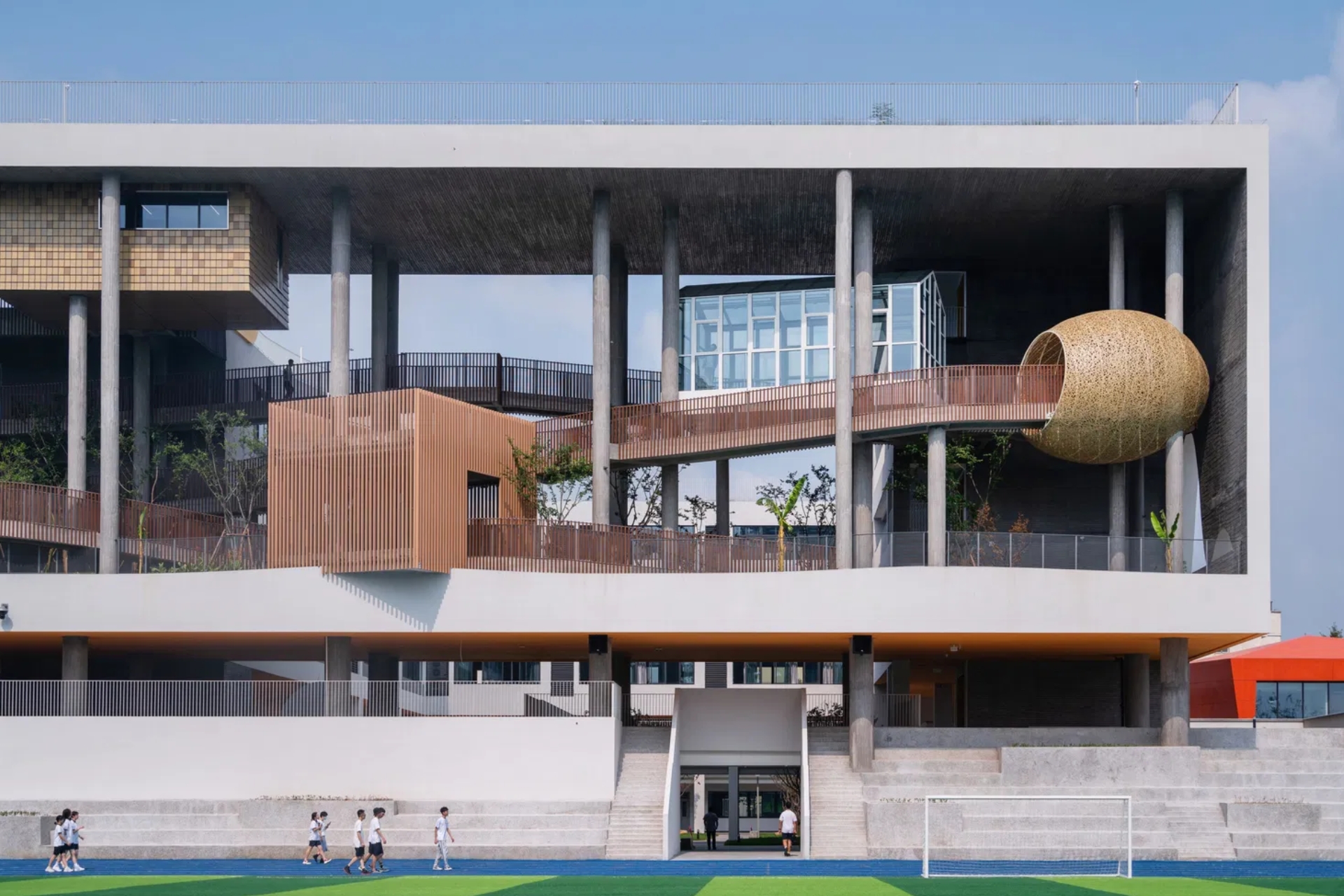
5. Maximizing Natural Light and Greenery
Natural light is always a key element in international school design. Large glass windows, skylights, and courtyards maximize daylight, reduce energy consumption, and create a more spacious atmosphere.
In addition, plants placed in classrooms, corridors, and common areas improve air quality while bringing nature closer to students. A green environment not only promotes better health but also creates a more relaxing atmosphere for learning.
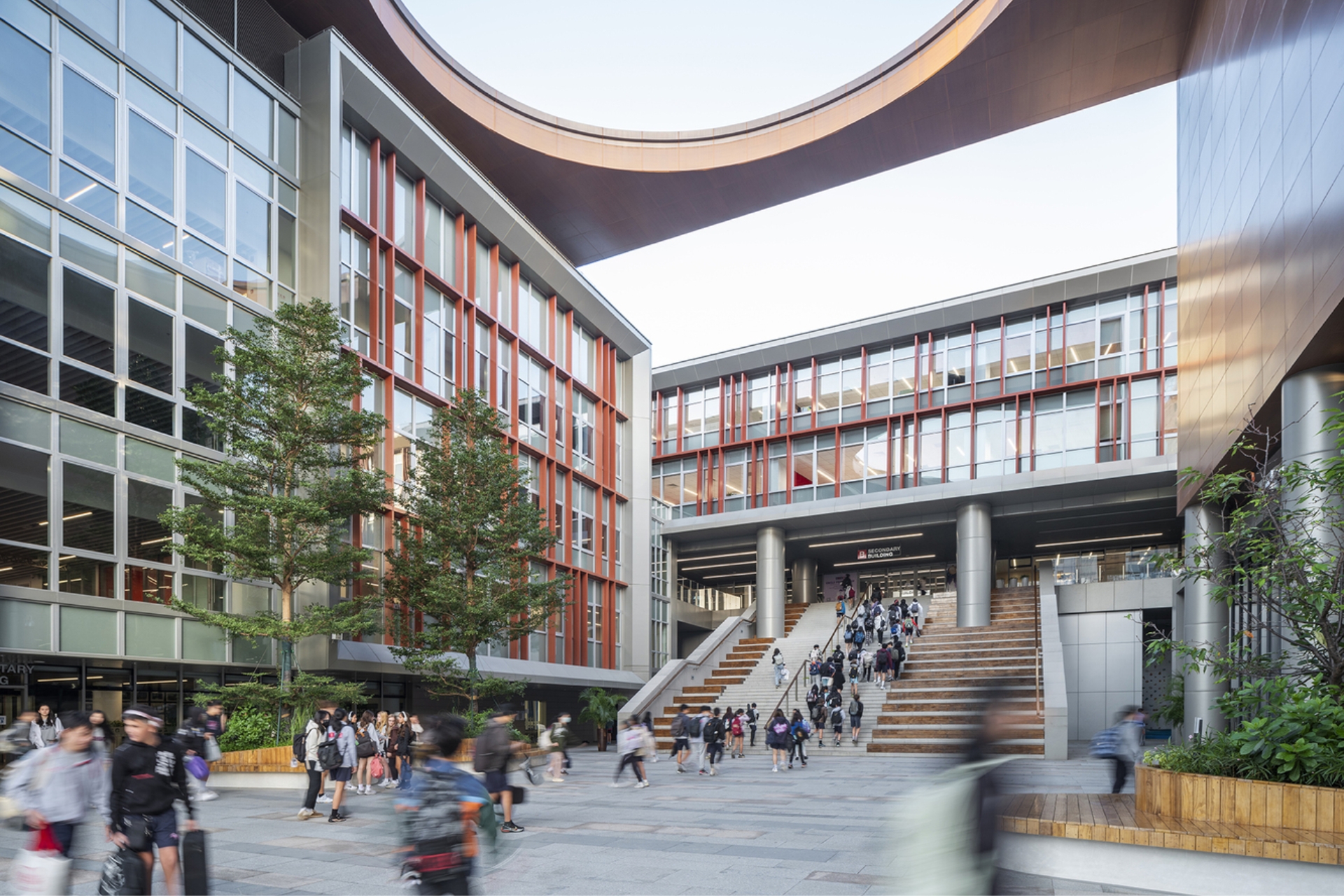 International schools optimized with natural light and greenery.
6. Modern Common Areas
Beyond classrooms, many international schools invest heavily in shared spaces.
These areas allow students to relax, socialize, exchange ideas, and participate in extracurricular activities. They are typically designed with an open concept featuring sofas, high tables, learning cafés, or casual reading areas.
These spaces help create a dynamic learning environment while strengthening connections within the student community.
7. Integrating Technology into Interior Design
Digital transformation has become a major trend in education. Many international schools incorporate technology from the very beginning of the interior design process.
Classrooms are equipped with interactive displays, projectors, audio systems, digital whiteboards, and charging outlets for personal devices.
In addition, digital libraries, smart management systems, and advanced presentation equipment further improve teaching and learning efficiency.
The integration of technology creates a modern educational environment that meets the learning needs of today’s students.
Principles for Designing International School Interiors
To ensure long-term functionality, the interior design of an international school should follow several important principles.
First, the design should suit each educational level while maximizing functionality.
Second, materials should be safe, environmentally friendly, and compliant with fire safety standards.
Furniture should also be flexible enough to accommodate future teaching methods or campus expansion.
Finally, the entire space should maintain consistency in colors, materials, and design style to create a professional image for the school.
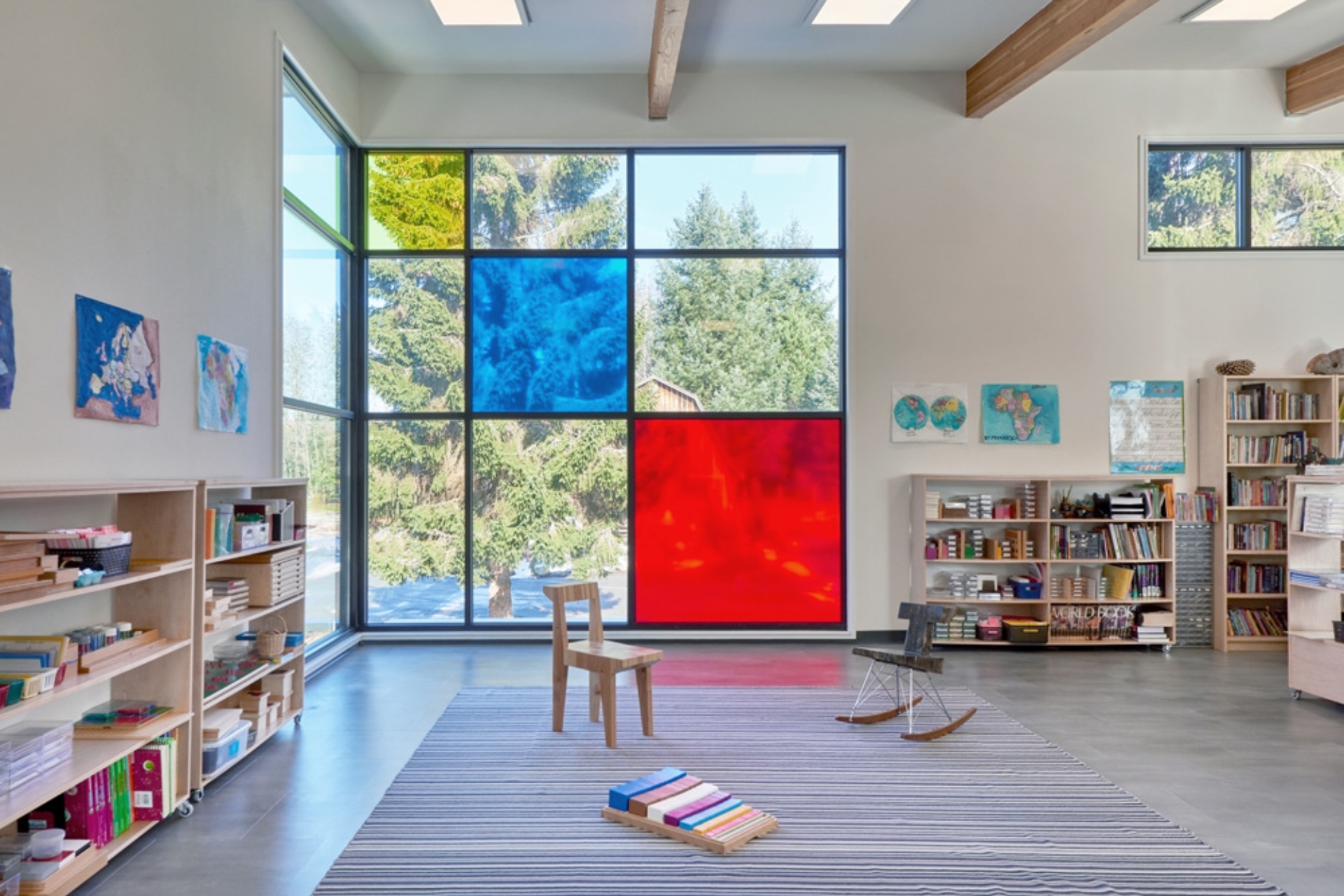 Principles for designing school interiors.
TECO – A Professional International School Interior Design Company
TECO has many years of experience in the design and construction of educational facilities. We provide comprehensive solutions ranging from space planning, architectural design, and interior design to turnkey construction for international schools.
Each project is carefully planned based on the school’s educational program, student capacity, and long-term development goals. TECO’s team of architects is committed to optimizing functionality, controlling budgets, and creating modern learning environments that inspire students.
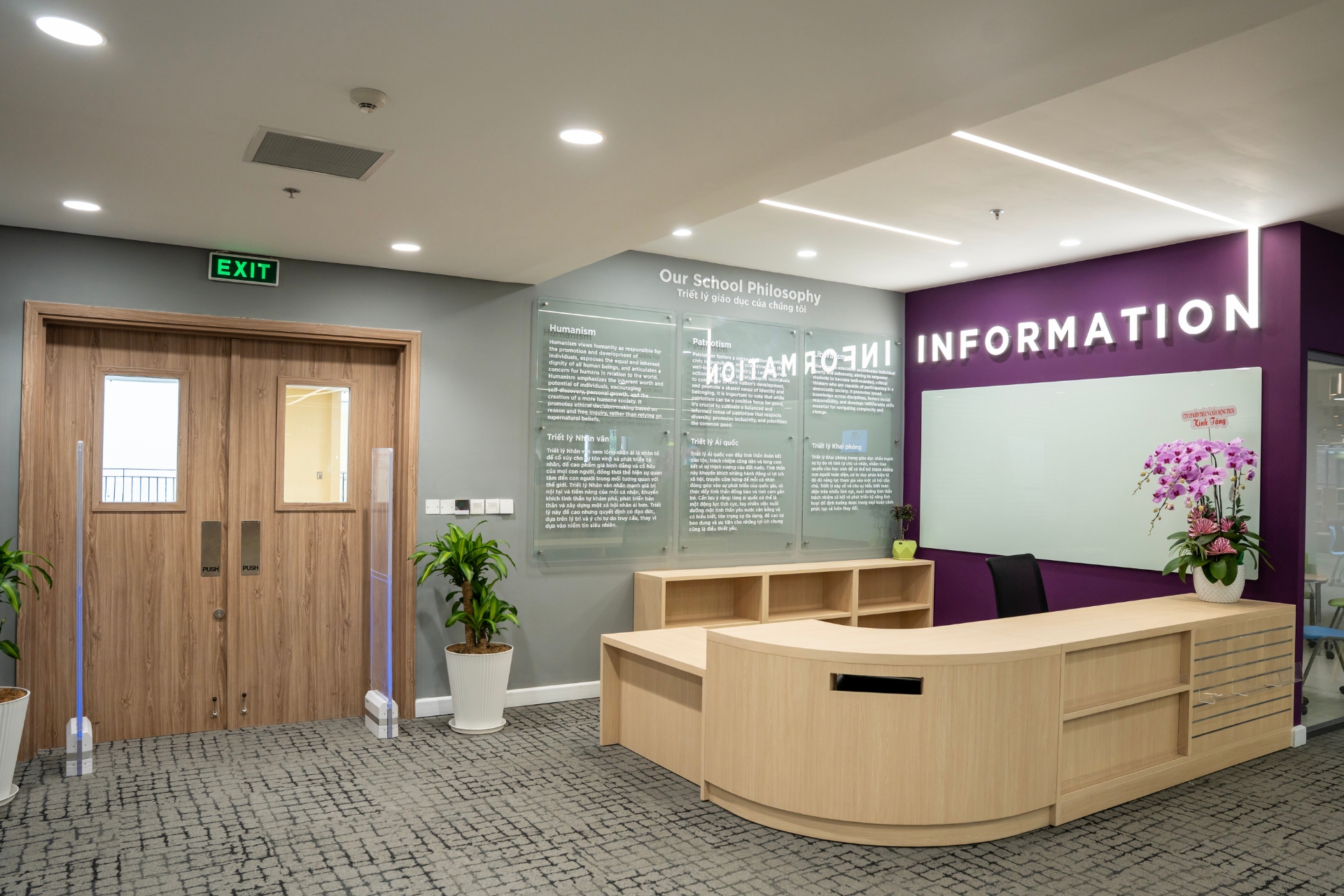
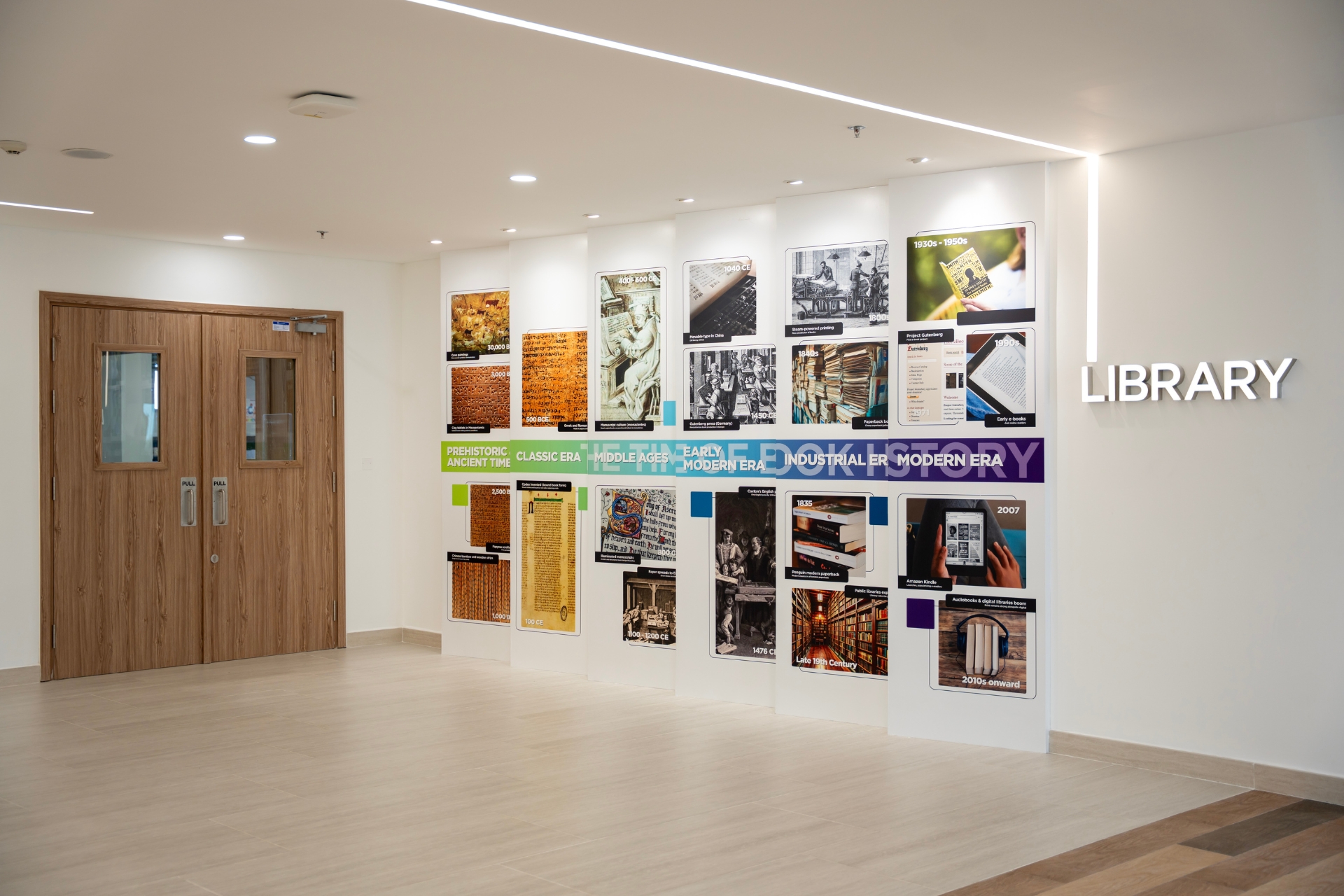
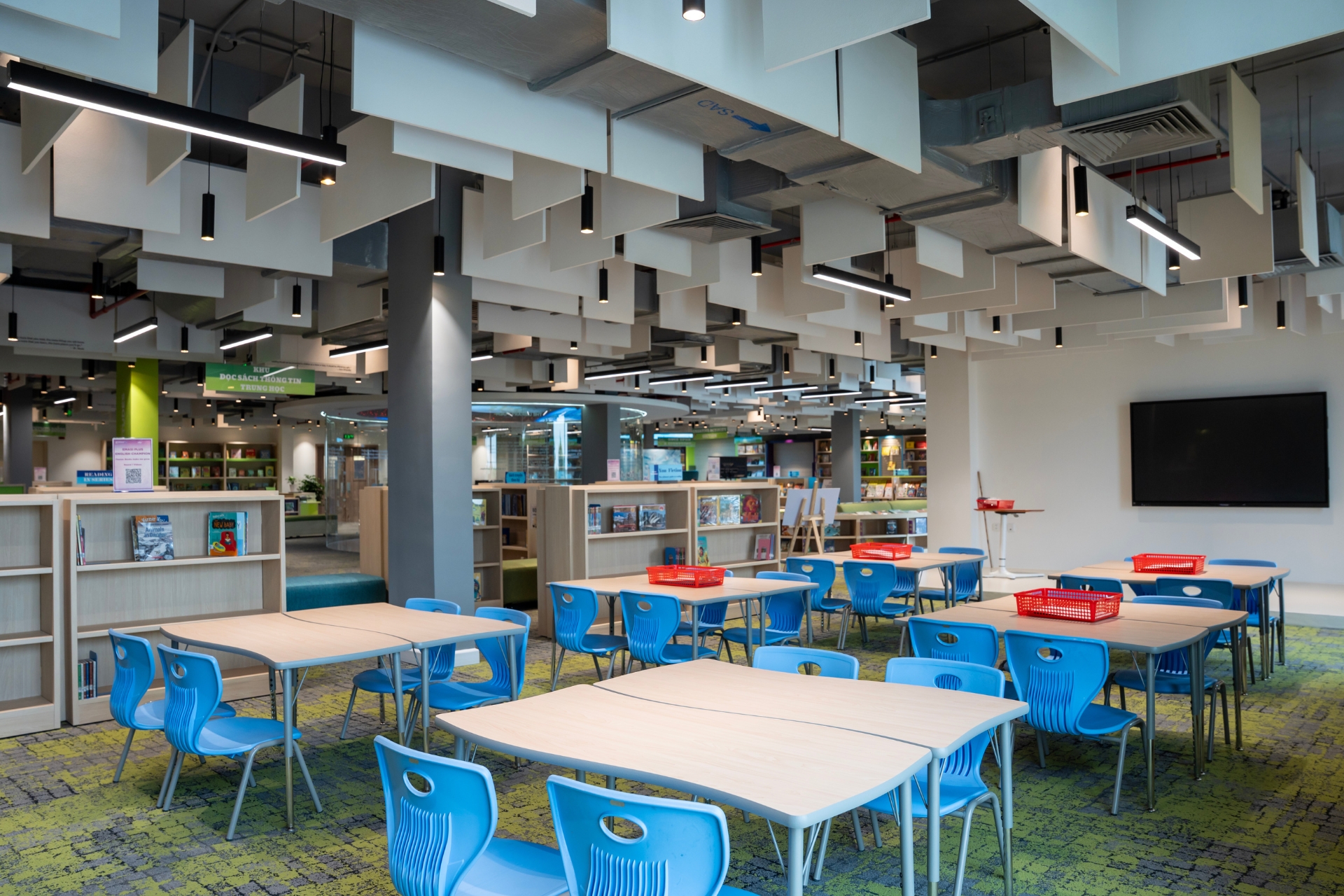 TECO – A trusted international school construction company.
Conclusion
Interior design plays a vital role in enhancing educational quality and building a professional image for an international school. From open learning spaces, multi-purpose classrooms, and modern libraries to thoughtful use of color, natural lighting, and technology integration, every element contributes to creating an effective and inspiring learning environment.
With extensive experience in designing and constructing educational facilities, TECO provides modern interior solutions for international schools that optimize functionality and meet international educational standards. We partner with schools to create high-quality, sustainable learning environments that support their long-term development goals.
Related services: International school & kindergarten design & build · After-handover maintenance – TECO MSC