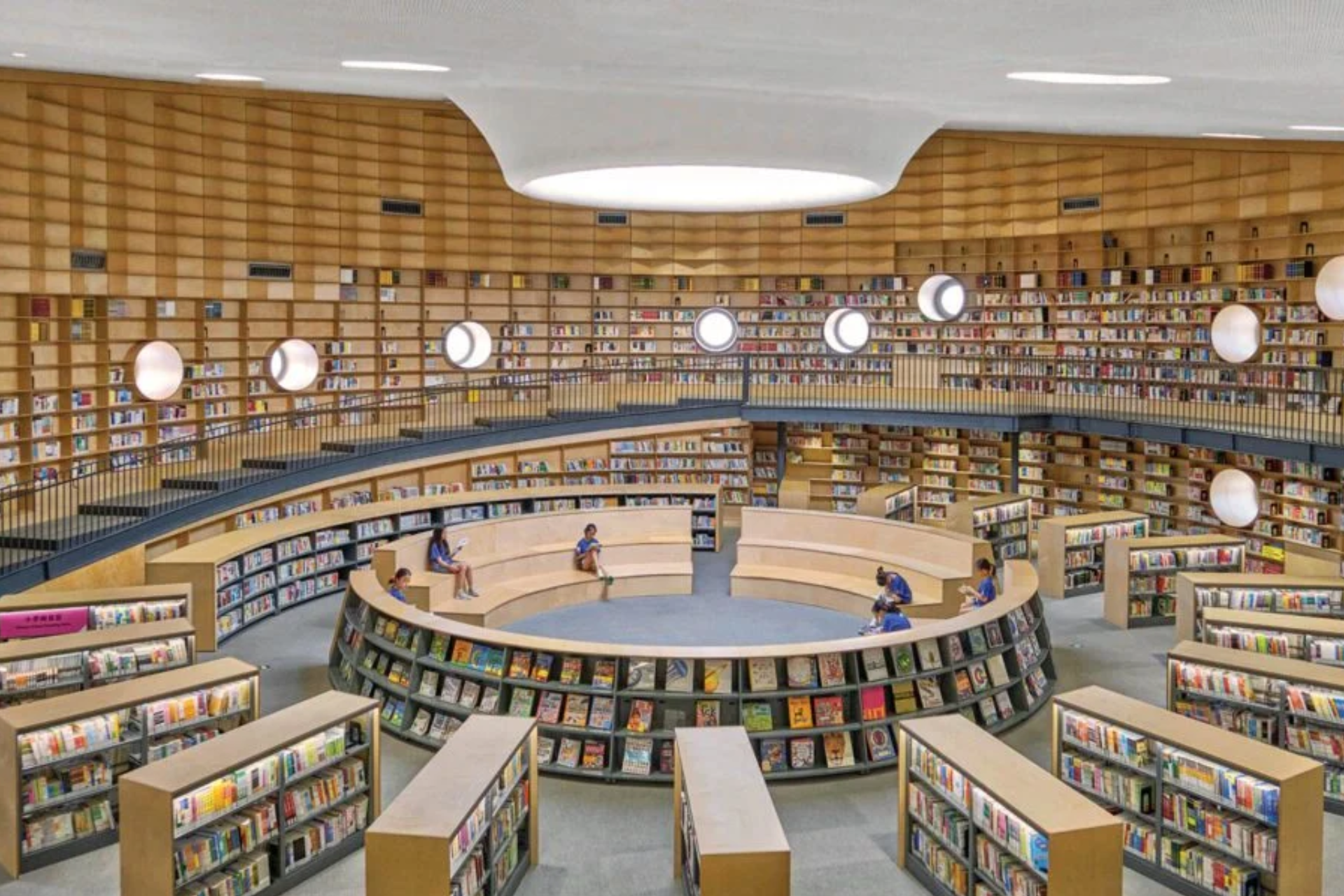
Creative Library Interior Design Ideas That Inspire Learning
In modern education, the library is no longer simply a place to store books. It has become a center for learning, research, and creativity for students. Therefore, library interior design should be flexible, modern, and inspiring. A well-planned space not only enhances the learning experience but also contributes to building a professional image for the school.
So, what library interior design ideas are being adopted by many international schools today? Join TECO as we explore them in the article below.
Creative library interior design ideas.
Why Is Library Interior Design Receiving More Attention?
Promoting a Reading Culture
A scientifically designed library interior encourages students to actively seek out books every day. A welcoming and comfortable environment makes reading a natural habit rather than a mandatory activity.
When the library is well organized, students can easily find resources, choose their favorite reading corner, and develop long-term self-learning habits. At the same time, library usage increases significantly.
Creating an Inspiring Learning Environment
The learning environment directly affects students’ emotions and their ability to absorb knowledge. A beautifully designed library inspires curiosity, stimulates creativity, and improves concentration.
The combination of lighting, colors, furniture, and spatial layout helps students remain comfortable throughout their learning journey.
Adding Value to the School
The library is one of the spaces that best reflects a school’s educational philosophy. A modern library interior helps establish a professional image, improves the quality of educational facilities, and creates a positive impression on parents.
It also provides a competitive advantage, enabling international schools to strengthen their reputation and attract prospective students.
5 Creative Library Interior Design Ideas
1. Open and Flexible Space Design
Open-plan layouts have become a major trend in modern library interior design. Instead of using numerous fixed partitions, functional areas are seamlessly connected to create a spacious and airy environment.
Furniture can be easily rearranged to accommodate various activities, including group discussions, workshops, presentations, and book exhibitions. A flexible design not only maximizes space utilization but also allows the library to adapt to future needs.
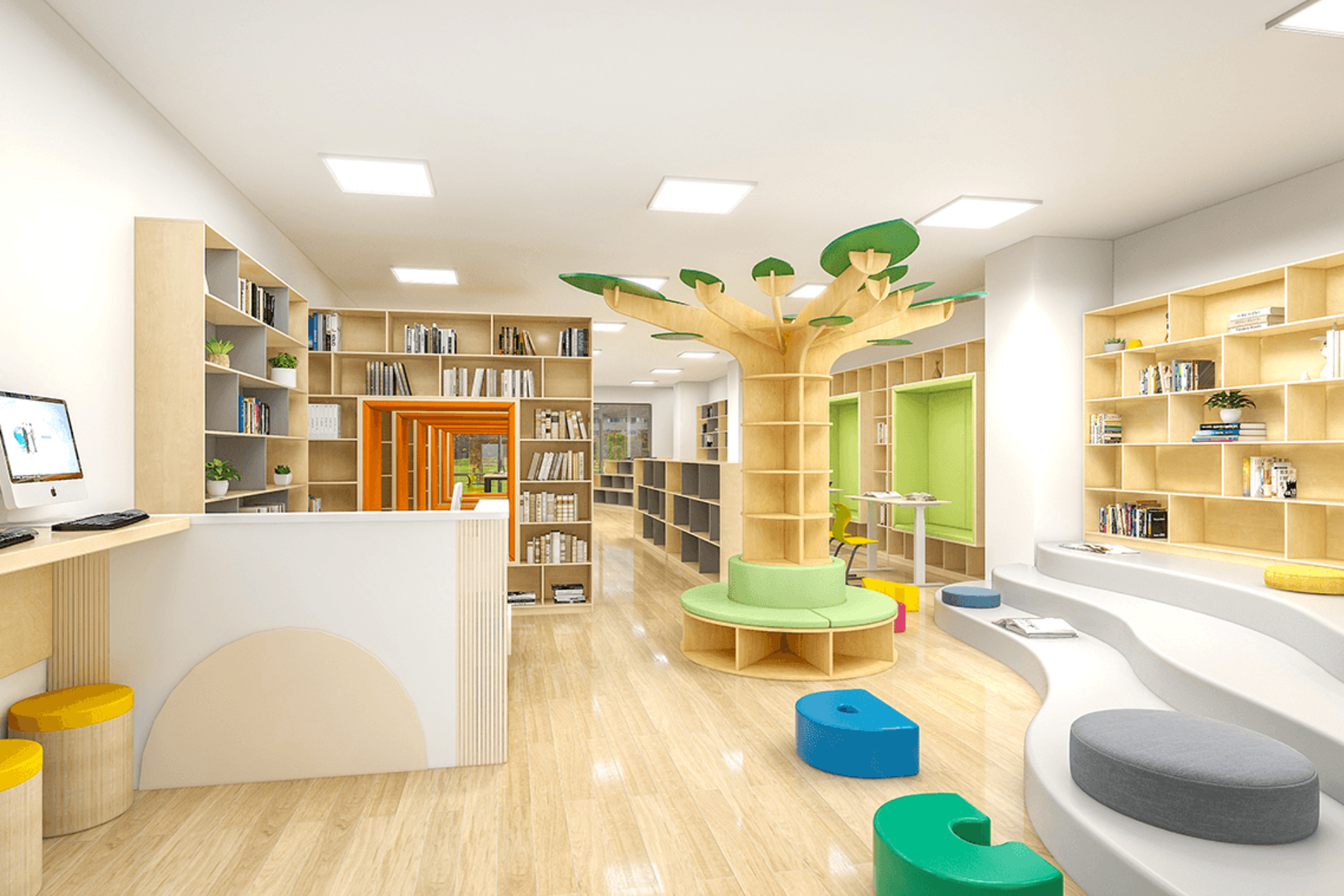 Creative library interior design.
2. Creating Diverse Reading Areas
Every student has different learning habits. Therefore, the library interior should be divided into multiple zones to accommodate a variety of learning preferences.
These areas may include:
- A quiet reading corner for students who need maximum concentration.
- A relaxing reading area with sofas or beanbags.
- A children’s reading corner featuring colorful décor and low bookshelves.
- Group study spaces for collaborative discussions.
- Research areas for students and teachers.
A well-planned zoning strategy enables the library to effectively serve different users and learning styles.
3. Creative Bookshelf Design with Optimized Functionality
Bookshelves are more than storage solutions—they are focal points of the library interior.
Many schools now choose creative bookshelf designs such as:
- Curved bookshelves.
- Tree-shaped bookshelves.
- Modular shelving systems.
- Bookshelves integrated with seating.
- Display shelves for newly released books.
These designs enhance aesthetics, maximize storage capacity, and encourage students to explore books. At the same time, a well-organized shelving system makes library management and resource retrieval much more convenient.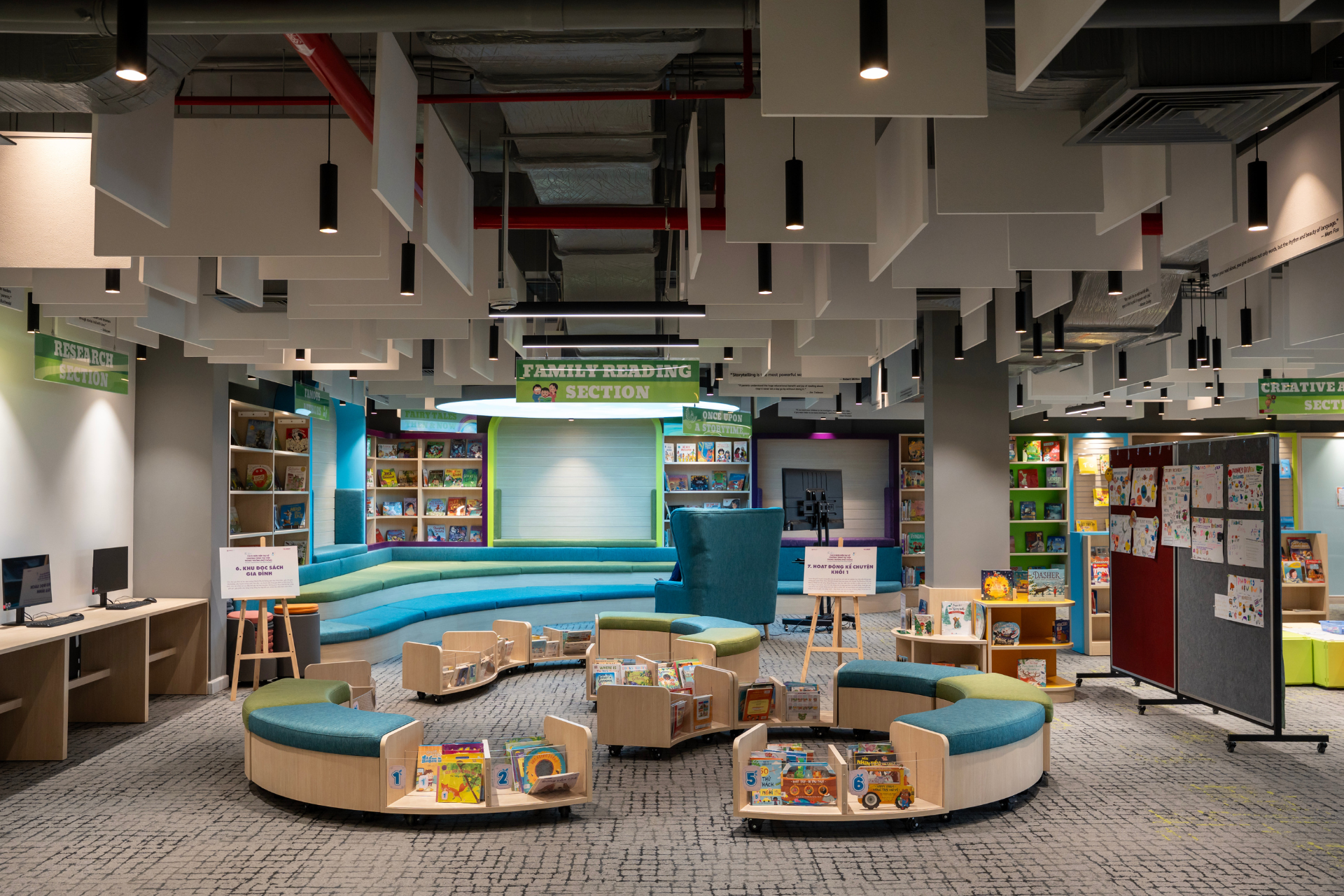
Creative bookshelves with optimized functionality.
4. Bringing Nature into the Library Interior
Nature always creates a relaxing and comfortable atmosphere. As a result, many international schools incorporate green elements into their library interior design.
The space can include:
- Indoor plants.
- Skylights.
- Natural daylight.
- Wooden materials.
- Neutral color palettes.
These elements help reduce stress, improve concentration, and create a learning environment closely connected with nature. They also contribute to developing a sustainable and environmentally friendly green library.
5. Integrating Technology into Library Interiors
Digital transformation is changing how modern libraries operate. Consequently, library interiors are increasingly equipped with advanced technological solutions.
Common applications include:
- Digital libraries.
- Digital catalog and search displays.
- RFID book management systems.
- QR codes.
- Interactive whiteboards.
- Device charging stations.
- Digital learning zones.
Technology enables students to access educational resources more quickly while improving the efficiency of library management and operations.
Principles of Library Interior Design
When designing a library interior, functionality should always be the top priority. The space should provide convenient circulation, easy access to resources, and efficient library management.
Safety is equally important. Furniture should be made from environmentally friendly materials, feature rounded edges, include slip-resistant surfaces, and fully comply with fire safety regulations.
The design should also suit different age groups. Preschool students require low furniture and vibrant colors, while primary, middle, and high school students benefit from more modern, professional, and flexible environments.
In addition, the entire library interior should be consistent with the school’s architectural identity through coordinated colors, lighting, materials, and branding elements. This creates a unified and professional educational environment.
EMASI Plus Waterpoint Library Interior Project – A TECO Signature
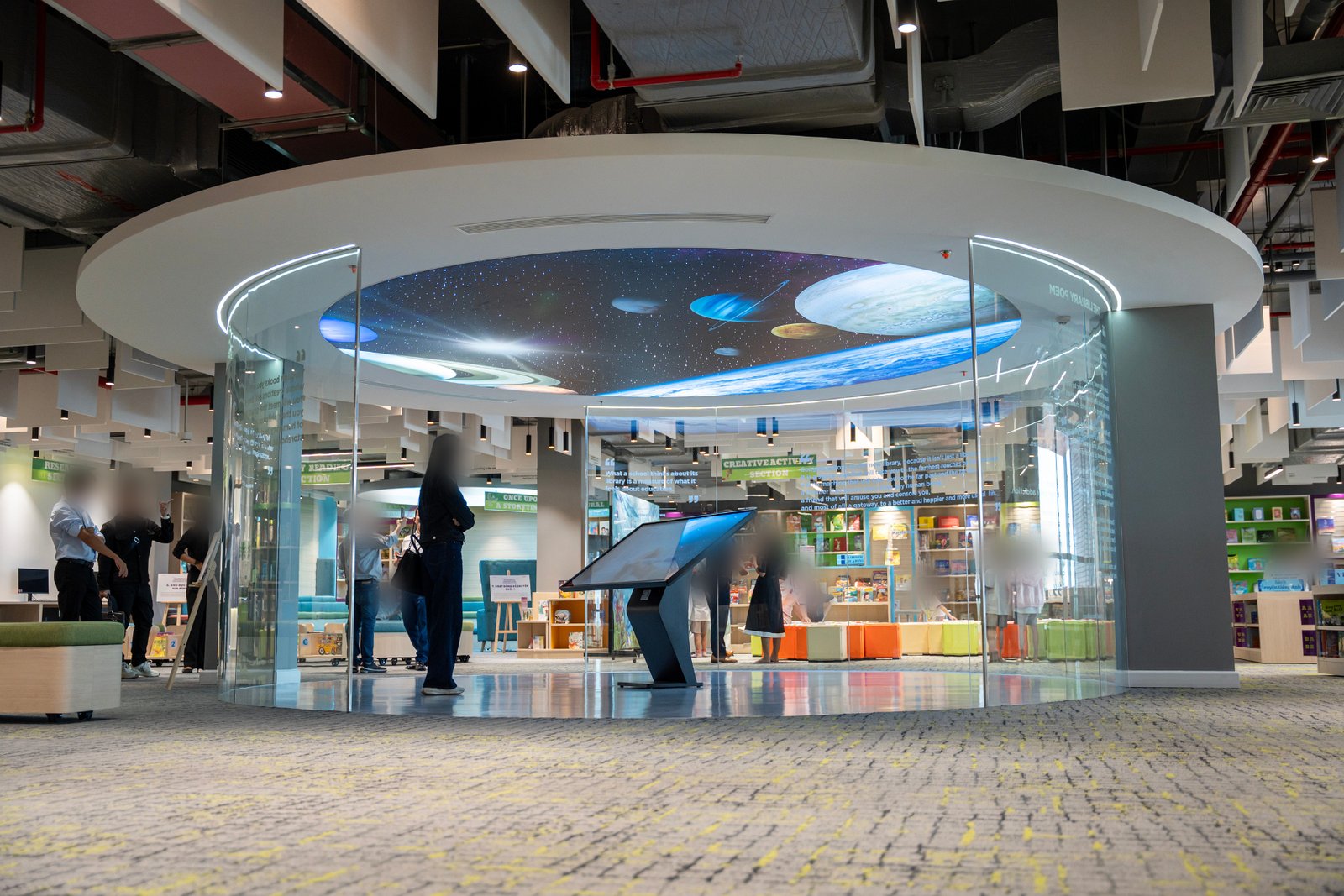
One of TECO’s flagship projects is the EMASI Plus Waterpoint International Bilingual School Library. The project was developed around a student-centered concept featuring an open, modern, and flexible environment.
Highlights of the project include multifunctional reading areas, flexible library interiors, and scientifically arranged bookshelves. The library also integrates collaborative learning spaces, a digital library, and dedicated research areas. Soft color palettes and thoughtful space planning create an inspiring learning environment.
This environment encourages a strong reading culture, develops self-learning skills, and provides students with opportunities to enhance their creativity throughout the learning process.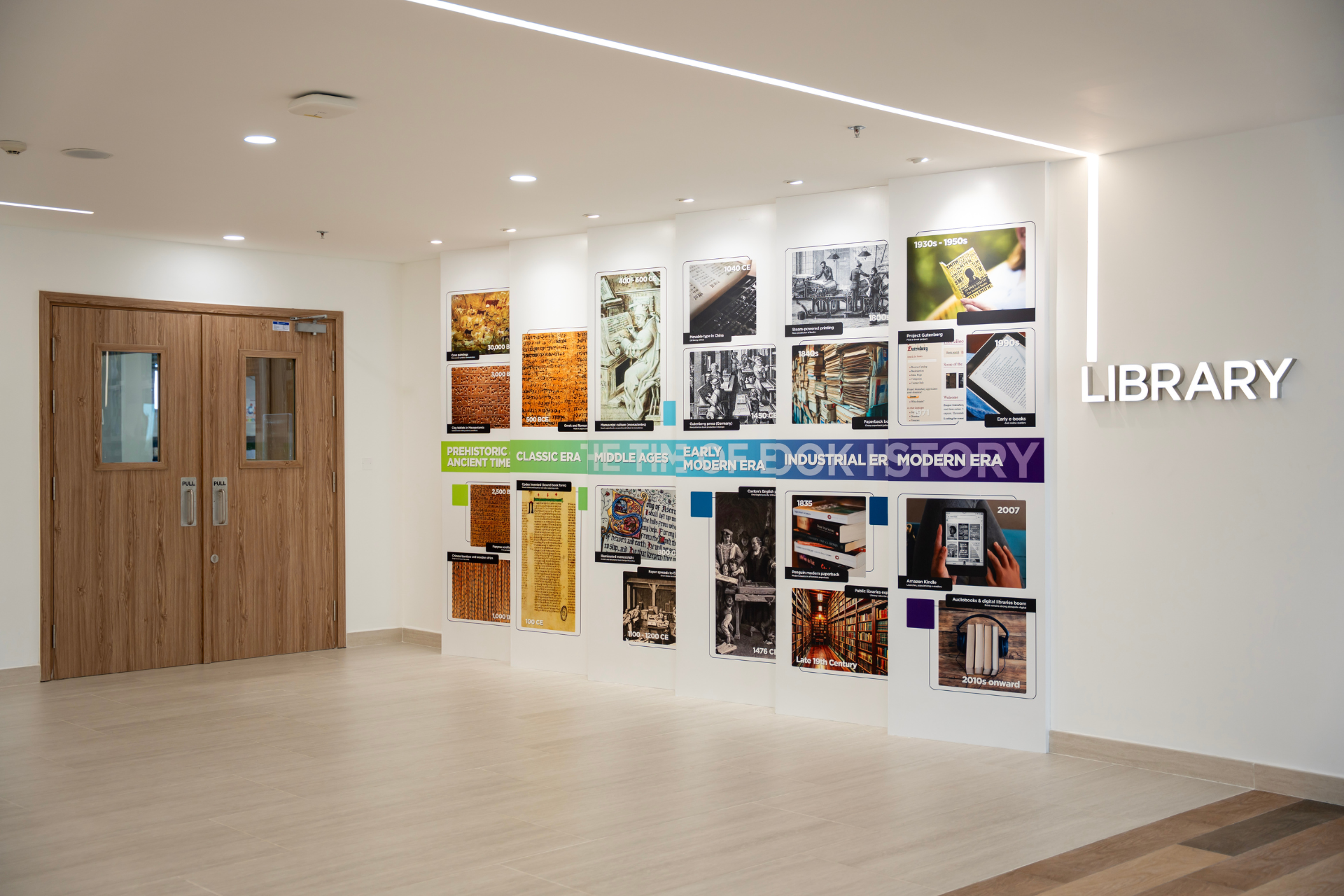
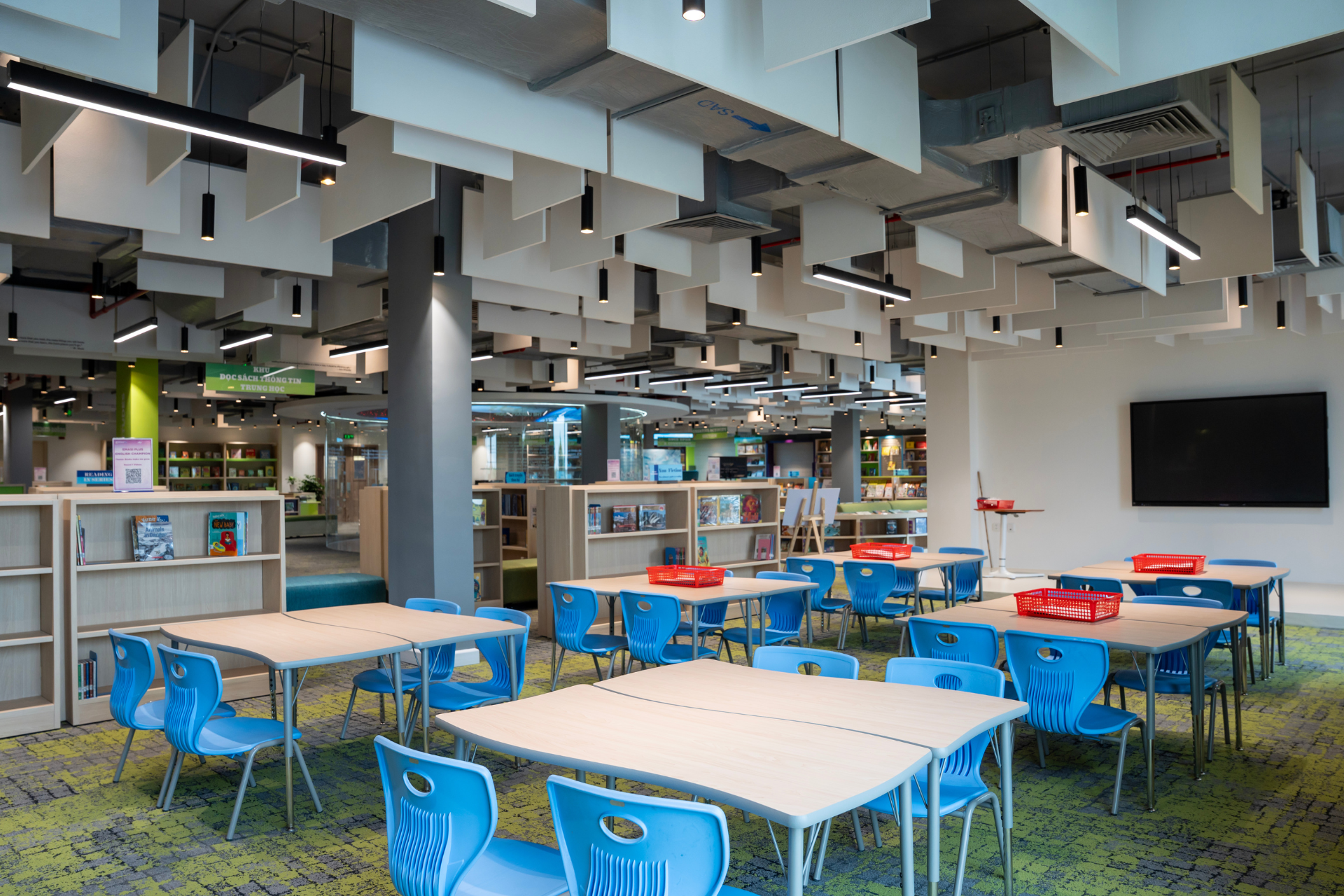
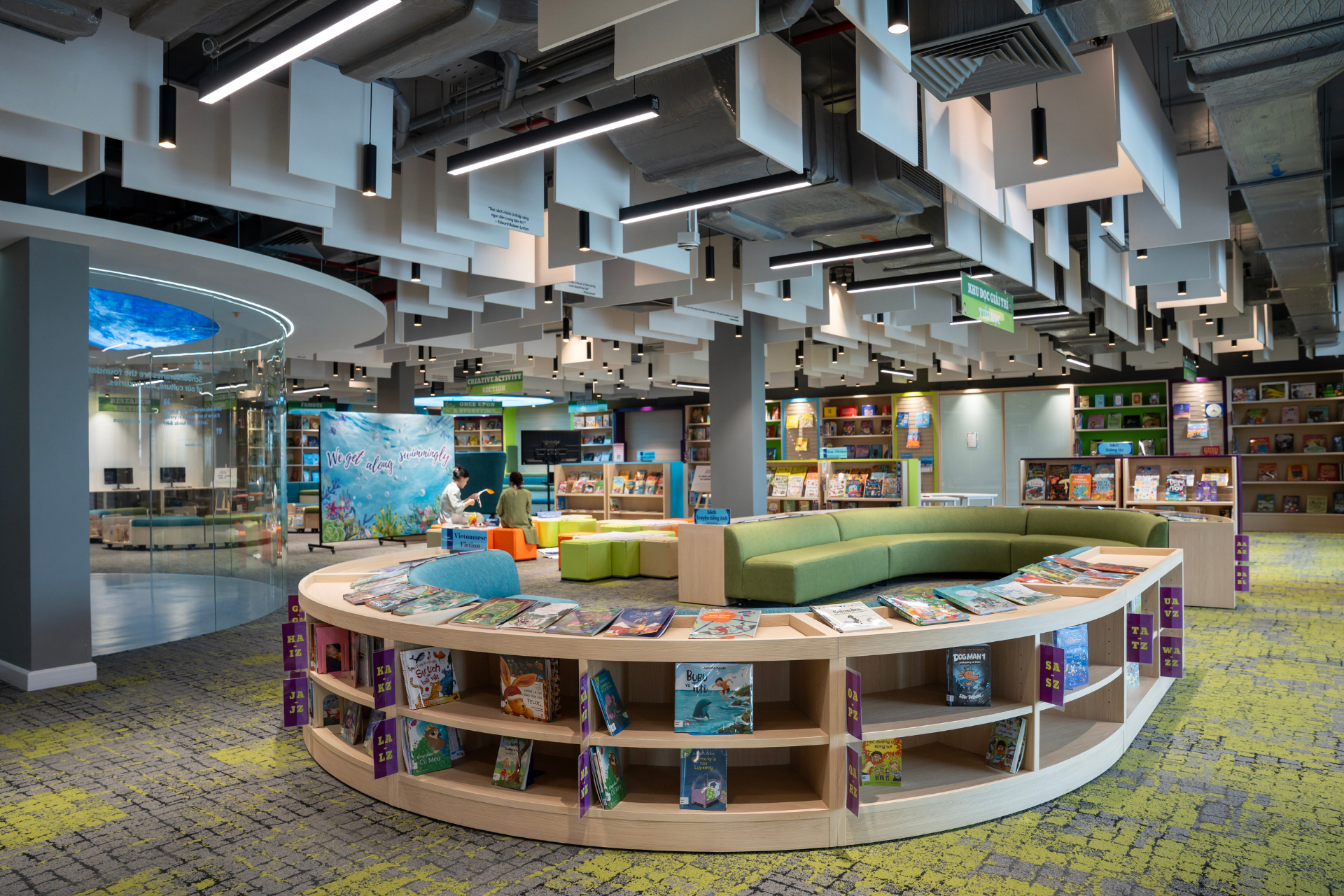
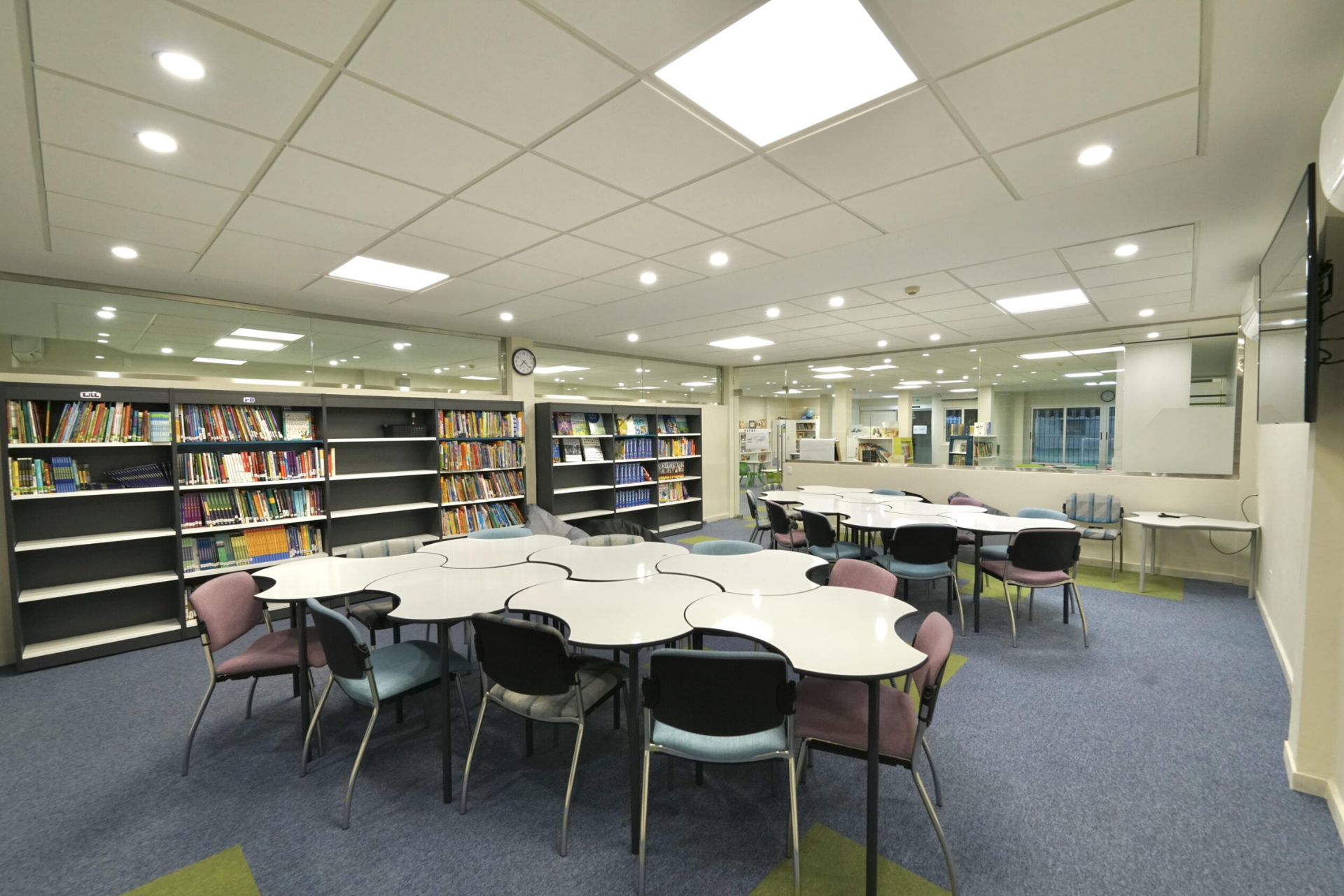
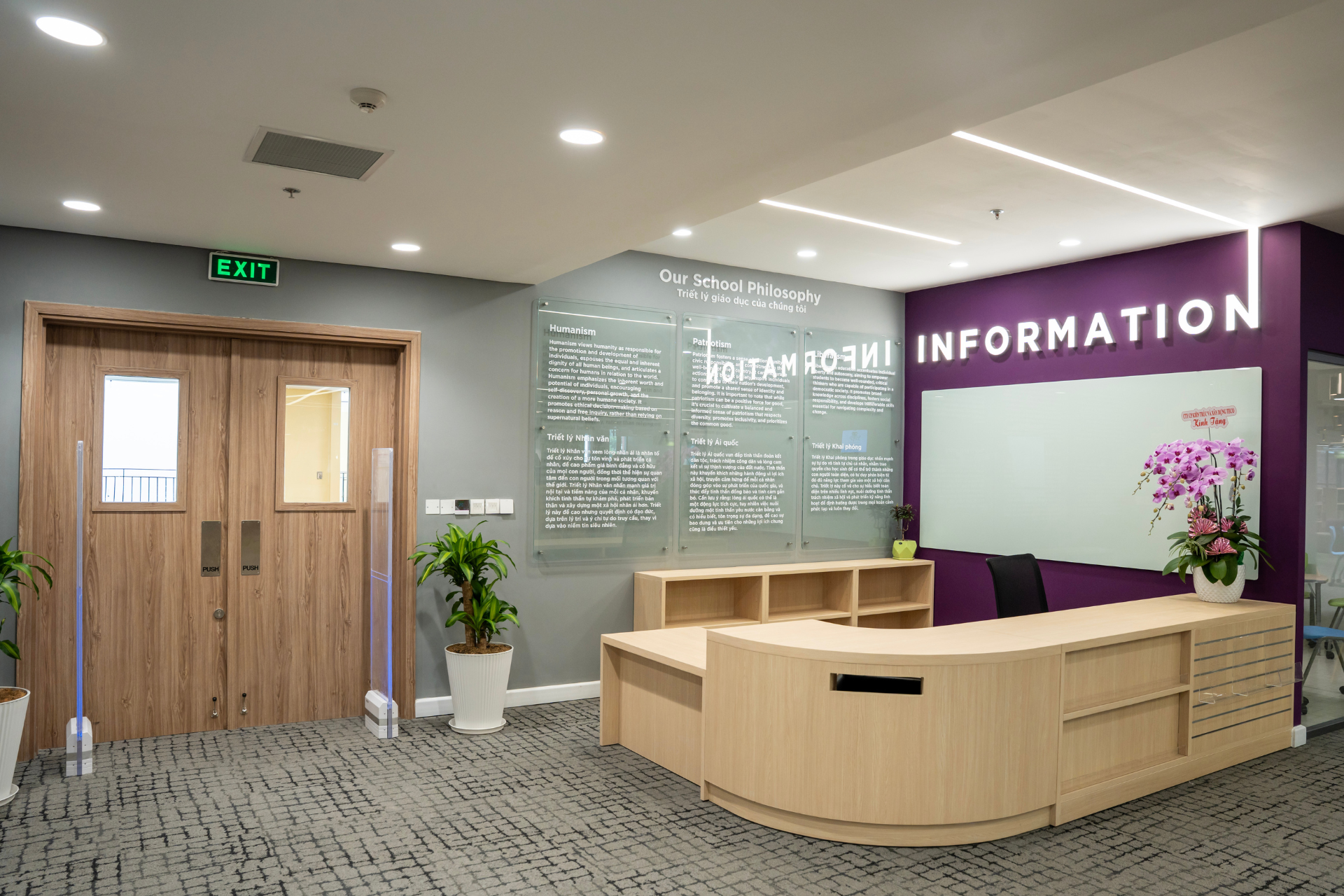
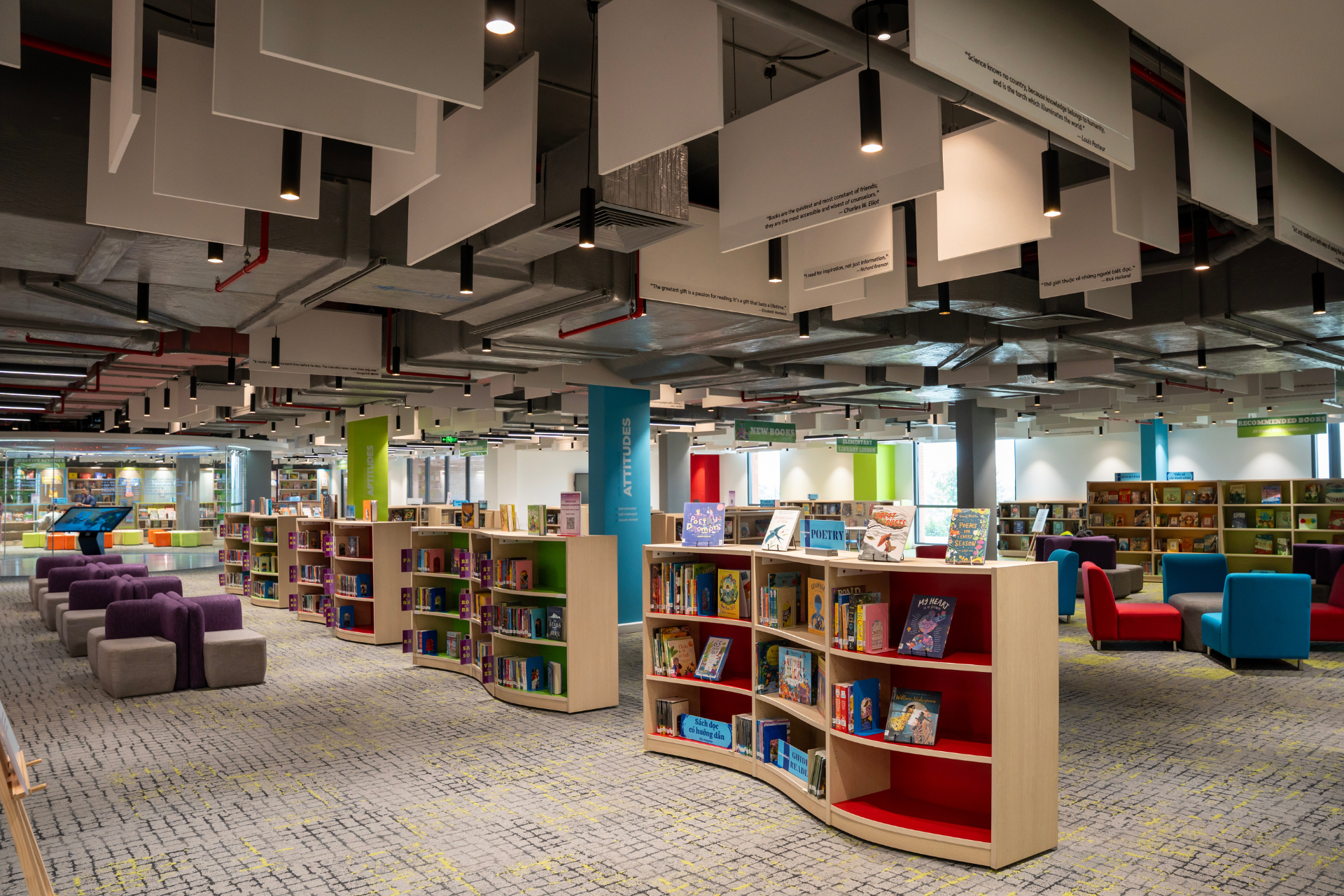
The EMASI Plus Waterpoint Library was constructed by TECO.
TECO – Your Professional Library Interior Design Partner
TECO has many years of experience in designing and constructing educational facilities. We have successfully completed numerous international school, library, and modern learning center projects.
TECO provides integrated solutions, including space planning, library interior design, bookshelf system design, turnkey construction, and project management. Every project is carefully planned to optimize functionality, enhance user experience, and meet international educational standards.
We are committed to delivering creative design solutions, on-time construction, effective budget control, and long-term customer support after project completion.
Conclusion
A creatively designed library interior does more than create a beautiful space—it significantly improves students’ learning effectiveness and overall experience. By harmoniously combining functionality, aesthetics, technology, and natural elements, the library becomes a modern knowledge hub within the school.
With extensive experience in educational projects, especially the EMASI Plus Waterpoint International Bilingual School Library, TECO delivers comprehensive, creative, and sustainable library interior design solutions. We partner with schools to create modern learning environments that meet international educational standards and provide a strong foundation for future generations.
Related services: International school & kindergarten design & build · After-handover maintenance – TECO MSC