Fire Protection Installation, Acceptance and Maintenance: A Guide for Owners
Fire protection installation decides whether a building can be put into use. A system built right the first time passes acceptance quickly, hands over cleanly and costs less to maintain. One mistake – pipes that fail the pressure test, detectors in the wrong place, missing documents – and the building waits for rework before acceptance.
This guide is written from TECO’s design-and-build contractor viewpoint: the stages from installation, commissioning and acceptance to handover and maintenance of fire protection systems for schools, offices, language centres, premium apartments and data centres.
1. Installation
1.1. Materials and pre-fabrication
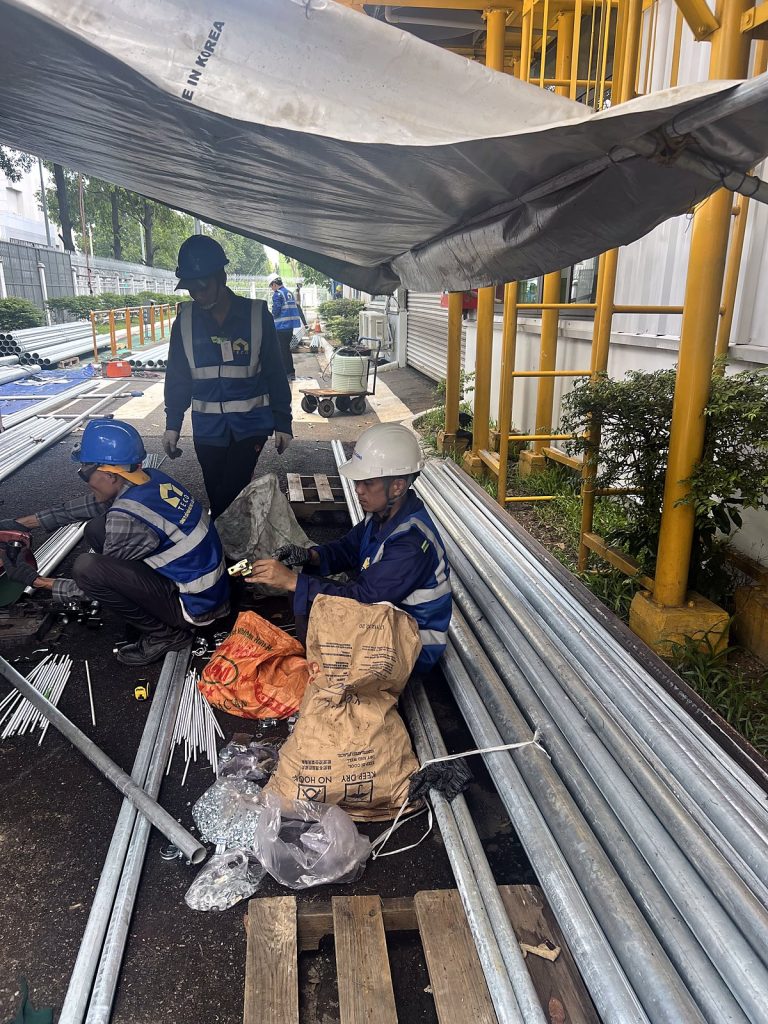
- Fire water pipes checked for type, wall thickness and galvanising against the approved design.
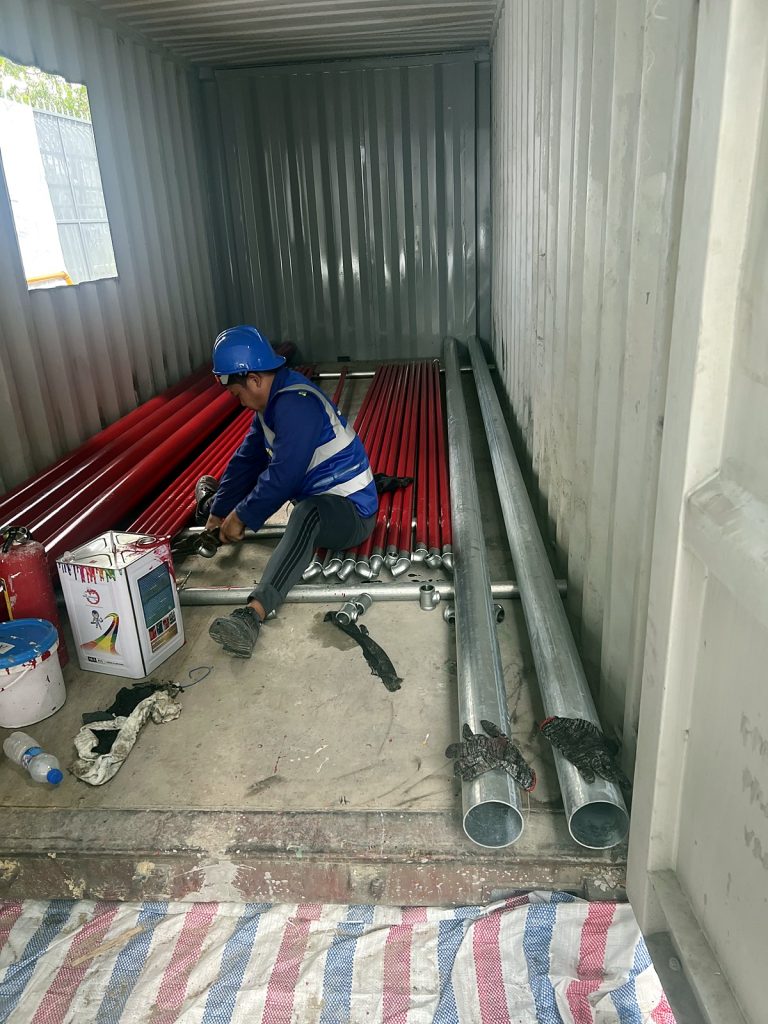
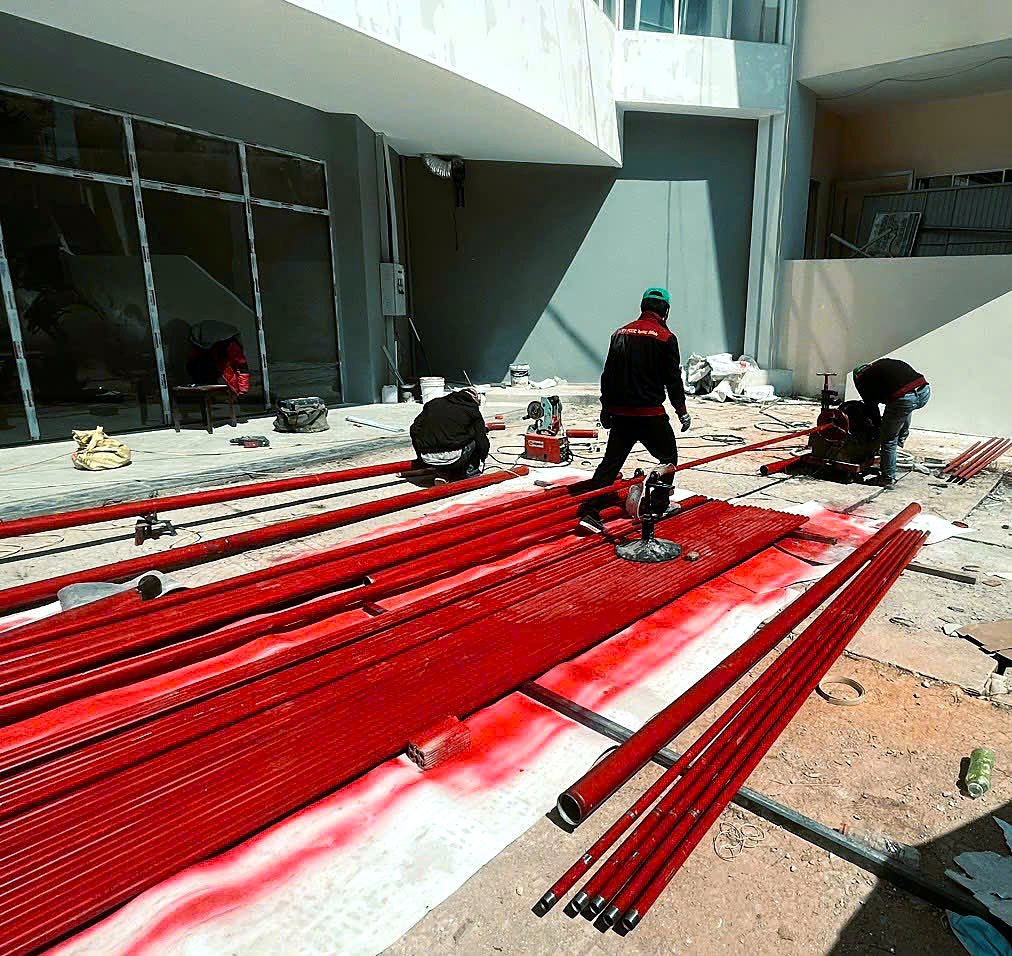
- Fire water pipes primed and painted red before installation; fire alarm cabling run in steel or fire-rated conduit as designed.
- Equipment (pumps, valves, sprinklers, detectors, control panels) carries fire equipment inspection certificates before installation.
1.2. Water-based fire fighting
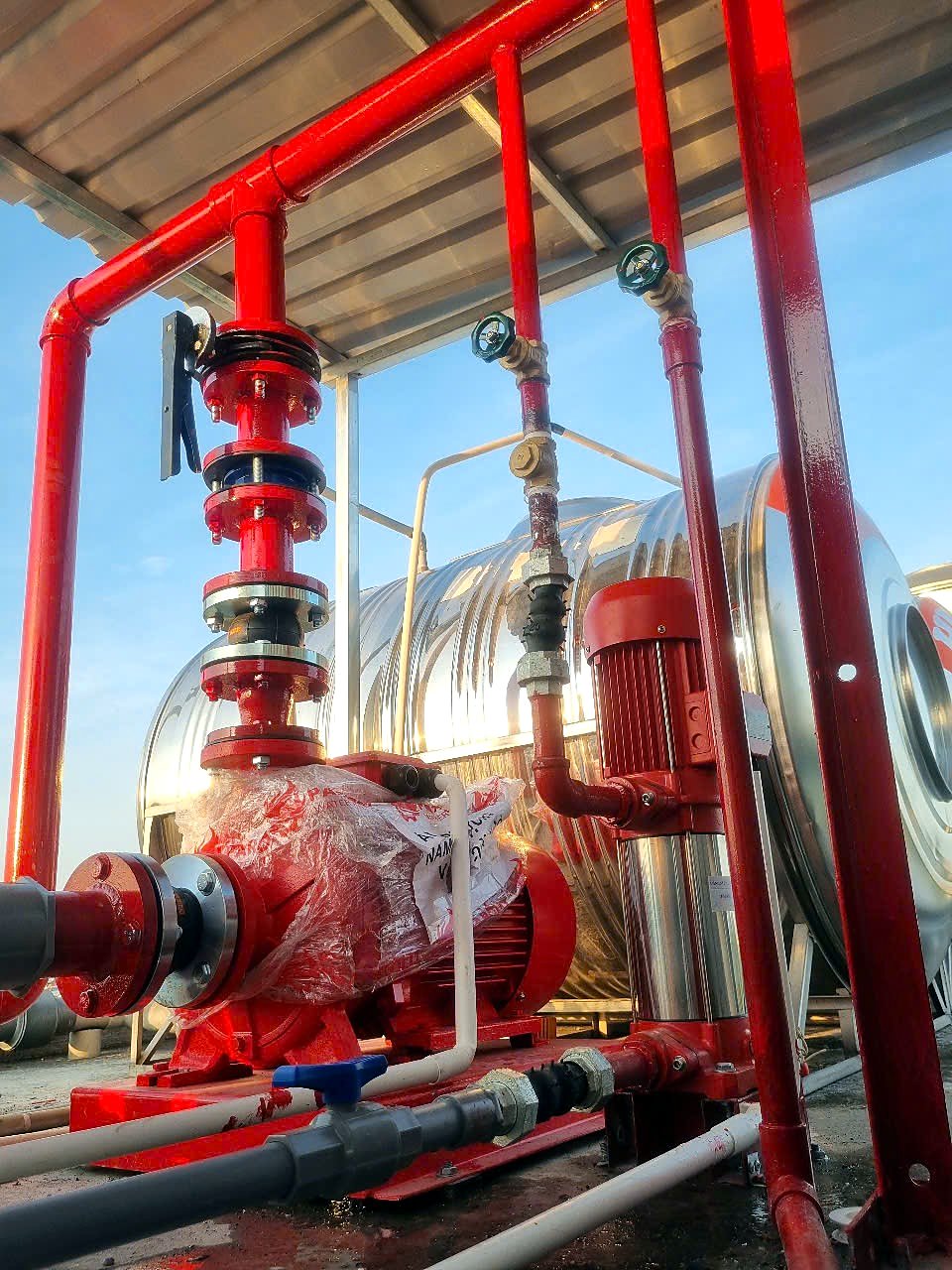
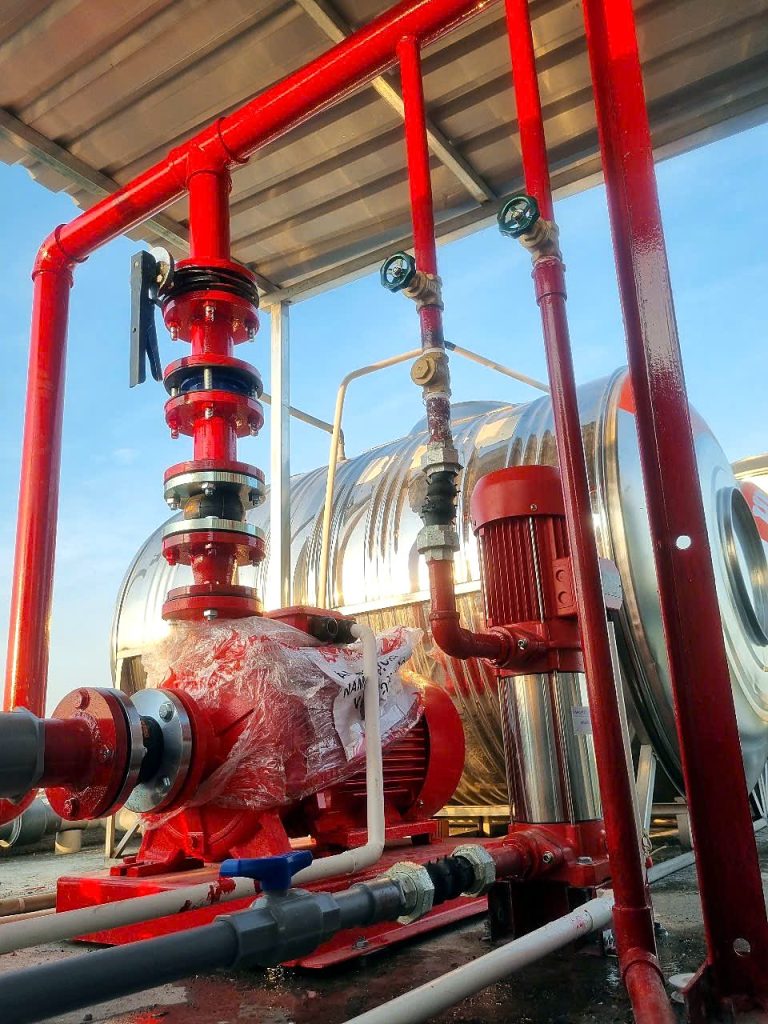
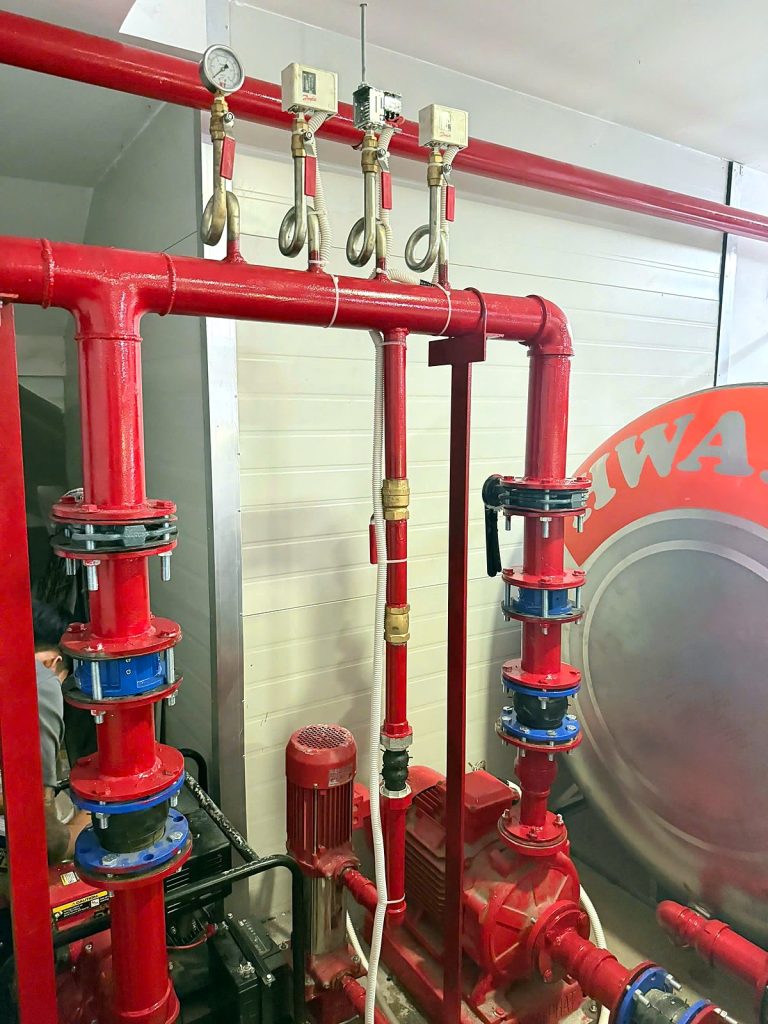
- Pump room and fire water tank: electric pump, jockey pump, diesel pump (if any), control panel, header, pressure switches.
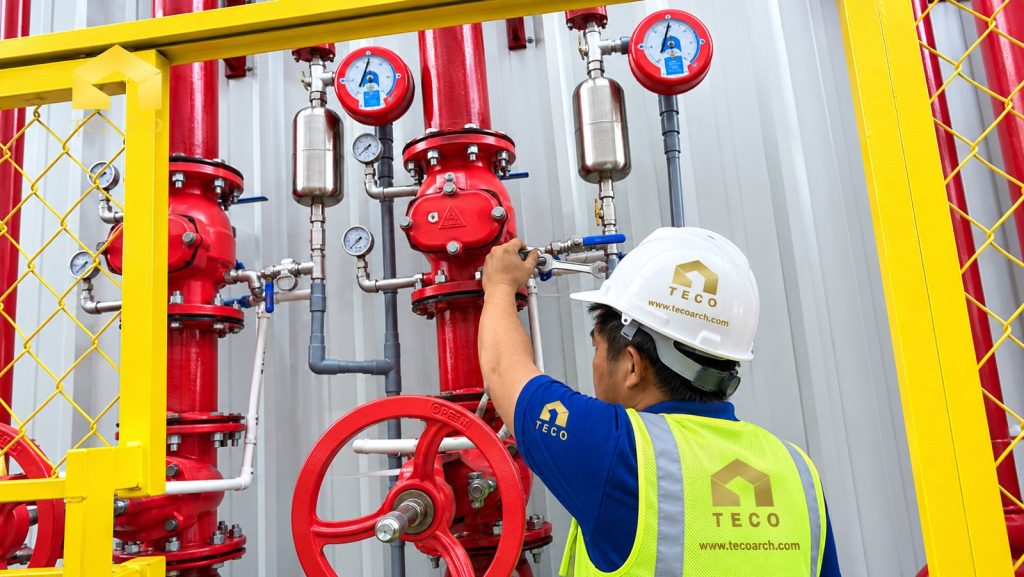
- Pipe network, isolation valves, alarm valve assemblies, floor drain valves, sprinkler heads.
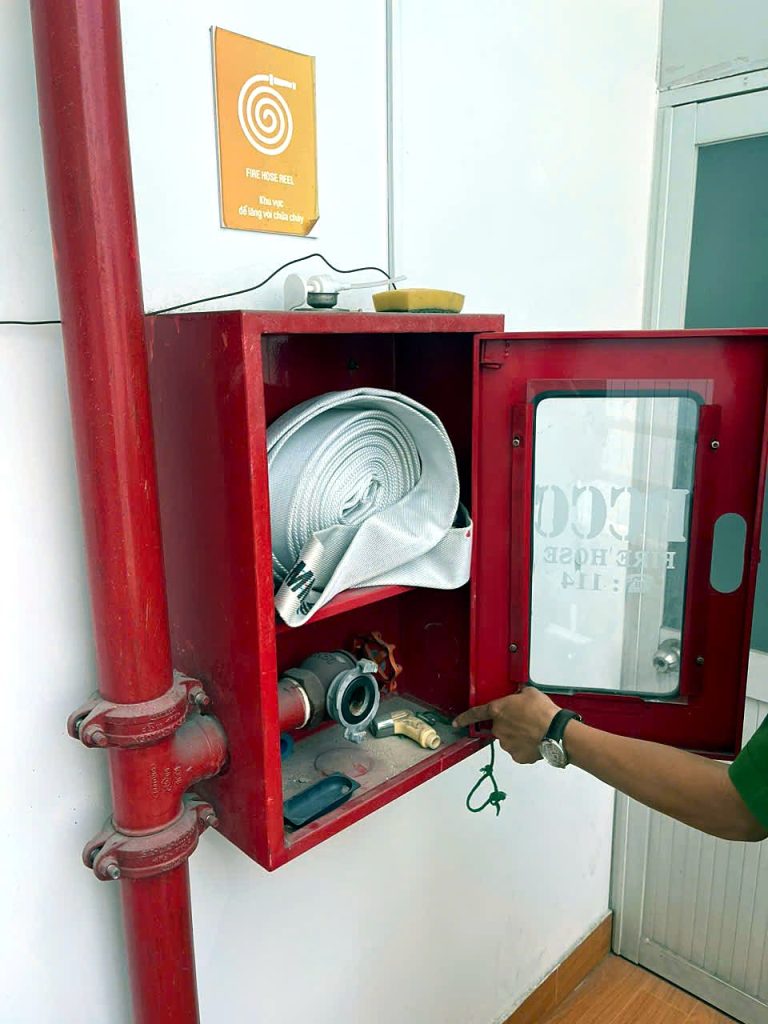
- Fire hose cabinets, outdoor hydrants, fire department inlets.
1.3. Fire alarm system
Control panel, smoke and heat detectors, call points, sounders/beacons, interface modules; exit signs and emergency lights. Detectors and sprinklers must be coordinated with the ceiling, lighting and air-conditioning layouts from the start, so nothing has to be moved after the ceiling is built.
2. Commissioning and acceptance
2.1. Pressure tests and system tests
- Pressure-test fire water pipes to the design and check for leaks.
- Run each pump and check its auto-start setting on the pressure switch.
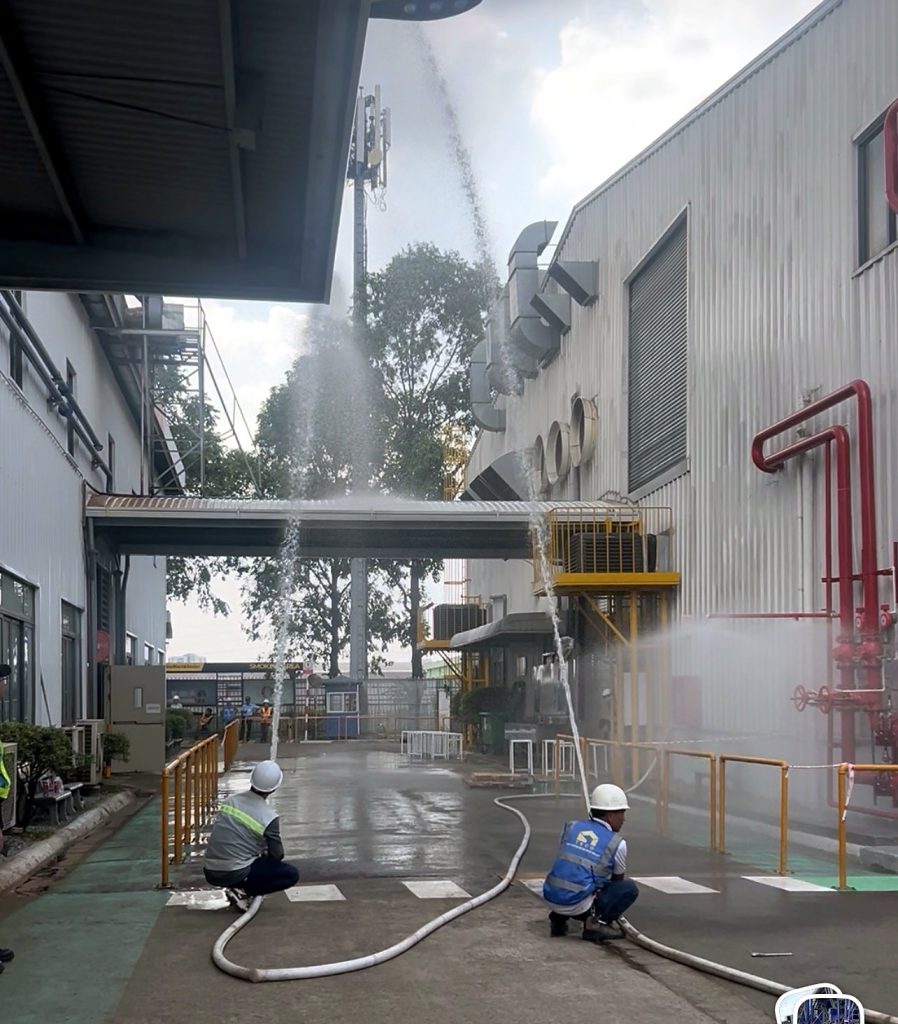
- Flow-test hose cabinets and outdoor hydrants; test flow switches at the floor drain valves.
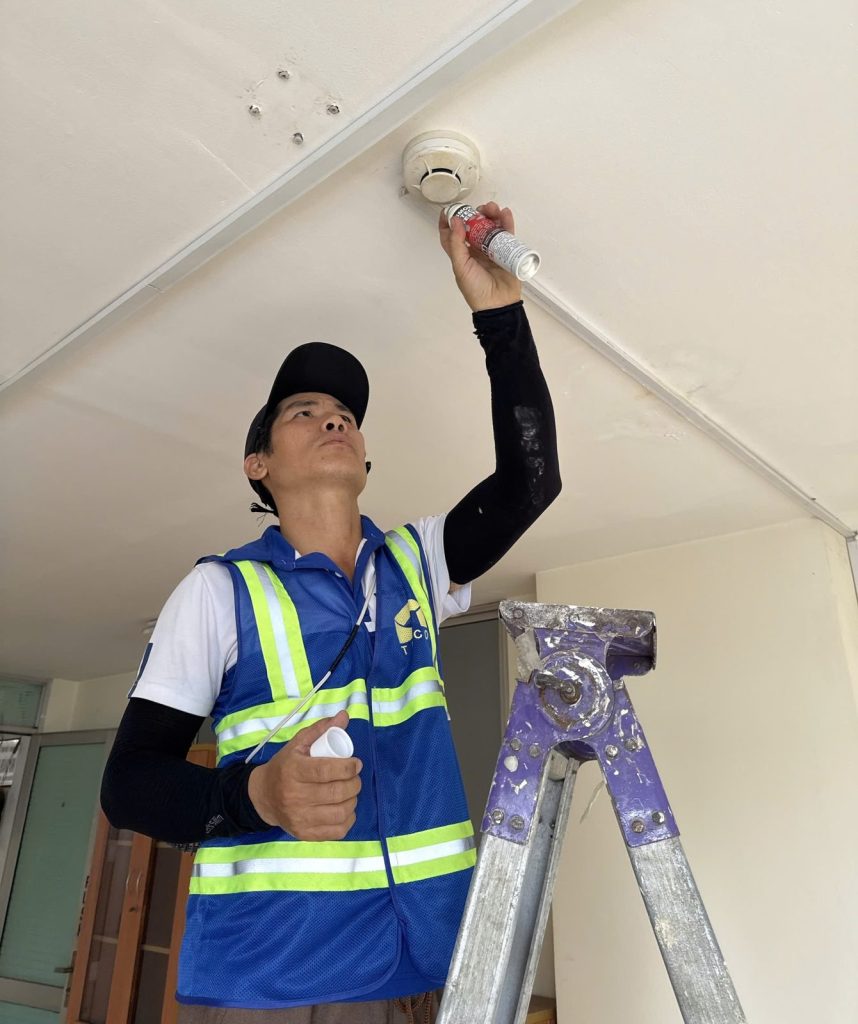
- Test every detector and call point back to the control panel.
2.2. Cause-and-effect test
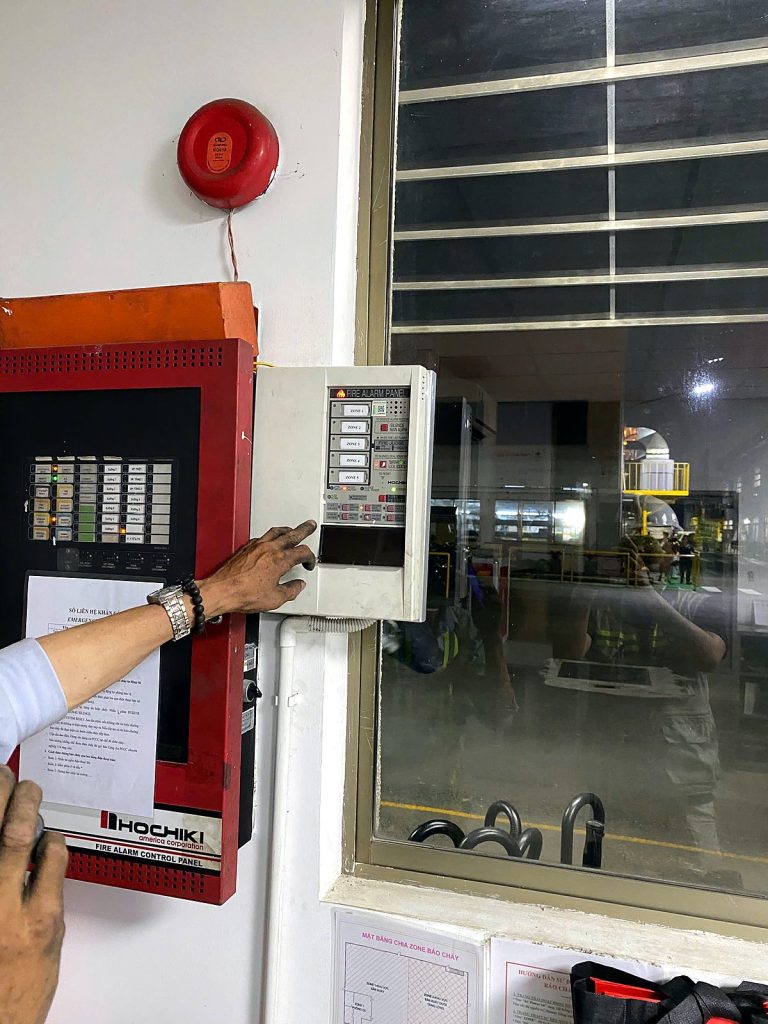
Simulate a fire signal and check the chain: sounders – pumps – pressurisation and smoke fans – fire shutters – lift homing (where designed).
2.3. Acceptance documents
As-built drawings, pressure and commissioning test records, internal acceptance records, equipment inspection certificates and operating instructions. For buildings that require fire design approval, the acceptance results are checked by the Fire Police before the building is put into use. TECO prepares the fire protection dossier and carries out fire protection acceptance for the projects it builds.
3. Handover and maintenance
- Handover includes an equipment register by system and floor – the checklist for future maintenance.
- Building management is trained on the control panel, pump room and false-alarm handling.
- Minimum maintenance intervals under QCVN 10:2025/BCA: fire alarm, water-based and automatic suppression systems, emergency and exit lights once a year; extinguishers every six months.
- Detailed maintenance checklists by system and building type: see the Fire Protection System Maintenance Guide by TECO MSC – TECO’s maintenance division.
4. Notes by building type
- Schools: schedule works for the summer break or outside class hours; halls and gyms need their own smoke extraction.
- Offices: in tenant fit-outs, sprinklers and detectors follow the new ceiling layout and connect to the building’s main panel.
- Language centres: leased space in a building – coordinate with building management for connections and signal tests; work outside class hours.
- Premium apartments: sprinklers inside apartments follow owner-built ceilings and kitchen cabinets; recheck before interior handover.
- Data centres: server and UPS rooms use gas/aerosol suppression and early-warning detection; room integrity is what lets the system reach design concentration.
5. FAQ
Does the building have to close during fire protection works?
Not necessarily. TECO works after hours and at weekends for offices, schools and English centres that stay open.
Who prepares the fire protection dossier and acceptance?
For projects TECO builds, TECO prepares the dossier and carries out acceptance with the owner.
Is maintenance available after handover?
Yes. TECO MSC – TECO’s maintenance division – provides scheduled maintenance based on the handed-over equipment register.
Contact TECO
TECO designs and builds, prepares dossiers, carries out acceptance and maintains fire protection systems for schools, offices, language centres, apartments, data centres and factories. Hotline: 0911 111 929 · Email: teco@tecoarch.com
Related services: TECO design & build services · After-handover maintenance – TECO MSC